
Dropshipping vs Private Label Clothing are the two most common terms when you are planning to start an apparel brand. Both are legitimate ways to build an ecommerce business, but they work in completely different ways. Each has its own pros and cons, and a wrong choice can cost you months of wasted effort.
A simple business model comparison of dropshipping vs private label clothing can assist you in your final decision. By the end, you’ll find a clear answer on what to go for in the long run.
A Quick Side by Side Analysis of Dropshipping vs Private Label
Here’s a short table you might want to take a look at if you don’t want to read the differences in detail. Since it covers the factors that matter most when you’re picking between the two models.
Factor | Dropshipping | Private Label |
Startup cost | Very low ($0–$500) | Moderate to high ($1,000–$10,000+) |
Inventory | None, supplier ships for you | You buy and hold stock |
Branding | Limited, generic products | Full control, your own brand |
Profit margins | 10–20% typically | 30–60% typically |
Product control | Low | High |
Time to launch | Days | Weeks to months |
Risk | Low financial risk | Higher upfront risk |
Long-term value | Hard to sell the business | Can build a sellable brand |
Key Differences
The core difference comes down to ownership.
With dropshipping, you’re basically a marketing layer sitting on top of someone else’s inventory and products. With private label, you own the product, the branding, and usually the packaging too.
That single difference explains almost every other gap between the two models: cost, margin, control, and the business’s value if you ever wanted to sell it.
Dropshipping is faster to start and requires almost no money upfront. Private label takes more capital and more patience, but it builds something you actually own.
What Is Dropshipping?
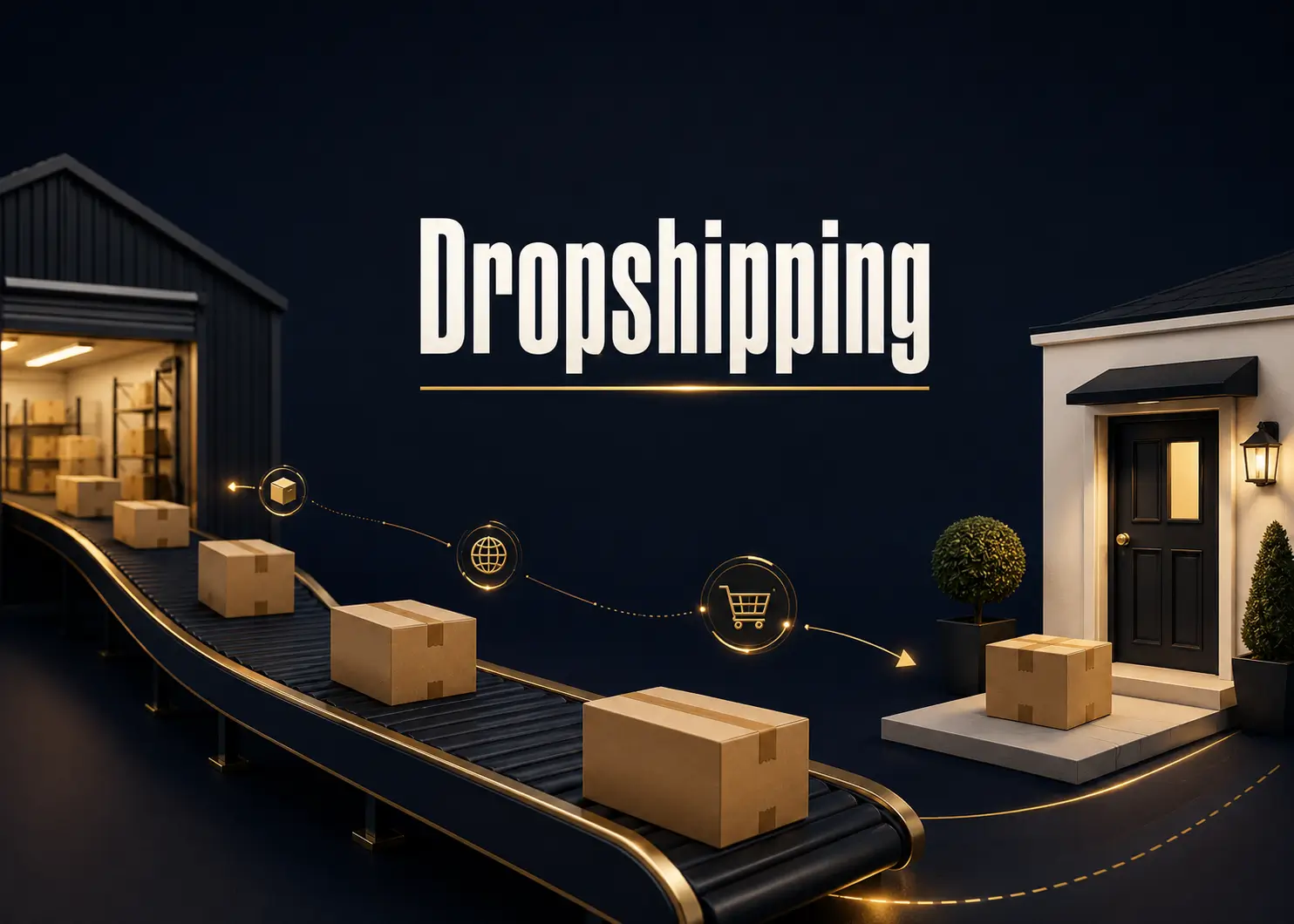
Dropshipping is a fulfillment model where you sell products online without ever touching or storing inventory. A customer places an order on your store, you forward that order to a supplier, and the supplier ships the product directly to the customer. You never see or handle the item.
How It Works
You set up a store, usually on Shopify or WooCommerce, and connect it to a supplier through an app or a direct agreement. You list the supplier’s products, set your own retail price, and run ads or content to drive traffic. When a sale comes in, you pay the supplier their wholesale price and keep the difference.
Pros
- Extremely low startup cost, sometimes under $500
- No need to buy or store inventory
- Easy to test dozens of products quickly
- Low financial risk if something doesn’t sell
- Can be run from anywhere with a laptop
Cons
- Thin profit margins, usually 10–20%
- Little to no control over product quality
- Long shipping times, especially with overseas suppliers
- Hard to build a real brand since anyone can sell the same product
- Heavy reliance on supplier reliability
Best Fit
Dropshipping tends to work best for people who want to test business ideas cheaply, learn the fundamentals of ecommerce, or dip a toe into online selling before committing real money.
What Is Private Label Clothing?
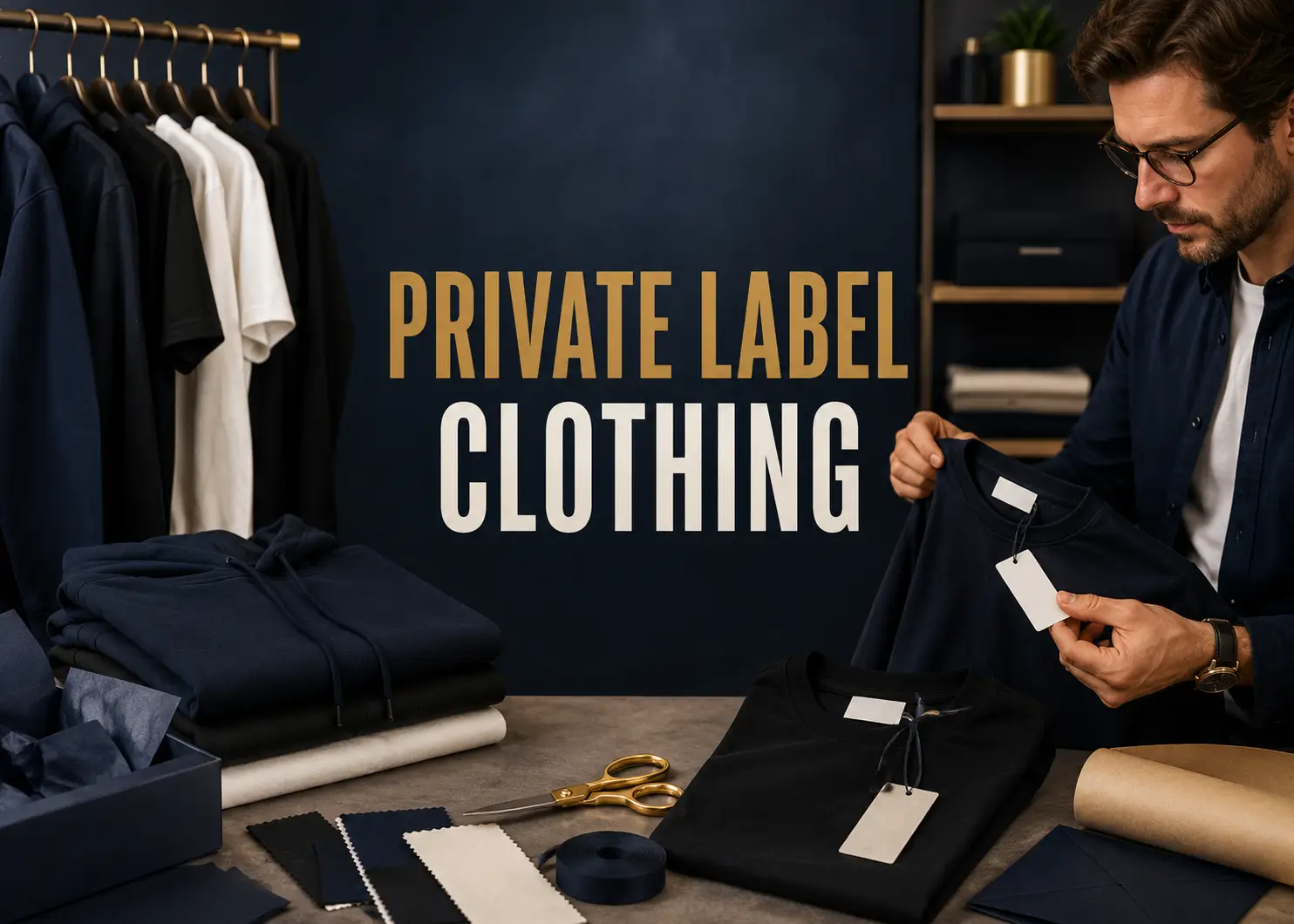
Private label clothing means you’re selling a clothing product manufactured by someone else, but sold under your own brand name, packaging, and design. You’re not inventing the product from scratch, but you are the one deciding how it looks, how it’s packaged, and how it’s marketed.
How It Works
You find a manufacturer, often through local suppliers such as Innovate Apparel, and negotiate a minimum order quantity (MOQ). You customize the product with your logo, packaging, and sometimes small design tweaks. Then you buy inventory upfront, store it (either yourself or through a fulfillment center), and sell it under your own brand.
Pros
- Full control over branding, packaging, and product quality
- Much higher profit margins, often 30–60%
- Builds real brand equity and customer loyalty
- Easier to stand out from competitors
- Creates a business asset that can be sold later
Cons
- Requires more upfront capital
- You’re stuck holding inventory, which carries risk
- Longer setup time before you can launch
- Requires more work: sourcing, quality control, packaging design
- Mistakes with MOQs can mean sitting on unsold stock
Best Fit
Private label clothing suits people who already have some validation that an apparel product sells, have some capital to invest, and want to build something with long-term value instead of just testing ideas.

What Should You Choose: Dropshipping vs Private Label Clothing?
Now that we’ve previously done the quick analysis, let’s go factor by factor. This is where the two models really pull apart, and where you’ll probably start forming a gut feeling about which one fits how you want to run your business.
Startup Costs
Dropshipping generally has a lower barrier to entry because you don’t need to purchase inventory upfront. Most initial expenses go toward building your online store and marketing your products. Private label clothing typically requires a larger investment for manufacturing, branding, packaging, and inventory before you begin selling.
Inventory
With dropshipping, suppliers usually store inventory and ship orders directly to customers, so retailers don’t need to hold stock. Private label businesses purchase inventory in advance, which requires more capital but provides greater control over product availability and inventory management.
Branding
Branding opportunities are often more limited with standard dropshipping since many retailers can sell the same products. Private label clothing allows you to build a unique brand through custom labels, packaging, and product presentation, helping your business stand out from competitors.
Product Control
Dropshipping businesses typically have limited control over product quality, materials, and design because suppliers manage production. With private label, businesses often work directly with manufacturers, making it easier to customize products and maintain consistent quality standards.
Profit Potential
Profit margins vary depending on pricing, advertising costs, and operating expenses. However, private label businesses often have greater potential for higher margins because they control branding and pricing. Dropshipping businesses may operate with narrower margins due to supplier pricing and increased competition.
Fulfillment
In a dropshipping model, suppliers handle order fulfillment, reducing operational responsibilities for the retailer. Private label businesses usually manage fulfillment themselves or through a third-party logistics provider, offering more control over shipping speed, packaging, and the overall customer experience.
Marketing
Marketing a dropshipping store often focuses on attracting customers to products that may also be available from other retailers. Private label brands can differentiate themselves through unique branding, product positioning, and customer experience, which may help build stronger customer loyalty over time.
Scalability
Both models can scale successfully, but they require different approaches. Dropshipping makes it easier to expand your product catalog without investing in inventory. Private label businesses require more inventory planning and cash flow management but can benefit from stronger brand recognition as they grow.
Customer Experience
Customer satisfaction is influenced by product quality, shipping speed, and packaging. Since private label businesses have more control over these factors, they can often deliver a more consistent brand experience. With dropshipping, the customer experience may depend more heavily on the supplier’s fulfillment processes.
Long-Term Business Value
A private label clothing business has the potential to build long-term value through its brand, customer relationships, and proprietary products. Dropshipping businesses can also become profitable, but their long-term value often depends more on marketing performance and supplier relationships.
Risk Comparison
Dropshipping generally involves lower upfront financial risk because inventory isn’t purchased before sales are made. Private label requires a larger initial investment and carries inventory risk, but it also provides greater control over branding, products, and the overall customer experience. The right choice depends on your budget, risk tolerance, and long-term business goals.
Best Business Model by Industry
Neither model, Dropshipping vs Private Label Clothing, is universally better. The right choice often depends on the category you’re selling in, and how much branding actually influences a customer’s decision to buy.
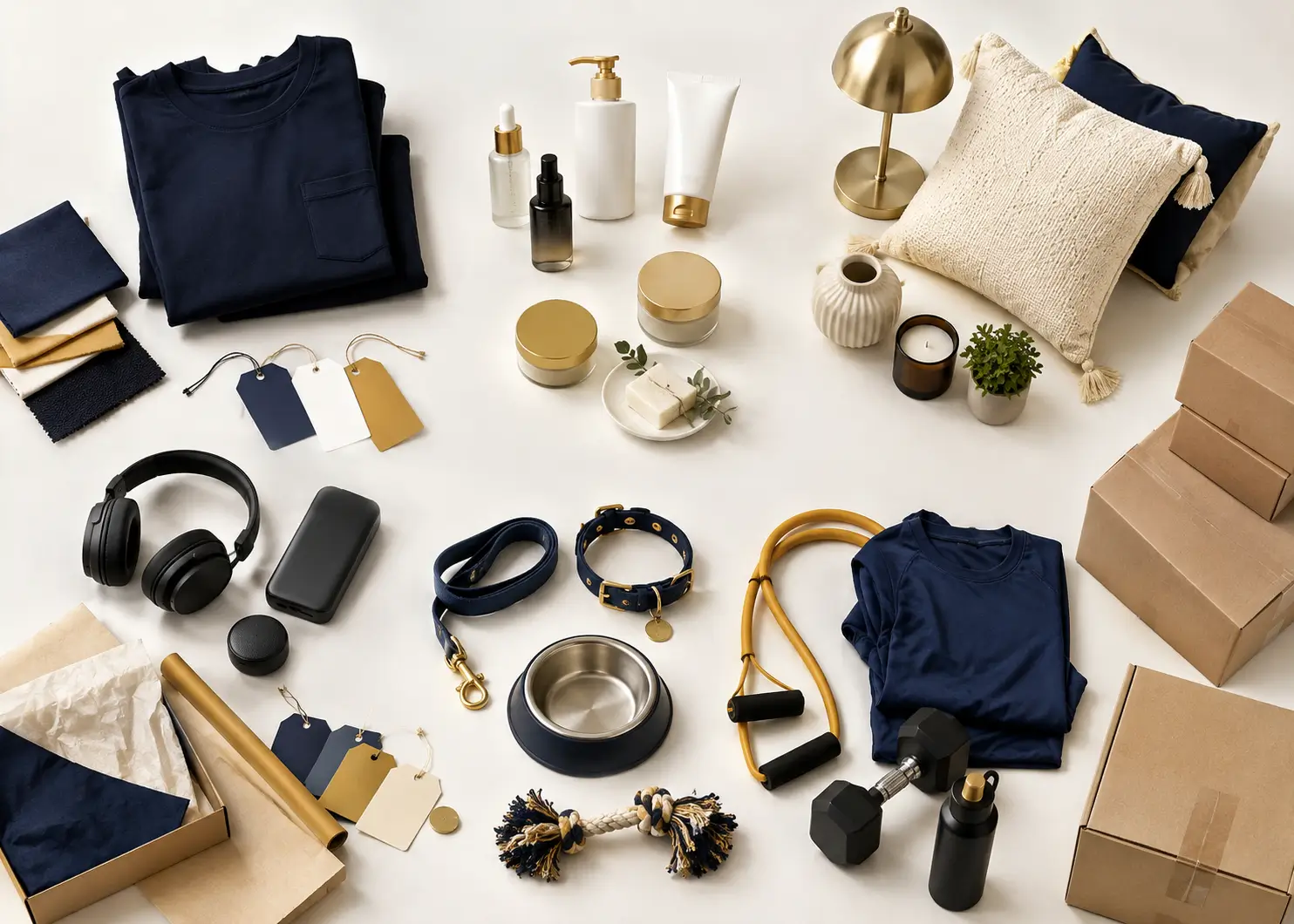
Apparel: Private label tends to win here because branding, fit, and fabric quality matter so much to buyers, such as top-quality denim or jeans. Custom apparel and clothing brands live or die on identity, which dropshipping can’t really deliver.
Beauty: Private label is common in beauty for similar reasons. Packaging and formula quality build trust, and repeat purchases are the whole business model.
Home goods: Both models can work, but private label tends to perform better for anything decorative or design-driven, where branding influences buying decisions.
Electronics: Dropshipping is more common here since customers often care more about price and specs than brand identity, though private label can work for accessories.
Pet products: Private label does well because pet owners are loyal to brands they trust, especially for consumables like food or treats.
Fitness: A mix of both, with dropshipping useful for testing trendy gadgets and private label better suited for apparel, supplements, and equipment where brand trust matters.
Which Business Model Should You Choose?
- Limited budget: Start with dropshipping. It lets you learn ecommerce fundamentals without risking money you can’t afford to lose.
- Testing ideas: Dropshipping again. It’s built for fast, cheap experimentation.
- Building a long-term brand: Private label. If your goal is a business with real identity and customer loyalty, this is the only model that gets you there.
- Maximizing margins: Private label. The profit math simply favors owning your product.
- Creating a sellable business: Private label. Buyers pay for brands and assets, not generic dropshipping stores with no unique inventory.
If you’re still unsure, a safe default is to start with dropshipping to validate an idea, then transition into private label once you see consistent demand. That approach limits your downside while still giving you a path toward the higher margins and brand value that private label offers.
Common Mistakes to Avoid in Dropshipping vs Private Label Clothing
- Jumping straight into private label without any proof the product sells
- Underestimating minimum order quantities and ending up with too much unsold stock
- Ignoring shipping times when dropshipping, which kills customer trust
- Choosing suppliers based only on price instead of reliability
- Treating dropshipping as a permanent business model instead of a testing phase
- Skipping trademark and packaging planning when building a private label brand
- Not tracking real profit margin after ad spend, only looking at product markup
Ready to Build Something That's Actually Yours?
Dropshipping is a fine place to start, but if you’re reading this far, there’s a good chance you’re already thinking past the testing phase. You want a brand people remember, not just a store that happens to sell things.
That’s exactly where Innovate Apparel comes in. We help ecommerce sellers make the jump from generic dropshipping listings to real private label apparel, handling everything from sourcing and manufacturing to custom packaging and quality control, so you can focus on growing the brand instead of chasing suppliers.
If you’ve validated a product idea and you’re ready to put your own name on it, get in touch with our team for a free consultation on what your first private label clothing order could look like.