Starting a clothing brand usually stalls at the same spot: manufacturers asking for large MOQ units such as 500+ before they will even quote a price. For a founder testing a single hoodie design or an Etsy seller trying one print run, that number is a direct NO.
The short answer is that true no MOQ manufacturing exists only in narrow situations, and this article explains exactly where those situations are, where “no MOQ” quietly becomes “low MOQ,” and what each option actually costs.
By the end, you will know which manufacturers to contact, what a fair price range looks like by country, and how to move from idea to shipped product without ordering more inventory than you can sell.
What Is a No MOQ Clothing Manufacturer?
A no MOQ clothing manufacturer is a factory or production partner that does not enforce a fixed minimum quantity before accepting an order. In practice, this term gets applied loosely across three different business models: sample-only workshops, small batch cut and sew factories, and print-on-demand platforms, each with a different definition of “no minimum.”
Understanding which category a supplier falls into before you contact them saves weeks of back and forth. A workshop that quotes “no MOQ” for sample development is not the same partner you will use for a 200-unit reorder, and confusing the two is one of the most common mistakes new apparel founders make.

Do No MOQ Clothing Manufacturers Really Exist?
Marketing copy on manufacturer websites often promises no minimum order, but the reality behind that claim is more specific. Factories still have to pay for fabric cutting, thread changes, machine setup, and labor time regardless of order size, so a true zero-minimum production run rarely makes financial sense for the factory.
What actually happens is that “no MOQ” gets used to describe sample orders, development runs of 5 to 20 pieces, or platforms where garments are printed and cut only after a customer buys one. It is also sometimes considered as the low MOQ option.
There are genuine exceptions. Some small workshops, particularly ones built around custom embroidery or screen printing on blank apparel, will produce a single garment because the blank stock already exists and only decoration is added per order.
No MOQ vs Low MOQ vs Print-on-Demand
Choosing between these three paths depends on what you are trying to prove. A no MOQ or sample-only order tells you whether the garment fits and looks right. A low MOQ order tells you whether the market wants it. Print-on-demand removes inventory risk entirely but limits how far you can customize the base garment.
Feature | No MOQ | Low MOQ | Print-on-Demand |
Branding | Yes, full control | Yes, full control | Limited to print area |
Custom fabric | Yes | Yes | No |
Inventory held | None | Small batch | None |
Cost per piece | Highest | Medium | Highest |
Profit margin | Medium | High | Low |
Scalability | Limited | Strong | Weak |
Typical order size | 1 to 20 | 25 to 100 | 1 (per sale) |
Why Most Clothing Factories Require Minimum Orders
A minimum order quantity is not an arbitrary number a factory picks to be difficult. It reflects the real cost of setting up a production line: cutting patterns, calibrating machines for a specific fabric weight, sourcing enough yardage to avoid waste, and planning labor hours across a shift. Below a certain volume, the factory loses money on the order.
Fabric mills also enforce their own minimums, often 100 to 300 meters per color, which pushes garment factories to bundle small brand orders together or require a minimum that matches what they can source economically. Quality control adds another layer, since inspecting and grading a run of 10 pieces takes nearly the same labor as inspecting 100, which is why per-unit cost drops sharply as order size grows.
Who Should Choose a No MOQ Manufacturer?
If your goal is building inventory to sell through a wholesale channel or a retail storefront, a low MOQ clothing manufacturer will almost always give you a better cost structure and more predictable lead times. The right choice depends less on preference and more on whether you are still validating demand or already have it.
1. Innovate Apparel
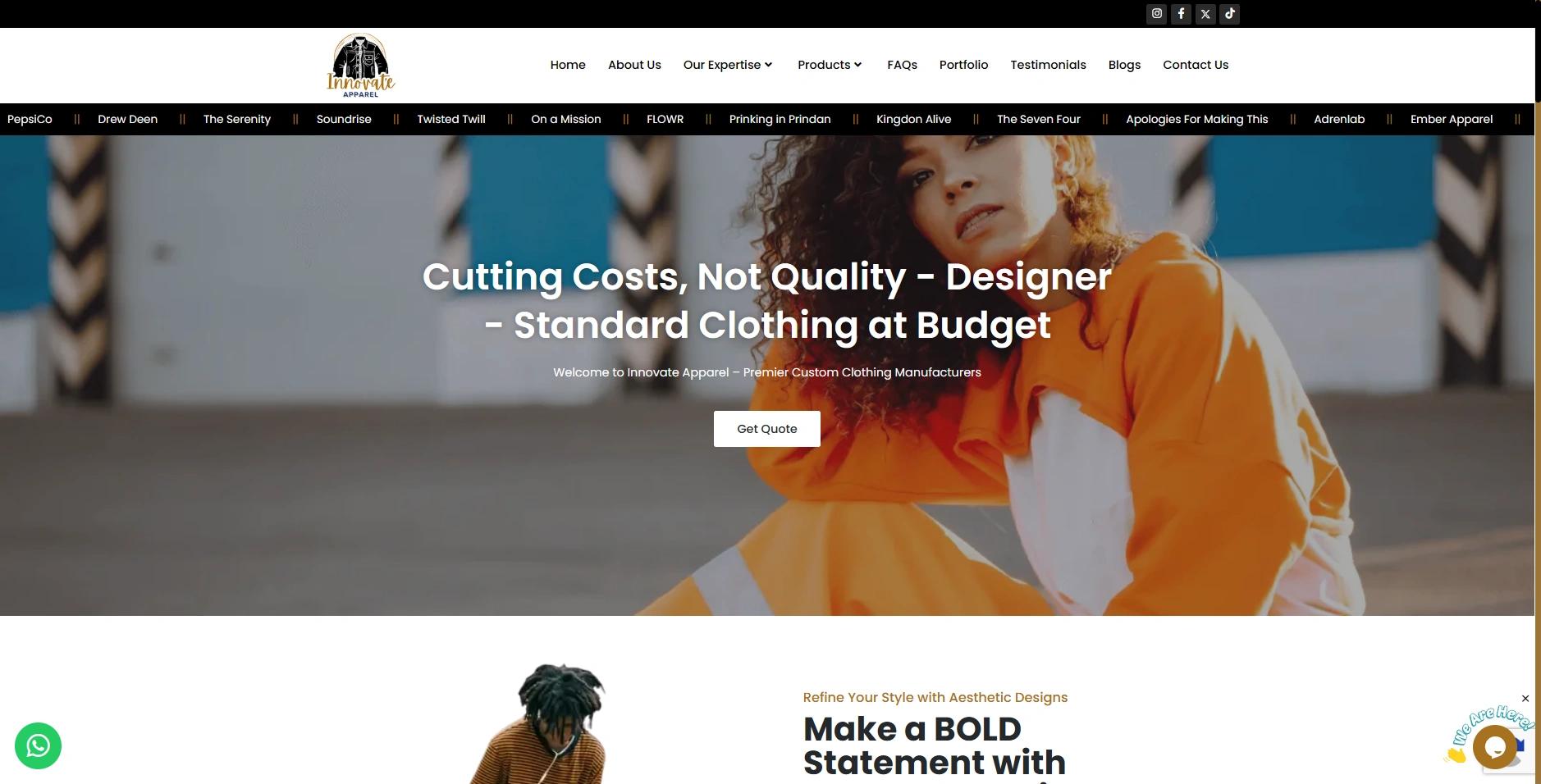
Innovate Apparel works directly with early-stage founders who need a genuine no MOQ clothing manufacturer for sample development and small first production runs. Orders start at a single sample garment for fit and quality testing, with an option to move into a small batch of 15 to 30 units once the design is approved, all without the founder needing to hold inventory beyond what they intend to sell. The team handles tech pack creation for clients who arrive with only a sketch, which removes one of the biggest early bottlenecks for first-time apparel founders.
Beyond sample and small batch production, Innovate Apparel supports private label branding, custom labels, hang tags, and screen printing or embroidery on blank stock, so a founder can go from concept to a sellable garment without juggling three separate vendors. Turnaround on samples typically runs one to two weeks, and the team provides shrinkage and fabric testing data before a client commits to a production run, which is not standard practice among low-cost overseas suppliers.
Best for: Founders who need a true no MOQ clothing manufacturer for sampling, plus a smooth path into small batch production with the same partner.
Pros: Single-unit sample orders accepted, tech pack support included, private label and small batch options under one roof, transparent fabric and shrinkage testing.
2. Nofal Apparel
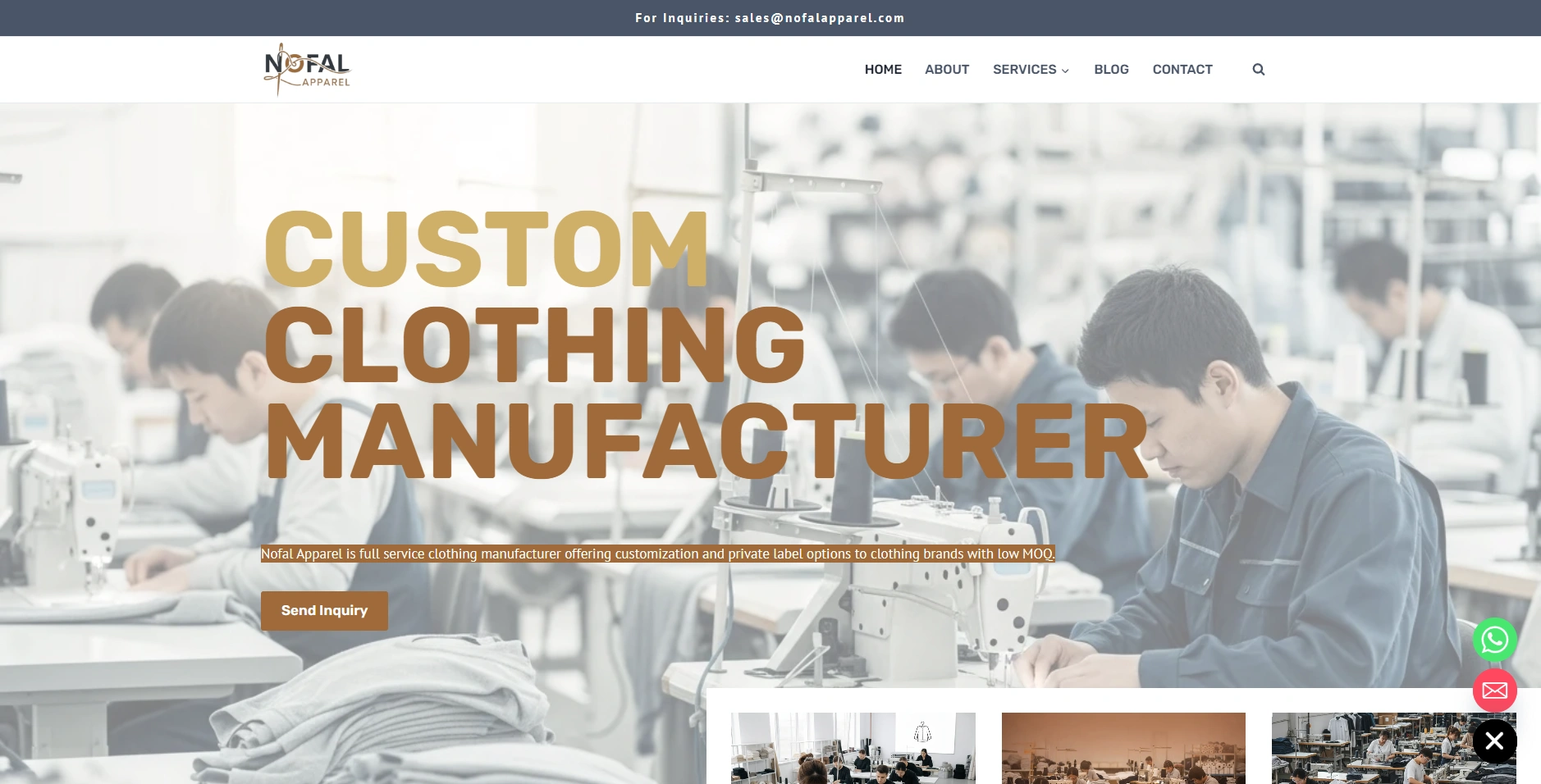
Nofal Apparel runs its production out of Sialkot and built its client base primarily around US customers. Its low MOQ policy allows orders as small as 20 pieces per design, which is accessible for a full cut-and-sew operation rather than a decoration-only service.
Its catalog spans streetwear, casualwear, athletic wear, sportswear, and leather goods, including custom polos, round-neck and V-neck tees, oversized tees, sports shirts, and several hoodie styles including zippered, pullover, oversized, and cropped.
Best for: Startup streetwear, athletic, and casualwear brands that are comfortable working with an overseas factory in exchange for a low per-design minimum.
Pros: A true 20-piece minimum, broad category coverage from tees to leather goods, samples available before committing to a bulk order, and global shipping already built into their process given their existing international client base.
Cons: No option to bring your own fabric or pre-made garments for decoration, since everything is produced in-house from raw materials. Overseas production also means longer shipping timelines and a significant time difference for US-based founders coordinating communication.
3. Baagh Enterprises
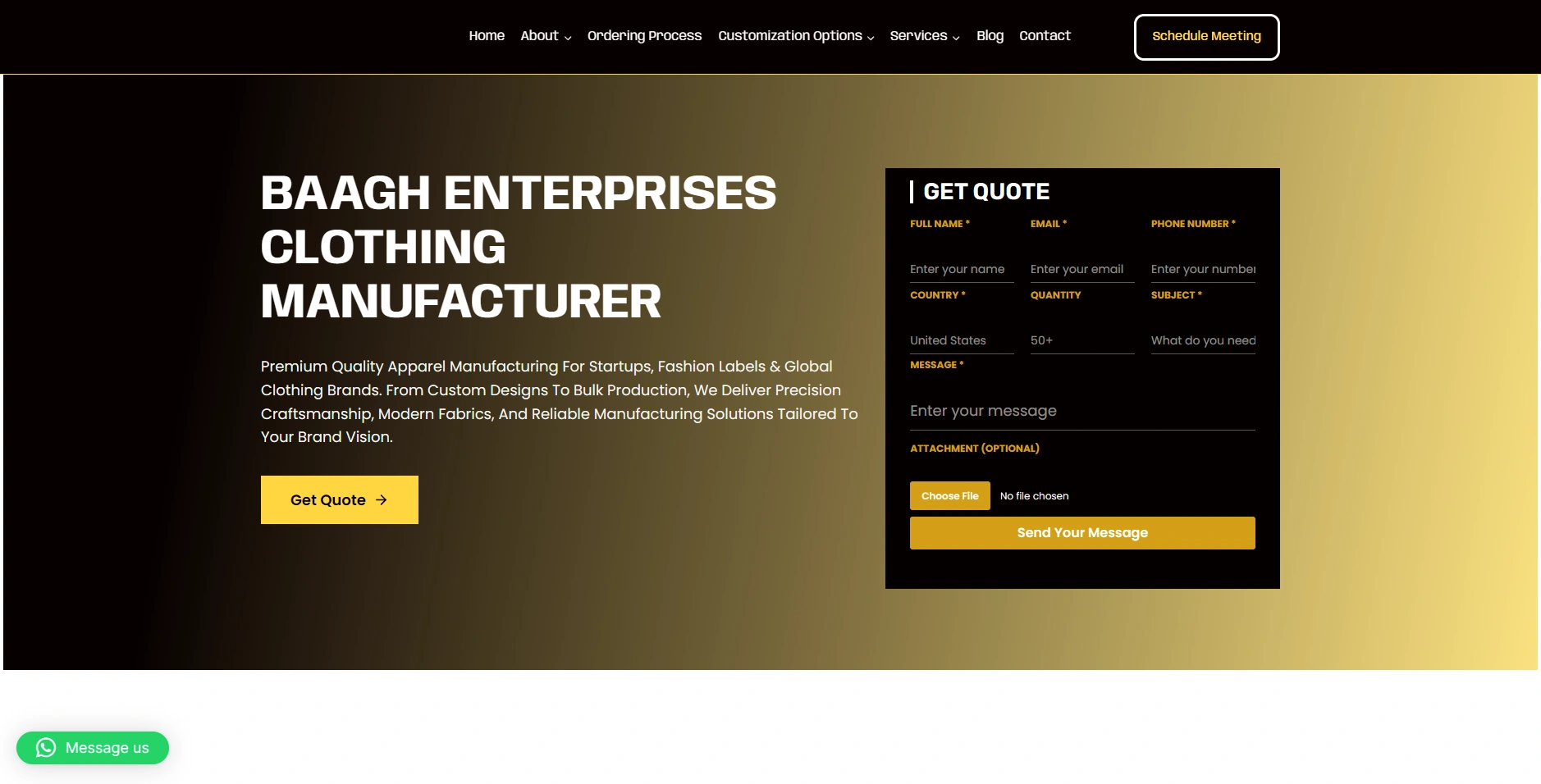
Baagh Enterprises is a Pakistan-based manufacturer that ships globally and markets itself around helping small brands avoid the frustrating first-production experience many founders describe with unfamiliar factories.
Its process runs through pattern making, cutting, sewing, and finishing, with custom packaging available as an add-on, and it markets its low MOQ specifically toward streetwear founders launching their first hoodie, tee, or jacket line. Reported minimums for design-based orders sit around 20 pieces, similar to other Pakistan-based manufacturers serving the same market.
Best for: Streetwear and casualwear brands running their first small test order, including founders who may also need uniforms, bags, or leather accessories from the same supplier.
Pros: Full-package service from design through cutting, sewing, and packaging, a broad product range beyond standard apparel, and a stated focus on first-time founders rather than established brands.
Cons: The same overseas sourcing trade-offs as other Pakistan-based and China-based options on this list apply. Expect longer shipping windows and less same-day communication than a domestic factory, and confirm current pricing directly since published minimums can change.
4. ARGYLE Haus of Apparel
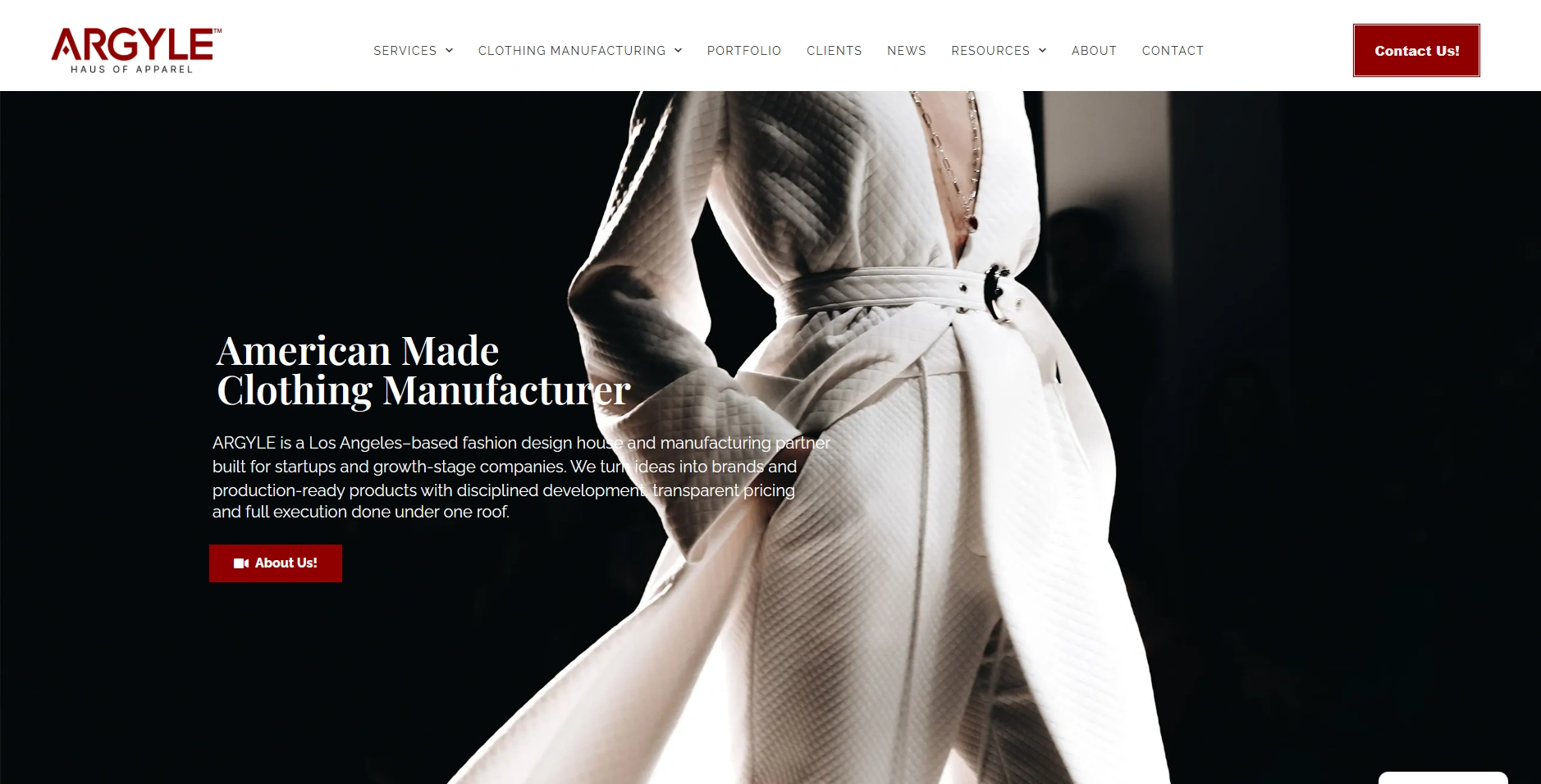
ARGYLE Haus of Apparel operates out of Los Angeles and built its business model around making small-batch, domestic production affordable. Its minimum starts at 25 pieces, and the company attributes its lower cost to a standardized costing model built specifically for smaller runs.
The team handles the full development pipeline in-house, including digital pattern creation, sample cutting and sewing, and a dedicated professional fit test to confirm the garment matches spec before committing to a bulk run.
Best for: US-based brands that want domestic manufacturing along with a structured fit-testing step before committing capital to their first real production run.
Pros: Made-in-USA production with same-timezone communication, a dedicated fit-test process built into the standard workflow rather than offered as an upsell, and a pricing model designed for small batches.
Cons: Domestic labor and facility costs mean per-unit pricing will run higher than overseas alternatives on this list, so expect to pay a premium for the fit-testing rigor and faster communication.
5. Mega Apparel
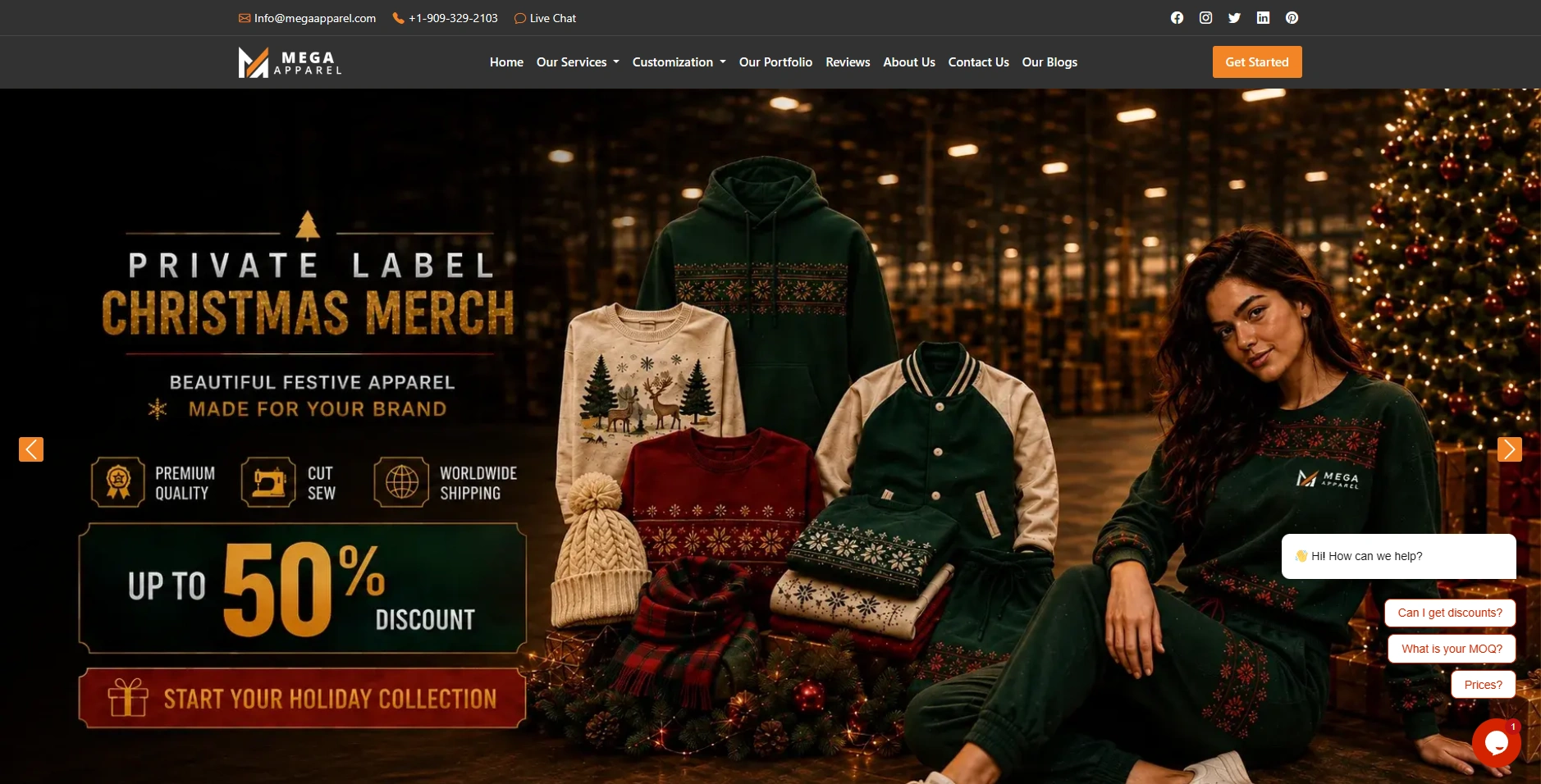
Mega Apparel markets itself as a one-stop shop for premium-level customization, with a stated minimum order quantity of 35 to 50 pieces. Its service list is broader than a typical low-MOQ shop, covering embroidery, cut and sew, fabric dyeing and washing, and several printing methods, all handled internally with a dedicated quality assurance step built into the production flow. The company frames its low MOQ as a way to reduce financial risk for founders still validating a concept. A smaller order means a smaller loss if a style doesn’t sell, and it lets a brand launch multiple styles at once instead of committing everything to one product, since the total investment per style stays lower.
Best for: Boutique brands that want a wider menu of finishing options, including dyeing, embroidery, and multiple print methods, in the same order as their core cut-and-sew production.
Pros: A wide service range under a single roof, a stated quality assurance step in the production process, an explicit focus on startups and small-batch sustainable brands, and enough flexibility to launch several styles at a lower per-style commitment.
Cons: At 35 to 50 pieces, this sits toward the higher end of what most people mean by low MOQ. Confirm whether that range applies per style, per color, or per combination before finalizing a quote.
6. ZEKA Apparel
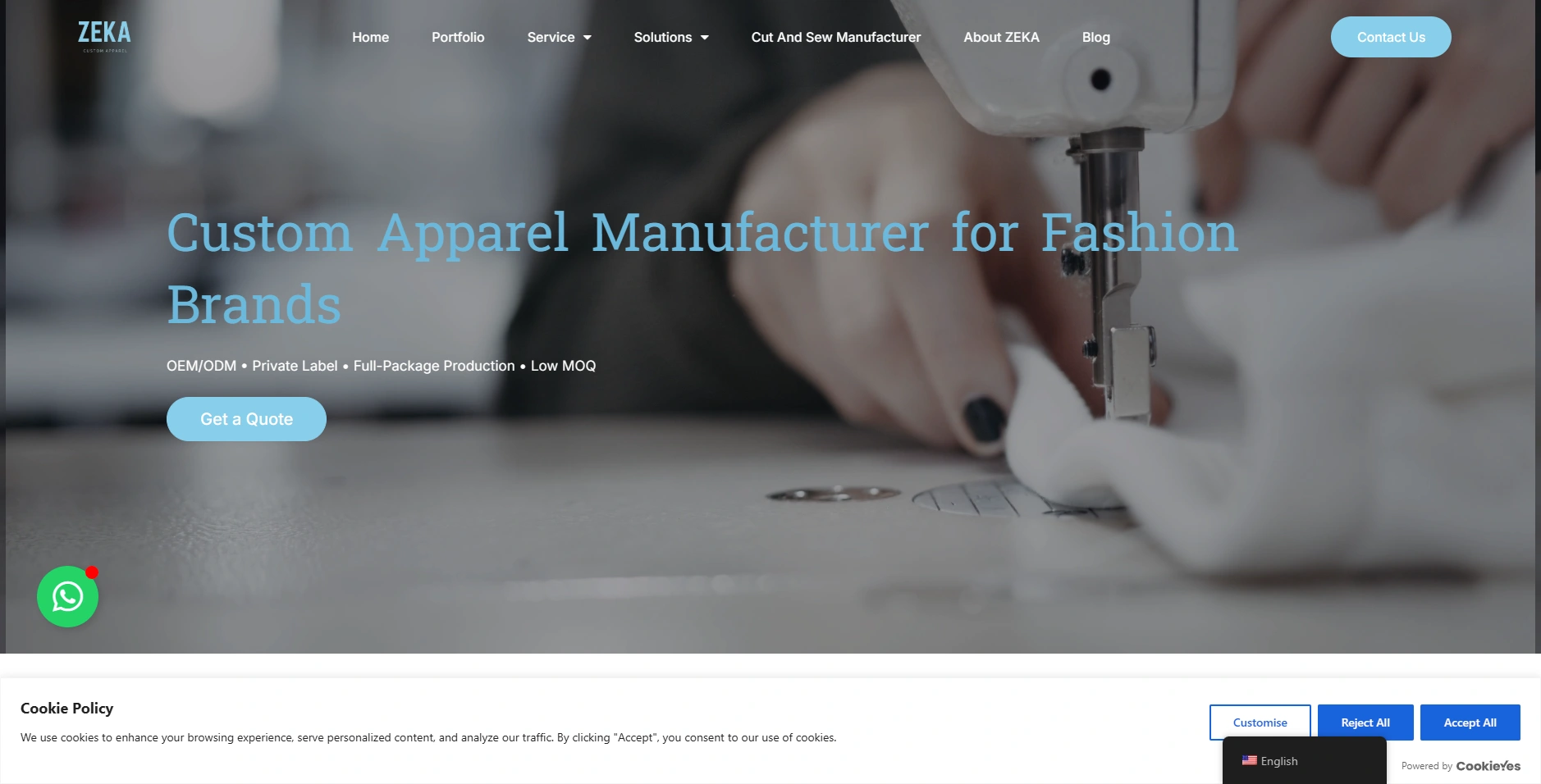
ZEKA Apparel positions itself as a bridge for new brands moving from concept to their first physical batch, with a stated minimum of 50 pieces per design and the freedom to mix sizes and colors within that quantity rather than requiring 50 units of a single colorway. That flexibility matters, since it means a founder can test two or three colorways in the same order instead of committing to one.
The company also advertises a fast 7-day sample turnaround, followed by a 30-day production window after sample approval, and offers fabric sourcing and tech pack consultation as part of a broader service aimed at first-time founders.
Best for: Founders who want to test multiple colorways or a small size range in their first order without each variation counting against a separate minimum.
Pros: A fast stated sample turnaround of 7 days, flexible mixing of sizes and colors within the 50-unit minimum, a defined 30-day bulk production window after approval, and built-in tech pack and fabric sourcing consultation for founders without a fully developed pattern yet.
Cons: 50 pieces is still a meaningful up-front commitment for someone testing an unproven design. As with every factory here, confirm stated turnaround times against current capacity before planning a launch date around them.
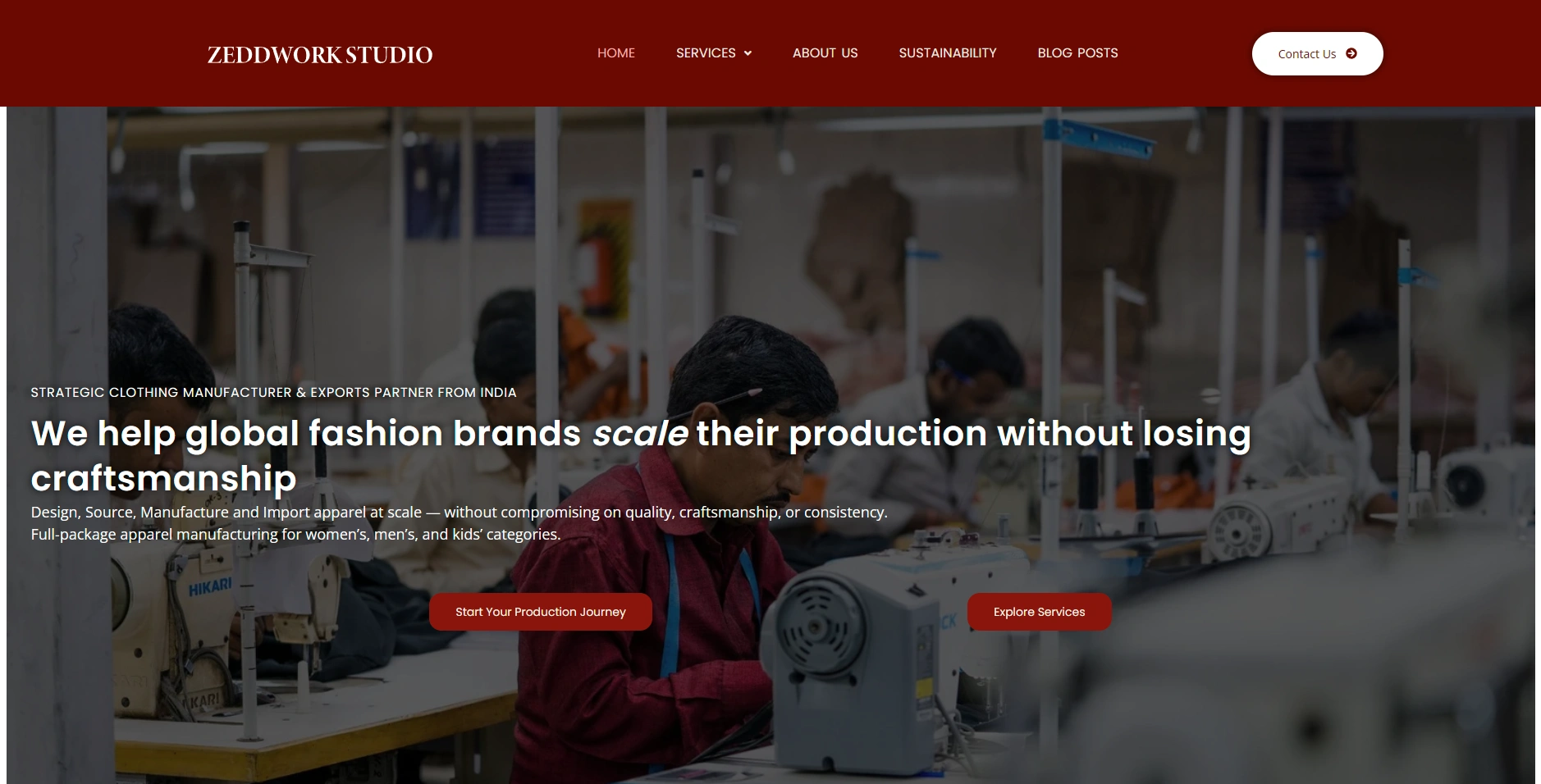
7. Zeddwork Studio
Zeddwork Studio frames its offering around helping brands start small and scale over time, with minimums beginning around 50 units per style and a heavier emphasis on sustainability than most other options on this list.
The company says it works exclusively with compliant factories that offer fair wages and safe working conditions, and it offers in-house design support to turn sketches, mood boards, or rough concepts into a factory-ready tech pack, useful for founders who haven’t formalized their designs yet.
Best for: Indie labels, boutique DTC brands, and eco-conscious startups that want sustainability and ethical sourcing built into the manufacturing relationship rather than treated as an add-on request.
Pros: In-house design support for founders without a finished tech pack, an explicit compliance and fair-wage standard for its factory network, swatch approval built into the process before sampling, and a stated ability to scale production as the brand grows.
Cons: The 50-unit minimum puts it a step above some of the 20 to 25 piece options on this list, so it suits a brand that already has some validation rather than one testing a completely unproven concept.
8. Appareify
Appareify operates out of China and has built an established reputation in the small-batch cut-and-sew space, offering low minimum orders alongside an existing catalog of more than 100 styles that founders can customize rather than building entirely from scratch.
That library covers cut-and-sew swimwear, loungewear, dresses, and more, and the company emphasizes unique fabrications and production methods that let it take on complex design ideas beyond basic tee and hoodie programs.
Best for: Brands that want to start from an existing style library to save on development time and cost, rather than developing a completely original pattern.
Pros: A large existing style catalog to customize from, experience with more complex fabrications beyond basic knitwear, and a broader network of manufacturer relationships, including Sew It In London and Billoomi Fashion, if your specific category is a better fit elsewhere.
Cons: MOQ is not standardized across every category in their catalog, so you’ll need a specific quote for your exact style rather than relying on a single published minimum.
Estimated Manufacturing Costs by Order Size
Founders asking whether they can afford to manufacture 10 hoodies or 25 T-shirts need actual numbers, not vague reassurance. Pricing per piece drops steadily as order volume increases, because setup and cutting costs get divided across more units, and that curve is steepest in the first 100 pieces.
Product | 1 to 10 units | 25 to 50 units | 100+ units |
Basic T-shirt | $14 to $20 | $6 to $9 | $4 to $6 |
Hoodie | $28 to $40 | $16 to $22 | $10 to $14 |
Sweatshirt | $24 to $34 | $14 to $19 | $9 to $12 |
Joggers | $22 to $30 | $13 to $18 | $8 to $11 |
Polo shirt | $18 to $26 | $10 to $14 | $6 to $9 |
The best way to understand these estimated costs is, the lesser the quantity the higher will be the price.
Are you planning to launch hoodies next?
👉 Here’s the top 10 custom hoodies manufacturers to look out for.
Complete Clothing Production Timeline
Most founders underestimate how long the path from idea to shipped product actually takes, especially when working with a no MOQ clothing manufacturer for the first time. Building in realistic time for revisions avoids missed launch dates and rushed decisions on quality.
- Week 1: Tech pack creation and design finalization
- Week 2: Pattern making and fabric sourcing
- Week 3: Sample production
- Week 4: Sample review and revisions
- Weeks 5 to 7: Production run
- Week 8: Quality check and shipping
Step-by-Step Guide to Ordering Without a MOQ
Working with a no MOQ or low MOQ clothing manufacturer follows a fairly consistent process regardless of which supplier you choose. Skipping steps, especially the sample stage, is where most first orders go wrong.
- Finalize your design and reference images.
- Prepare a tech pack with measurements, materials, and construction notes.
- Request a sample or development order.
- Review fit, fabric weight, and stitching quality.
- Confirm final materials and any color adjustments.
- Approve the production run.
- Arrange shipping and inspect the finished goods on arrival.
Common Mistakes to Avoid
When working with low production volumes, there is very little room for error. Even small mistakes can lead to costly delays, wasted inventory, and higher per-unit costs, making careful planning essential before production begins.
- Order too many color variants before validating customer demand.
- Skip the sampling stage to save time and costs.
- Ignore shrinkage testing for natural fiber fabrics.
- Choose a manufacturer based only on the lowest price.
- Submit incomplete size grading for production.
- Use inadequate packaging that risks product damage.
- Start production without a finalized tech pack.
- Overlook pre-production planning and quality checks.
Which Manufacturer Is Right for You?
Choosing the right no-MOQ clothing manufacturer helps you validate products, control costs, and scale with confidence. Start with a production partner that matches your current order size and quality requirements, then expand as demand grows.
If you’re looking for reliable no-MOQ or low-MOQ apparel manufacturing, Innovate Apparel offers flexible production, expert guidance, and end-to-end support to help you bring your designs to market.
Contact Innovate Apparel today to discuss your project and get started with small-batch manufacturing.