Small batch clothing manufacturing means producing garments in limited runs, typically between 25 and 300 units per style, instead of committing to large orders.
Wonder why this model exists in 2026?
It’s for small business owners and startup founders. It fills the gap needed to test a design, validate demand, and refine fit before trying a large production run.
This guide is built for founders who are choosing a manufacturing partner for the first time, or brands that want to experiment with a small batch.
The manufacturers featured here were selected based on published MOQ information, services, and how well they match different stages of brand growth.
Best Small Batch Clothing Manufacturers - Quick Feature Comparison Table
Before reading full profiles of the small batch clothing manufacturers, use this table to narrow down options.
Manufacturer | MOQ | Specialty | Private Label |
Innovate Apparel | Flexible MOQ | Full range of apparel | Yes |
Argyle Haus | 50 units | Streetwear, cut and sew knits | Yes |
Good Clothing Company | 48 units | Sustainable basics | Yes |
Indie Source | 50 units | Full service, design to delivery | Yes |
Portland Garment Factory | 24 units | Sustainable small batch | Yes |
Lefty Production Co. | Low | Contemporary basics | Limited |
Clothier Design Source | 100 units | Denim, outerwear | Yes |
Stitch Texas | 72 units | T-shirts, athleisure | Limited |
Royal Apparel | 48-100 units | Organic basics, wholesale blanks | Yes |
SFP | 30 units | Luxury, tailored garments | Yes |
Before we dive deeper into the specifics of each batch clothing manufacturer in USA, we should get a basic understanding of small batch clothing manufacturing.
What Is Small Batch Clothing Manufacturing?
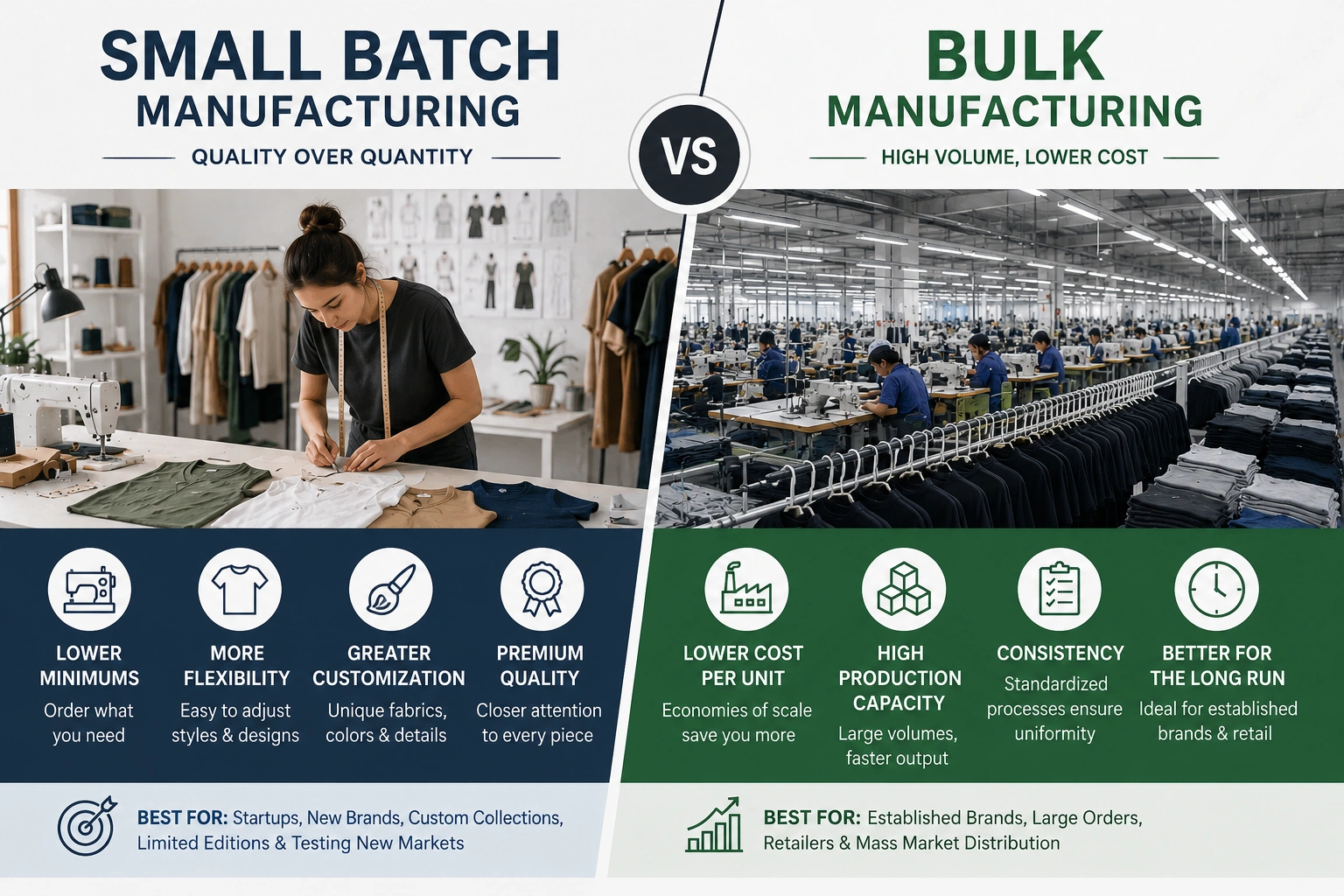
Small Batch vs Bulk Manufacturing
Factor | Small Batch | Bulk |
MOQ | 24-300 units | 1,000+ units |
Cost per unit | Higher | Lower |
Lead time | Shorter | Longer |
Flexibility | High | Low |
Inventory risk | Lower | Higher |
Scalability | Limited per run | Efficient at volume |
Most founders start with small batch production, and in case the apparel journey doesn’t go as planned, the production stops there. Hence, saving the money they would’ve spent on bulk manufacturing.
Let’s take a look at why you should consider small batch clothing manufacturing.
Benefits of Small Batch Manufacturing
Small batch production offers several advantages that matter most in a brand’s early stages, before sales data exists to justify a larger commitment.
- Lower inventory risk. Producing fewer units per style means less capital tied up in unsold inventory if a design does not perform as expected.
- Easier product testing. Small runs let founders validate demand for a specific style or fit before scaling, using real sales data instead of guesswork.
- Better quality control. Smaller production runs typically receive closer attention from factory staff, since fewer units are moving through the line at once.
- Faster design updates. Brands can adjust fit, fabric, or construction details between production runs without the sunk cost of a large existing order.
Questions to Ask Before Hiring a Manufacturer
Now, before making it to the final cut, aka the small batch clothing manufacturers list of 2026, you should be well prepared. We have come up with an effective checklist that you could use during your first conversation with any manufacturer to avoid feeling like you were betrayed.
- What is your minimum order quantity per style per color?
- What does your sample process cost, and how long does it take?
- What is your production timeline for an order of my size?
- Can you provide an itemized quote broken down by fabric, labor, trims, and packaging?
- Do you have experience working with startups and first-time brands?
- What are your payment terms and deposit structure?
- What happens if there is a quality issue with finished goods?
- Do you source fabric, or do I need to supply it?
- Can I visit the factory or request a video walkthrough?
The List of Best Small Batch Clothing Manufacturers 2026
We can collectively agree that choosing the right small batch clothing manufacturer is an important step in building a successful apparel brand. A reliable manufacturing partner can help you produce high-quality garments in smaller quantities.
You may also look at: Top 10 Custom Hoodie Manufacturers in USA
This list features some of the best small batch clothing manufacturers in 2026 based on their production capabilities and experience working with fashion brands. These small batch clothing manufacturers offer solutions to support a wide range of business needs.
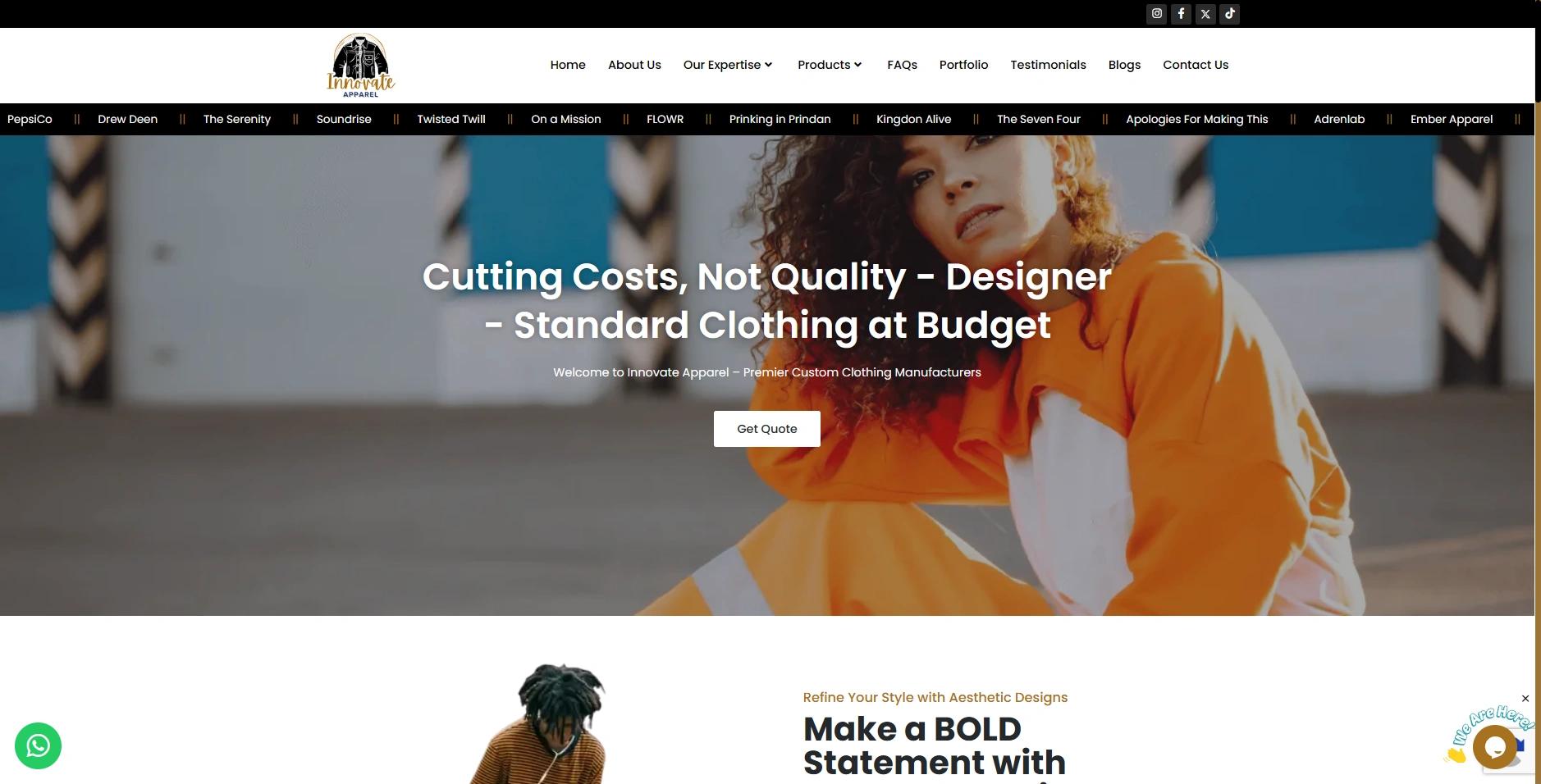
1. Innovate Apparel
Innovate Apparel is a custom OEM clothing manufacturer built around full private label production, covering design, cut and sew, printing, embroidery, and packaging under one roof.
The company works across a wide product range, including hoodies, t-shirts, leggings, activewear, jackets, denim, underwear, and intimates, which makes it one of the more versatile options for brands that plan to expand into multiple categories rather than staying locked into a single product type.
It has clientele all across the globe, giving founders the option to discuss domestic versus overseas production depending on budget and timeline.
Best for: Startups and growing brands that want a single manufacturing partner to entrust their order to.
MOQ: Advertised as low and flexible, adjusted by product complexity and fabric choice. Innovate Apparel does not publish a fixed unit minimum across all categories, so confirm the exact number for your specific garment during your quote request.
Services: Private label manufacturing, cut and sew production, custom printing, embroidery, fashion design consultation, fabric sourcing, and packaging.
Pros: Broad category coverage under one vendor relationship, published per-unit pricing ranges on several product pages (t-shirts from $8 to $18 per piece, hoodies from $15 to $25 per piece), flexible MOQ policy aimed specifically at new brands, and full support from design through shipping.
2. Argyle Haus
Argyle Haus is a manufacturer based in the LA Fashion District that mostly works with streetwear and contemporary cut and sew brands. They’ve been around long enough to build a name with founders doing their first or second production run, mainly because they actually keep people updated instead of going quiet for weeks at a time.
A lot of new brands get burned by factories that disappear mid production, so the fact that Argyle Haus assigns someone to check in with you weekly is a bigger deal than it sounds. For someone learning the ropes of manufacturing for the first time, having a person to call who actually answers is worth a lot.
Best for: Streetwear founders and DTC brands running their first cut and sew production.
MOQ: 50 units per style per color.
Pros: Fast sample turnaround, usually five to seven business days, plus a dedicated production contact for weekly updates.
Cons: Slots fill up fast in Q3 and Q4, so book early if you’re planning a peak season launch.
3. Euphoric Colors
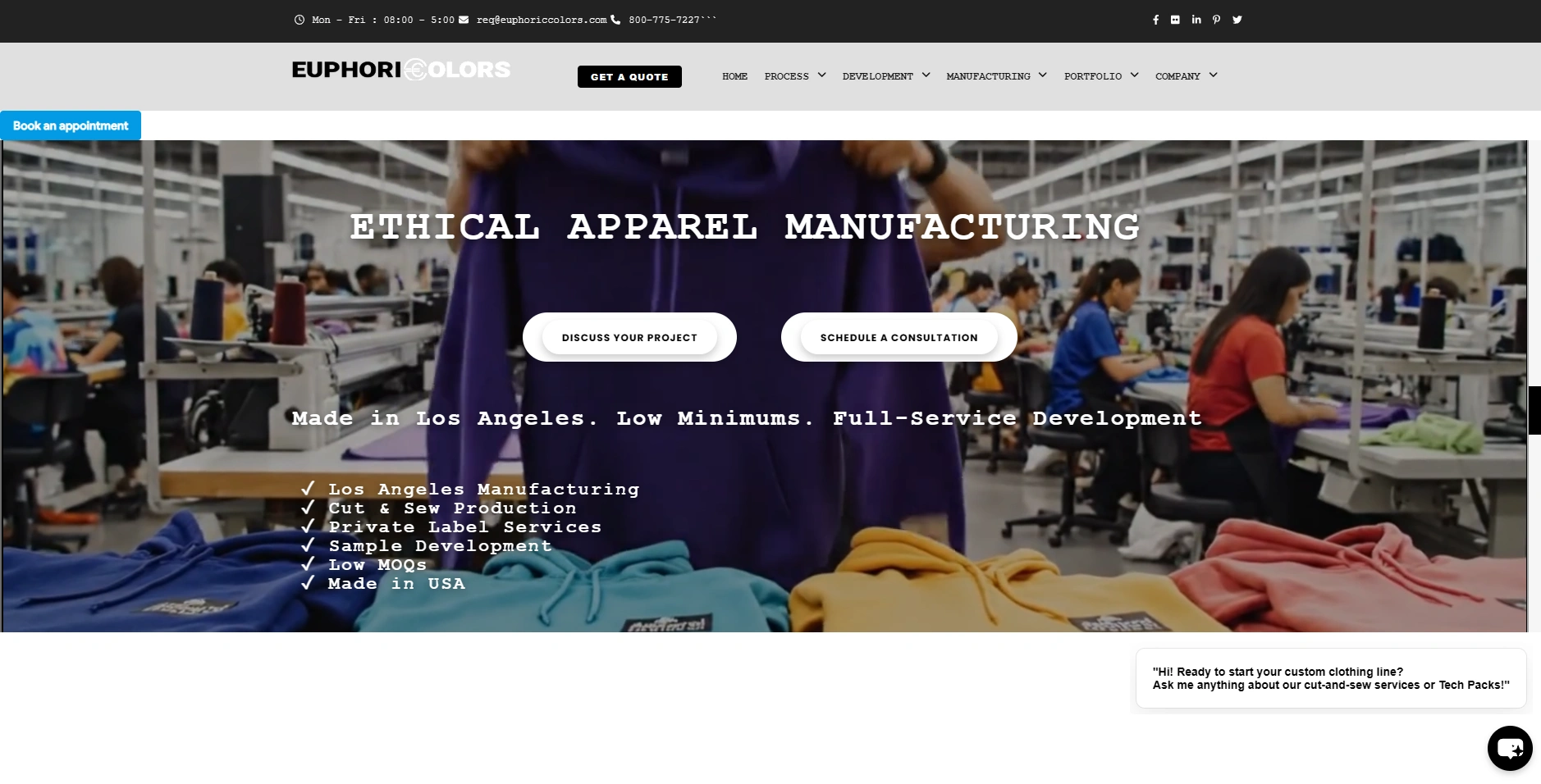
Euphoric Colors is a vertically integrated sewing factory in Los Angeles that has been running for close to three decades. They specialize in sustainable cut and sew work, including upcycled deadstock patterning, and source materials with GOTS and OEKO-TEX certifications.
Since everything happens under one roof, from cutting to sewing to finishing, there’s less handoff between vendors and fewer places for quality to slip. For a brand that wants to say its garments are actually sustainably made rather than just labeled that way, this kind of setup gives you something to point to.
Best for: Sustainable fashion brands and basics first startups.
MOQ: 10 units per style at the studio level, 50 to 300 plus at the factory level depending on scope.
Pros: Nearly three decades of in-house sustainable manufacturing experience, with deadstock and certified organic material sourcing built into the process.
Cons: The jump from studio scale to factory scale pricing can be a big step, so it helps to clarify which tier your order falls into before committing.
4. Fimy Apparel
Fimy Apparel is based in the NYC Garment District and works with contemporary womenswear brands that need pattern making, sample creation, fabric sourcing, and cut and sew production handled together. They’re known for staying in close contact with clients through the whole process, which matters a lot when you don’t know what questions to ask yet.
New founders usually don’t come in with a finished tech pack or a clear sense of what a production run actually involves. Fimy is built to walk people through that, offering guidance at each stage instead of expecting you to already know the process.
Best for: Complete beginners who need guidance at every stage, including sample development and sourcing.
MOQ: Around 50 units per style, with flexibility depending on garment complexity.
Pros: Precise pattern making and cut and sew work combined with a communicative, hands on process for people new to manufacturing.
Cons: Being NYC Garment District based, per unit costs and sampling fees can run higher than manufacturers in lower cost regions.
5. Portland Garment Factory
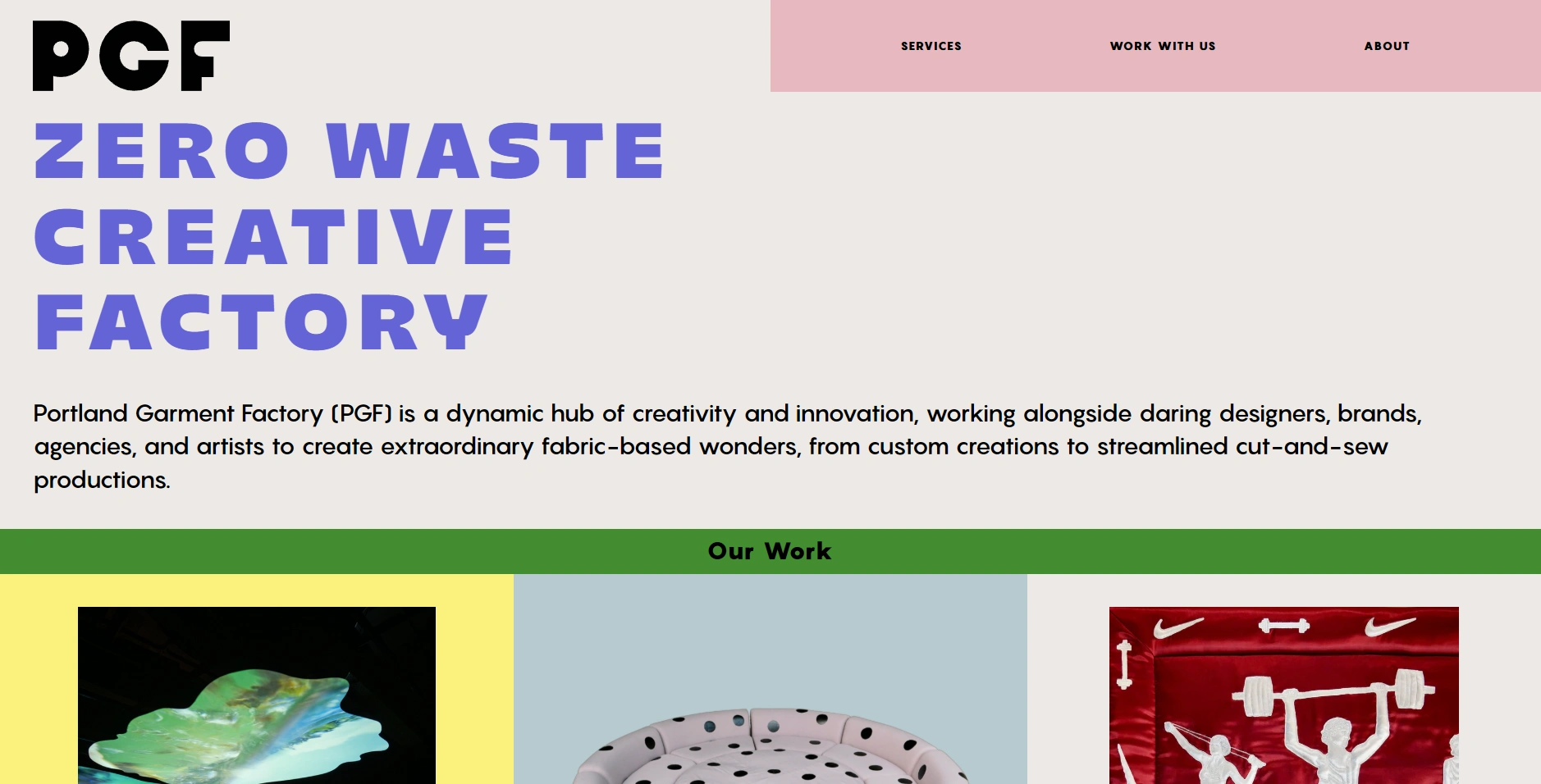
Portland Garment Factory has one of the lowest published MOQs in domestic small batch manufacturing. Everything happens in house, pattern making, grading, cutting, sewing, all under one roof.
This one’s built specifically for emerging brands rather than being a big factory that tolerates small orders as a favor. If you’re trying to keep your first run small and truly made in the USA, this is one of the more realistic options out there.
Best for: Brands seeking genuine made in USA small batch production at the lowest domestic minimum available.
MOQ: 24 units per style per color.
Pros: A real small batch operation built for emerging brands, not a large factory squeezing in small orders.
Cons: Per unit costs run higher at these low minimums since there’s less economy of scale.
6. Lefty Production Co.
Lefty Production Co. is an LA manufacturer built around transparency, focused on small batch cut and sew for contemporary basics and lifestyle lines. They lean into a hands on process where you’re actually talking to people, not chasing emails.
For brands doing a capsule drop or a limited run, this kind of setup matters more than it seems. You get someone who explains what’s happening at each stage rather than leaving you guessing.
Best for: Brands launching capsule or limited collections that want a hands on, communicative process.
MOQ: Low and flexible, quoted depending on garment type and materials.
Pros: Known for clear communication and startup friendly minimums.
Cons: Pricing is entirely quote based, so you’ll need an upfront conversation before you can budget anything.
7. Clothier Design Source
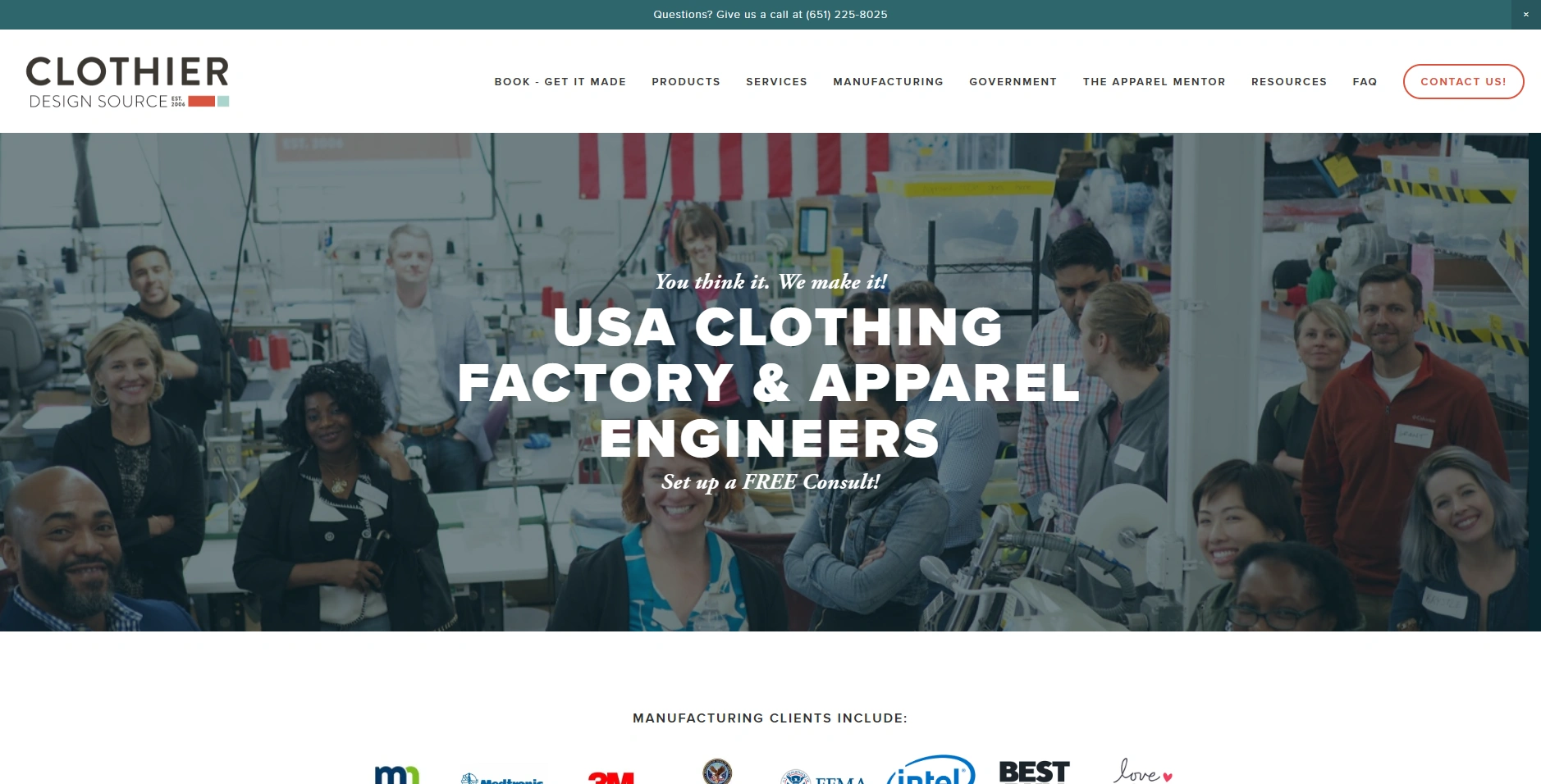
Clothier Design Source is one of the few domestic manufacturers set up for denim and outerwear at volumes a startup can actually hit. They have in house pattern making and denim wash capability, which most small factories just don’t carry.
Denim is a different beast from knitwear, it needs specialized machines and washing setups that a lot of cut and sew shops skip entirely. This one’s built specifically for brands working with heavier fabrics.
Best for: Denim brands and outerwear startups working with heavy fabrics that need specialized equipment.
MOQ: 100 units, sometimes negotiable down to 75 for simpler styles.
Pros: Access to the specialized machinery denim production needs, something most small batch factories don’t have.
Cons: The MOQ is firm and sits higher than knit focused competitors on this list.
8. Stitch Texas
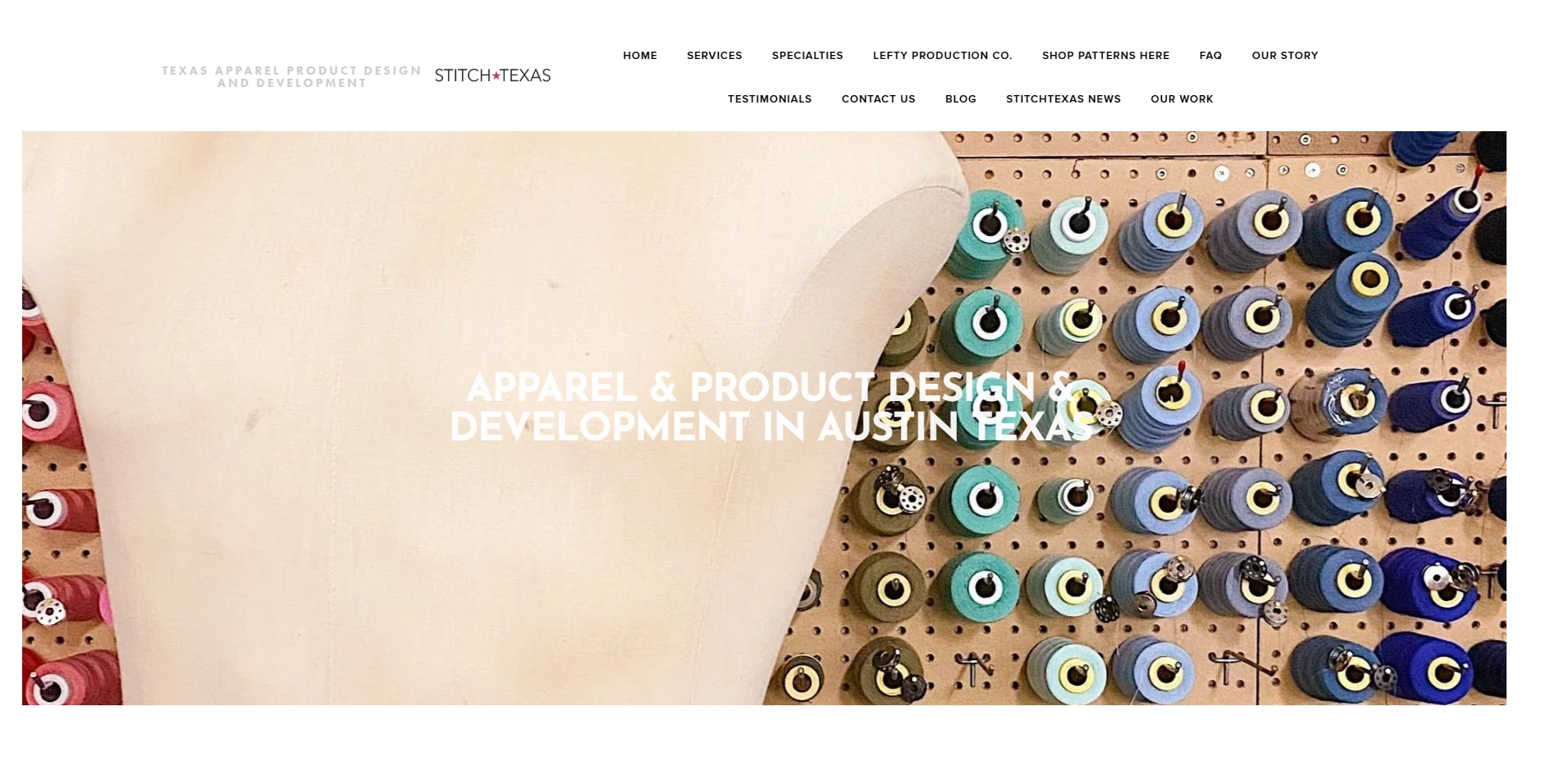
Stitch Texas is based in Austin and runs a dedicated small batch division for t-shirt and athleisure brands. They keep pricing competitive for domestic production without charging LA level rates.
If your line is mostly simple knit styles, this is a solid pick for turnaround speed. It’s not the place for anything with a lot of construction detail, but for straightforward basics it moves fast.
Best for: T-shirt brands and athleisure startups wanting domestic production without LA level pricing.
MOQ: 72 units per style per color.
Pros: Fast turnaround, often 2 to 3 weeks for straightforward cuts.
Cons: Less flexible with complex construction, embroidery, or specialty detailing.
9. Royal Apparel
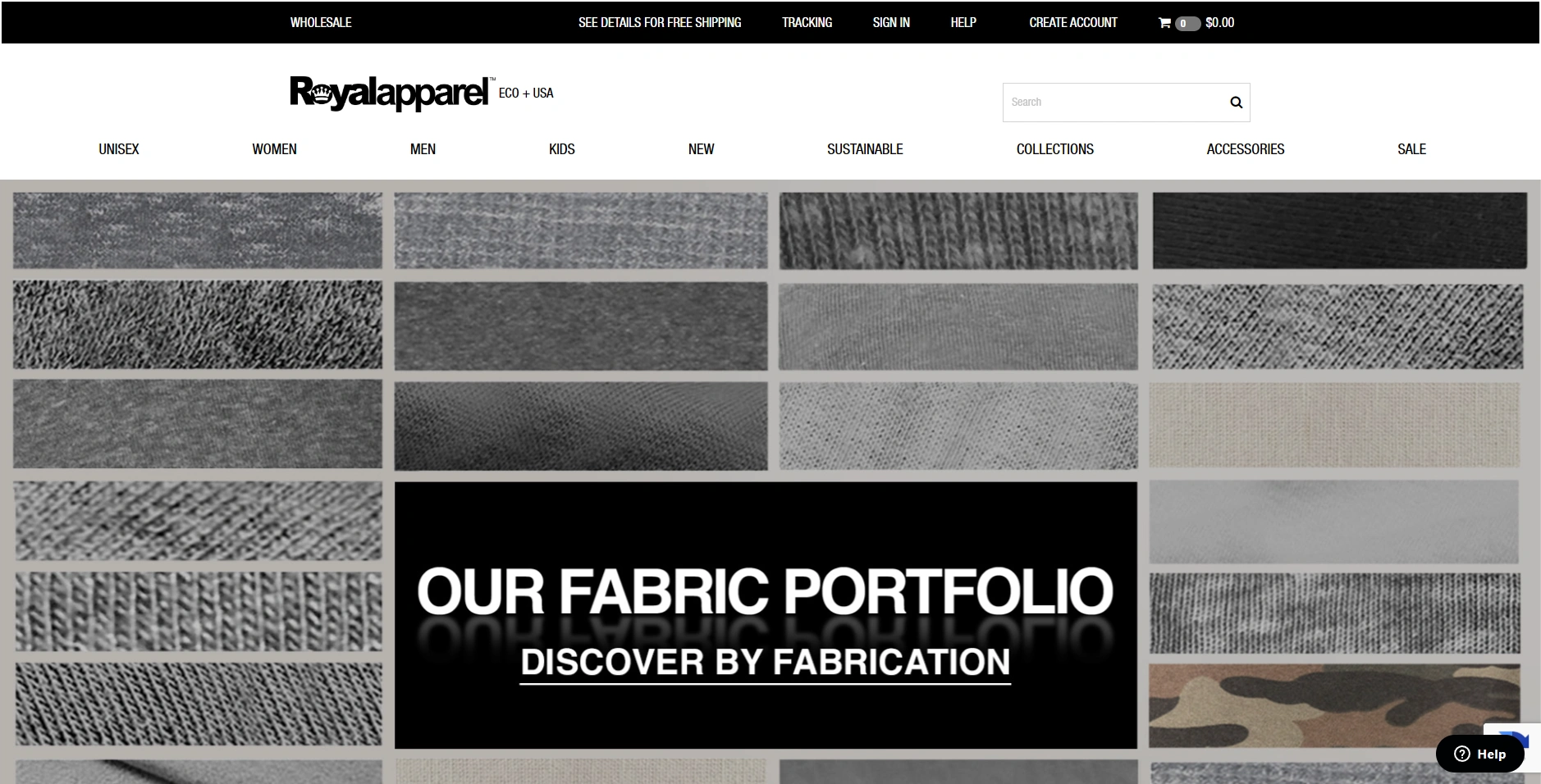
Royal Apparel is an East Coast manufacturer that combines organic cotton sourcing with made in USA wholesale blanks and custom private label production. They operate as both a supplier and a manufacturer, so you can pull from existing blanks or go fully custom.
This flexibility means a brand can start with blanks early on and move into full custom production later without switching vendors. It’s a useful setup for brands that expect to grow and change their approach over time.
Best for: Brands focused on sustainability that want made in USA basics with organic material options.
MOQ: 48 to 100 units depending on style.
Pros: Works as both a wholesale supplier and custom manufacturer, giving flexibility across different brand stages.
Cons: MOQs can run higher than boutique cut and sew studios for fully custom styles.
10. Panah Project
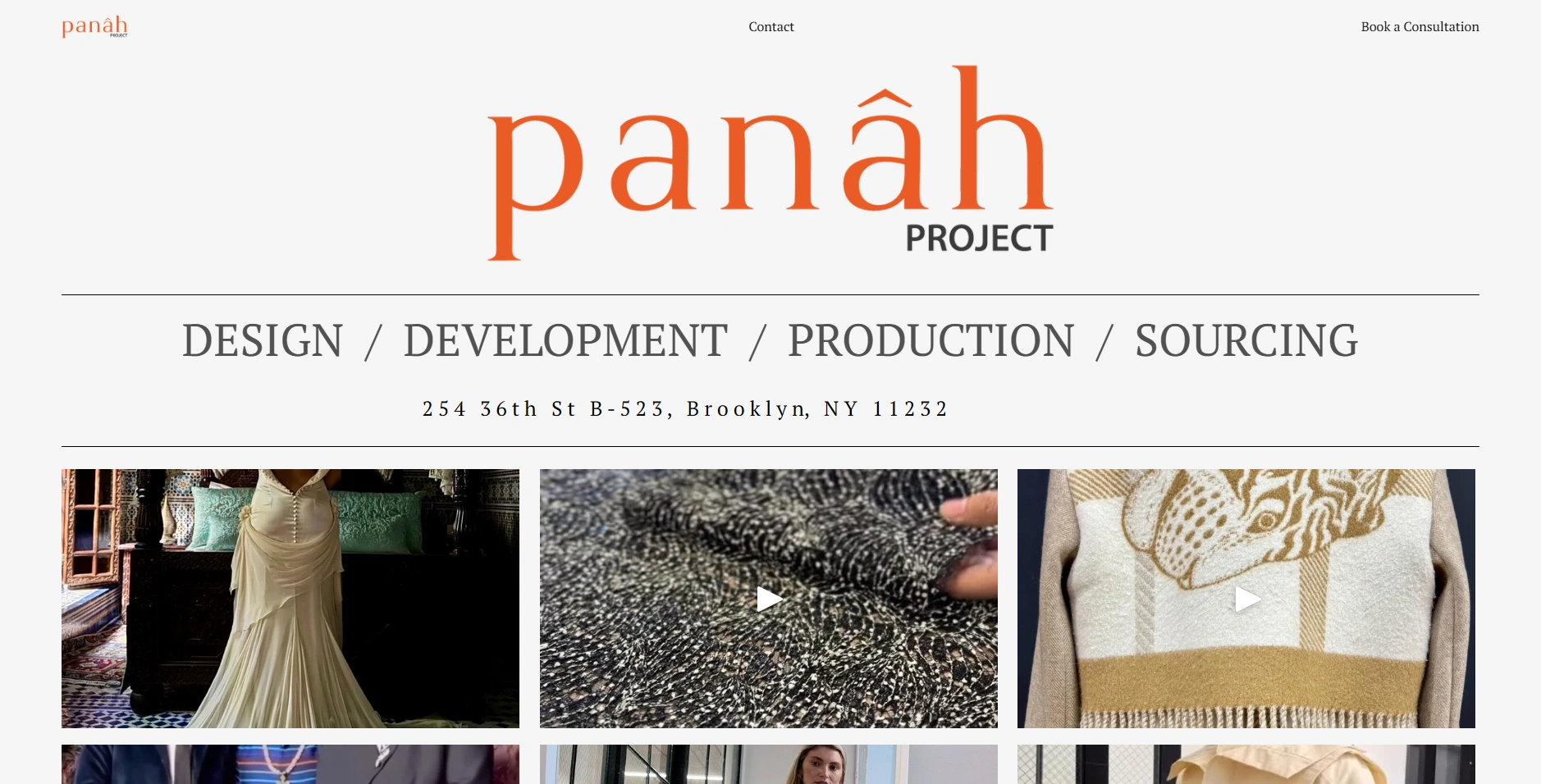
Panah Project runs out of a factory in Brooklyn and focuses on emerging and sustainable brands. With 30 years of combined experience behind the team, they handle design, pattern making, draping, sample development, grading, fitting, and small batch production for seasonal collections.
Because they work closely with each brand on fit and construction, this is a good option for founders who want more than just a factory that executes a tech pack. They help shape the garment itself, which matters for anyone building toward a premium or runway level product.
Best for: Luxury and premium womenswear startups that want a hands on development process close to the New York fashion scene.
MOQ: Low MOQ production, with exact minimums quoted per project.
Pros: Decades of combined technical experience plus full sample development and design consultation under one roof.
Cons: Pricing is quote based and depends heavily on construction complexity, so it takes an upfront conversation to nail down a budget.
Common Mistakes to Avoid When Choosing a Small Batch Clothing Manufacturer
Choosing the right small batch clothing manufacturer involves careful evaluation before placing your first order. Avoid these common mistakes to reduce production issues and ensure a smoother manufacturing process.
- Choice based only on low pricing. A lower quote may reflect lower-quality fabrics, weaker stitching, or limited quality control. For example, saving a few dollars per hoodie may result in uneven seams or inconsistent sizing that leads to costly returns.
- Skipping the sample. Always review a sample before approving production. For example, a T-shirt sample may reveal that the fabric is thinner than expected, the neckline stretches easily, or the sizing runs smaller than your specifications.
- An inexperienced clothing manufacturer for your apparel. Not every factory specializes in every type of apparel. For example, a manufacturer known for basic cotton T-shirts may not have the expertise or equipment needed to produce technical activewear with moisture-wicking fabrics and flatlock seams.
- Lack of documentation during quotation and production. Document key terms such as MOQ, pricing, delivery schedule, quality standards, and revision policies before production begins. For example, if the agreed delivery date or fabric specification is not written into the contract, resolving disputes becomes much more difficult.
Find the Right Small Batch Clothing Manufacturer in 2026
Selecting the right small batch clothing manufacturer is an important decision that directly affects your product quality, production timeline, and overall customer experience. The best manufacturing partner is one that aligns with your apparel category, order volume, quality expectations, and long-term business goals while providing clear communication throughout the production process.
As you evaluate your options, request product samples, review previous work, compare minimum order quantities, and confirm pricing, lead times, and production terms before placing an order. Taking these steps will help you choose a manufacturer with confidence and build a reliable partnership that supports your brand as it grows.
Request a free consultation with Innovate Apparel and discover how our small batch manufacturing can support your brand’s growth.