
Denim Explained: What It’s Made Of, Types, Cost & How to Wash It
If you’ve ever stood in a store holding jeans and wondered about denim vs cotton: what’s the difference? Many go through what you felt at that moment. Denim shows up in our closets every day, yet many of us still don’t know what denim is, what material is denim made of, or how to care for it without ruining the color or fit.
Innovate Apparel has prepared this informative blog to give clear answers to your denim-related queries, especially around Denim vs Cotton: What’s the Difference?. We’ll share how denim feels at each stage from the beginning to manufacture products, so you can make smart choices and care better.
What Is Denim? What Material Is Denim Made Of
Denim is a woven fabric, most often made from cotton. So yes, denim is cotton fabric in the sense that the fiber is usually cotton, but the way it’s woven (twill) makes denim behave differently from a plain cotton cloth. That’s the heart of denim vs cotton: what’s the difference? One is a fabric style, the other is a fiber.
Classic denim uses indigo-dyed yarns in the warp (the long threads) and undyed or light yarns in the weft (the cross threads). This creates the famous blue outside and lighter inside. When you rub the surface, the color slowly fades on the high points, which is why jeans gain character with wear. I love that arc: new denim feels firm and a bit crunchy; months later, it relaxes and molds to your body.
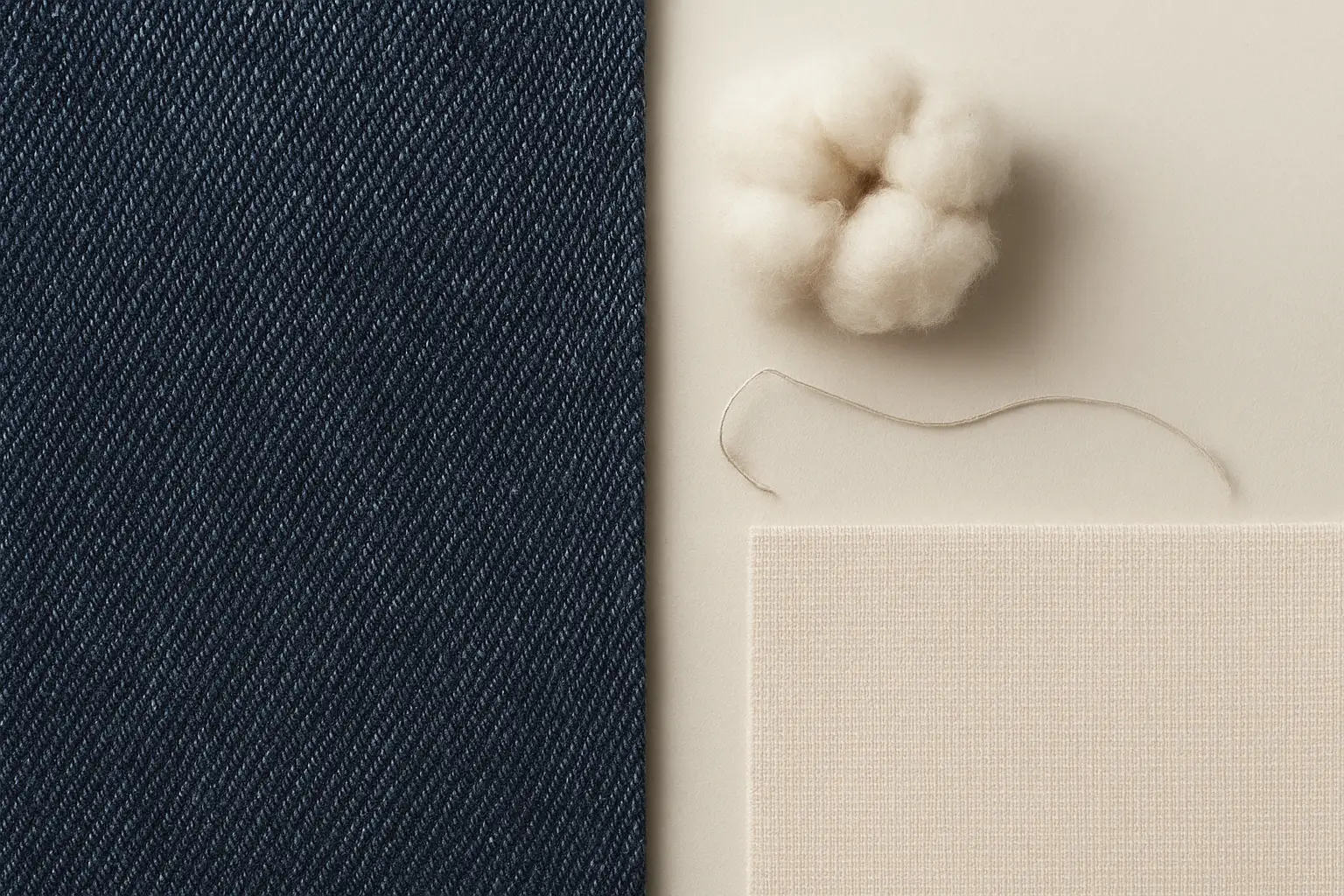
Is denim 100% cotton? It can be. Many traditional denims are pure cotton. Modern options often add 1 – 3% elastane (spandex) for stretch and comfort. Is denim cotton fabric? Mostly yes with cotton as the base, but mills also blend with polyester or hemp for strength or a lighter footprint. That’s why two similar jeans can feel very different in hand.
Weave 101: Twill Basics
Twill weave makes diagonal lines across the fabric. That structure resists tearing better than plain weave cotton. It also drapes differently, which is why denim hugs and holds shape.
Indigo & Core Dye: Why It Fades
Indigo sits on the yarn surface instead of soaking through the core. Each wash removes a tiny bit, revealing highlights and lowlights. That surface dye is the secret behind “whiskers,” “honeycombs,” and the natural map of your movement.

Denim vs Cotton: What’s the Difference?
When discussing Denim vs Cotton: What’s the Difference?, think of cotton as the plant fiber, and denim as a fabric made (usually) from that fiber. A cotton T-shirt and a denim jacket can both be cotton, yet they perform differently because of the weave and the finishing. That’s why “denim vs cotton: what’s the difference” is less a “this or that” question and more “fiber vs fabric.”
Here are the key takeaways for Denim vs Cotton: What’s the Difference? What you can actually feel:
- Structure: Denim’s twill weave is sturdy and slightly rigid at first. Plain cotton (like poplin or jersey) feels soft right away but isn’t as tough.
- Weight: Denim ranges widely – light (6 to 9 oz), mid (10 to 12 oz), heavy (13 to 16+ oz). Plain cotton fabrics are usually lighter.
- Fade & Patina: Denim fades with beauty; plain cotton fades flatter and more evenly.
- Stretch: Many denims add elastane for comfort. Plain cotton knits stretch by construction, not by fiber.
When anyone breaks in raw denim, it starts stiff, almost like cardboard. A month in, the knees and hips relax. After a season, it’s back in a way a regular cotton chino never becomes.
Fiber vs Fabric: Clear Takeaway
- Cotton = fiber.
- Denim = twill fabric usually made from cotton.
Same ingredient, different recipe, different result.
And that’s really the essence of Denim vs Cotton: What’s the Difference?
Types of Denim
Understanding types of denim helps you choose what suits your lifestyle and climate and further clarifies Denim vs Cotton: What’s the Difference? in real-world use. Here are the common ones you’ll encounter and how they feel in hand.
- Raw (Unwashed) Denim: Dark, stiff, high contrast fades. Feels crisp and almost squeaky at first. Great if you love personalized wear patterns.
- selvage Denim: Woven on narrow looms with a clean “self edge.” Often denser and smoother. Roll the cuff and you’ll see the tidy edge line.
- Sanforized Denim: Pre-shrunk at the mill to reduce surprise shrinkage. Feels more predictable from day one.
- Stretch Denim: Cotton with a small % of elastane. Feels forgiving, moves with you, ideal for long days at a desk or on the go.
- Slub/Ring-Spun Denim: Yarn with thickness variation. Feels slightly textured; fades with lively highs and lows.
- Colored/Black Denim: Dyed with sulfur or reactive dyes. Feels smooth, fades more subtly than indigo.
- Blended Denim: Cotton mixed with polyester, lyocell, or hemp for strength or softness. It can feel silkier or lighter, with a different drape.
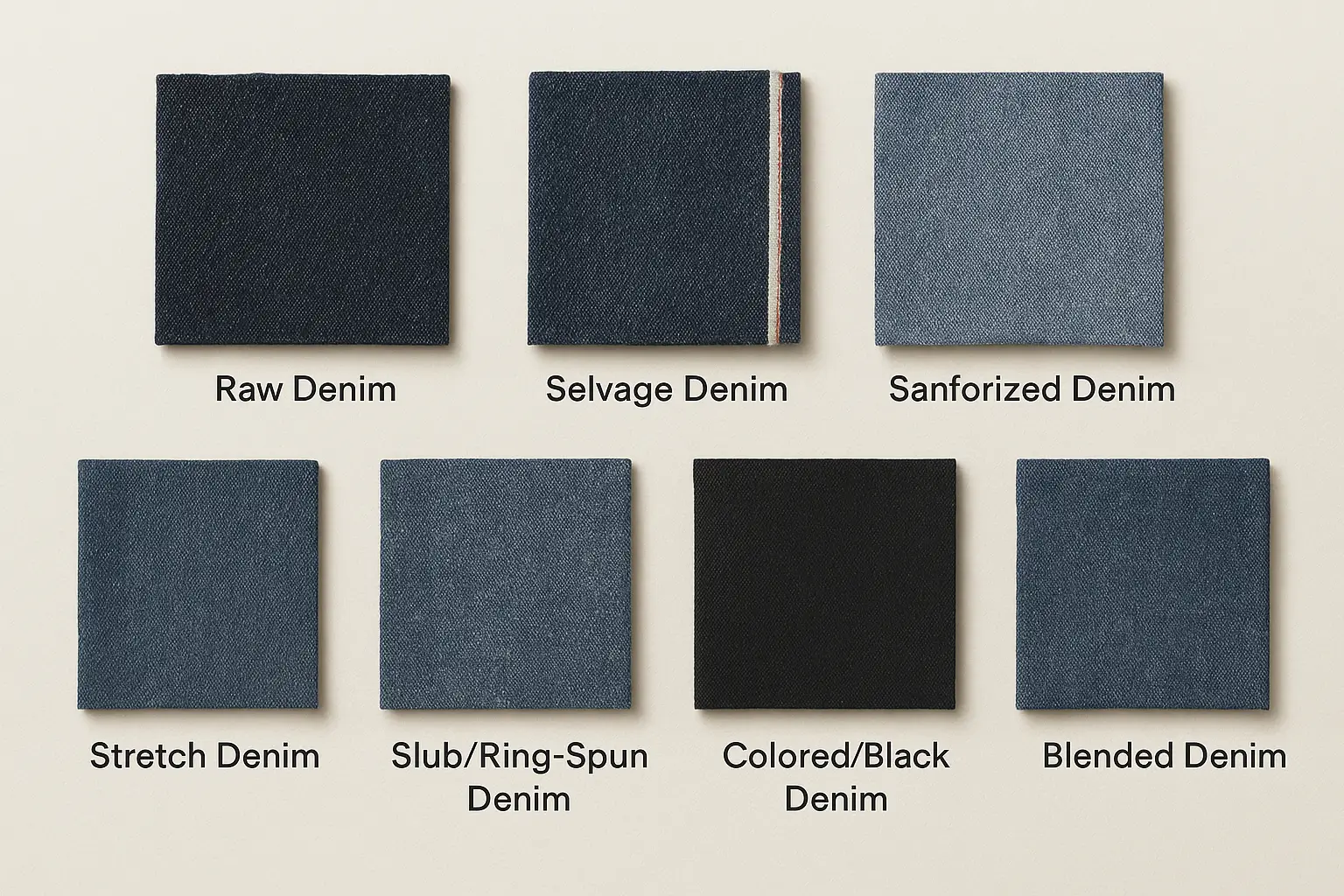
If you want sharp creases and high-contrast fades, choose raw or selvage. If you want comfort on day one, stretch denim is your friend. If you live hot, a light 9 to 10 oz denim feels airy; in winter, 14 to 16 oz feels sturdy and warm. In all cases, Innovate Apparel is well known for its custom denim jeans.
What Is Poor Quality Denim?
Fabric that feels papery thin yet oddly plasticky, shows early pilling, and loses shape fast. The hand feels flat, with little “spring.” Stitching may wave or tunnel. If it looks tired after a week, skip it.
How Much Does Denim Material Cost?
When exploring fabric value, especially around Denim vs Cotton: What’s the Difference?, cost depends on weight, dye, mill, and whether it’s selvage or stretch. Budget denim for crafts can be inexpensive per yard. Mid-range, mill-washed denim costs more but saves you from heavy shrink. Premium selvage and specialty indigo processes sit at the top.
What affects price:
- Cotton Quality: Long-staple cotton spins smoother yarn. It feels cleaner in hand and lasts longer.
- Weight & Density: Heavier, denser weaves use more yarn and loom time.
- Dyeing: Rope-dye indigo (multiple dips) costs more than simple piece dye.
- Finishing: Sanforizing, mercerizing, or coating adds steps and cost.
- Sustainability: Organic cotton, recycled water, and certifications raise costs but often improve feel and ethics.
A bargain denim feels thin and scratchy, and premium denim feels like a firm but smooth sheet you can trust. Price doesn’t guarantee joy, but with denim, you often feel where the money went: deeper color, tighter weave, and neater edges.
Expensive Denims are usually made of long-staple cotton, rope-dyed indigo, tighter weaves, sometimes selvage edges. The result is a dense yet breathable fabric that softens without going limp.
How to Wash and Dry Denim
Proper care matters just as much as understanding Denim vs Cotton: What’s the Difference?, and how to wash and dry denim is a common worry. Good news: simple steps go a long way and keep the color you love.
First wash:
- Turn inside out.
- Cold water, gentle cycle or a short soak.
- Mild liquid detergent—no bleach, no fabric softener.
Everyday routine:
- Wash less often. Spot clean small marks with a damp cloth and a drop of soap.
- Air out your jeans between wears. Hanging them overnight helps odors vanish.
- For stretch denim, wash a bit more often to bring shape back.
Drying:
- Air-dry flat or hang from the waist. Smooth the seams with your hands.
- Avoid high heat. Tumble low only if needed, then remove slightly damp to finish air-dry.
Stains & smells:
- Mud: let it dry, brush off, then wash.
- Oil: sprinkle a little cornstarch, let it sit, brush off, then wash.
- Odor: a short cold soak with a splash of white vinegar, then rinse well.
Air-dried denim feels firmer at first, then it loosens with body heat. Fresh from a hot dryer, denim can feel limp and over-soft, and color loss is faster. Air keeps the character alive.
FAQs You Actually Ask
Is denim 100% cotton?
How long does 100% denim last?
Is all denim real denim?
What’s the difference between cotton and denim fabric?
Is denim the strongest cotton fabric?
What about “imitation denim”?
Quick Guide: How to Tell Good Denim From the Rest
- Hand Feel: Should feel dense yet breathable, not papery or plastic.
- Recovery: Stretch denim should snap back after a bend, not bag out right away.
- Stitching: Even lines, clean bar-tacks at stress points.
- Edge & Weave: Flip the cuff – tight weave, tidy edge (selvage if present).
- Color Depth: Rich indigo that looks layered, not flat.
A strong pair makes a soft rustle when you move; cheap fabric often sounds thin and scratchy. Trust your hands and ears.
Closing Thoughts on Denim vs Cotton: What’s the Difference?
- Fiber vs Fabric: Cotton is the fiber; denim is a twill fabric usually made from cotton.
- Feel: Denim starts firm and molds to you; plain cotton starts soft but doesn’t develop the same patina.
- Use: Denim shines in jeans and jackets; plain cotton rules tees and shirts.
- Care: Wash denim less, air-dry, and avoid heat. Plain cotton care is simpler but wears out faster.
So when somebody asks you about denim vs cotton: what’s the difference? Remember, you’re comparing a fiber to a fabric style. This information from Innovate Apparel helps you unlock smarter shopping and better care.
Now you know what is denim made of, how the twill weave sets it apart, and how to keep the color and shape you love. You also know the types of denim, where the cost comes from, and the simple steps for how to wash and dry denim. The best part is how denim grows with you. It starts a little stiff, then relaxes and tells your story with every fade line.
Who wouldn’t love a custom denim for themselves and their families? Get in touch with Innovate Apparel for quality denim or any apparel manufacturing services.