You might start with a simple request:
“I need 500 custom hoodies. How much?”
That gives a manufacturer the product category and quantity, but it leaves too many production details unanswered.
A hoodie can use different fabrics, GSMs, fits, construction methods, trims, branding techniques, and finishing requirements; each choice can change the materials, labor, and production work behind the final price.
To get a custom apparel quote quickly, give your custom apparel manufacturer a clear production brief from the start.
And you don’t need a perfect tech pack to begin.
This guide explains what to send, which details affect apparel manufacturing costs, what you should look for in a quotation, and what happens after you submit your request.
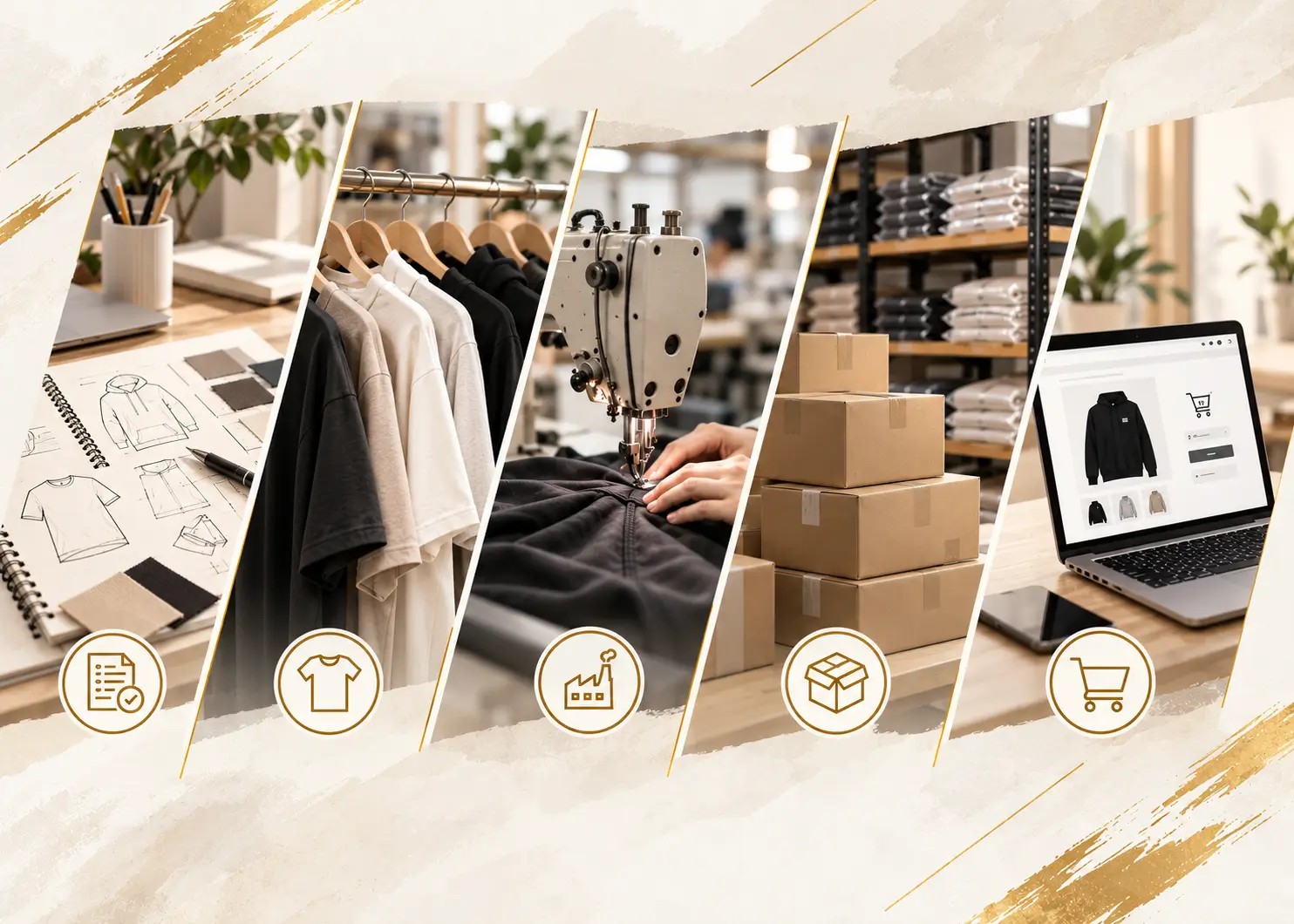
How to Get a Custom Apparel Quote Quickly
A manufacturer can work faster when your request answers the basic production questions upfront.
Start with these six areas.
Define the Garment
Start with the product itself.
Tell the manufacturer what you want to produce, such as:
- T-shirts
- Hoodies
- Sweatshirts
- Polos
- Joggers
- Jackets
- Activewear
- Uniforms
- Other apparel styles
Then add the details that define the garment.
For a hoodie, for example, you might specify:
- Pullover or zip-up
- Regular, oversized, slim, or relaxed fit
- Hood style
- Pocket style
- Cuff construction
- Hem construction
- Panel configuration
- Special finishing
A product name alone isn’t enough to establish the production requirements; two garments that share the same category can require very different materials, construction steps, and finishing work.
Send Your Design or Product Reference
Send whatever design information you already have.
Useful references include:
- Complete tech pack
- Technical drawings
- Sketches
- CAD files
- Reference photographs
- Existing garments
- Physical samples
- Measurement specifications
A complete tech pack gives the manufacturer a much clearer production reference.
But a sketch, photograph, or existing garment can still start the conversation when your product isn’t fully developed yet.
If you’re sending a reference garment, explain what you want to reproduce and what you want to change; otherwise, the manufacturer may have to make assumptions about the intended fit, construction, or finishing.
Specify the Fabric
Fabric can have a major effect on the manufacturing quote.
Provide details such as:
- Fiber composition
- Fabric type
- Knit or woven construction
- GSM
- Fabric finish
- Stretch requirement
- Color
- Custom dye requirement
For example, “100% cotton hoodie” still leaves several questions open.
What GSM do you want? What type of cotton fabric? What finish? What color? Do you need custom dyeing?
If you’ve already selected a material, send its specification or a fabric reference.
So if you haven’t chosen the fabric yet, explain how you want the finished garment to feel, perform, and look; the manufacturer can then identify the material specifications that still need to be defined.
Give the Quantity and Size Breakdown
Tell the manufacturer how many units you expect to order.
Include:
- Total units
- Number of styles
- Number of colors
- Units per color
- Size breakdown
- Number of SKUs
Quantity needs context.
Five hundred units of one hoodie in one color creates a different production requirement from 500 units divided across several styles, colors, and sizes.
Providing the expected distribution also helps the manufacturer assess applicable minimum order quantities and production requirements.
Explain Branding and Decoration
Tell the manufacturer how you want the finished garments branded.
Depending on your project, this could include:
- Neck labels
- Woven labels
- Printed labels
- Care labels
- Hangtags
- Patches
- Embroidery
- Screen printing
- Other decoration
- Individual polybags
- Retail packaging
- Custom packaging
These aren’t just visual details.
Each addition can introduce materials, setup work, production operations, or finishing requirements that affect the quotation.
Provide the Destination and Deadline
Finish your request with the logistics.
Tell the manufacturer:
- Destination country
- Destination city or port, when relevant
- Required delivery date
- Launch or sales deadline
- Special shipping requirements
The destination gives the manufacturer information needed to assess logistics, while the deadline helps establish the required production schedule.
If you have a fixed launch date, say so early.
That gives the manufacturer a better basis for discussing production timing, sampling, and shipment planning.
Custom Apparel Quote Checklist
Use this checklist before sending your request.
Information | Required? | Why it matters |
Product type | Yes | Defines the garment |
Design or reference | Yes | Communicates the intended product |
Fabric | Yes | Affects material selection and cost |
GSM | Recommended | Defines fabric weight |
Quantity | Yes | Establishes production volume |
Size breakdown | Recommended | Supports production planning |
Colors | Yes | Affects material and dyeing requirements |
Branding | Yes | Defines labels and brand elements |
Decoration | If applicable | Defines the decoration process |
Packaging | If required | Adds finishing requirements |
Destination | Yes | Supports logistics planning |
Deadline | Yes | Helps establish the production schedule |
Quick answer: What do you need to get a custom apparel quote?
To get a custom apparel quote, provide the garment type, design or reference, fabric and GSM, quantity, size breakdown, colors, branding, decoration, packaging requirements, destination, and target delivery date. The clearer your production brief, the less back-and-forth you’ll usually need before costing can begin.
What Information Does a Clothing Manufacturer Need for a Quote?
The information behind the quote matters just as much as the number of units.
An apparel manufacturer needs to understand what you’re making, how you want it constructed, and which specifications the finished garment must meet.
Key Information 1: Product Type and Construction
Start with the garment category, then describe its construction.
A hoodie might require different production work depending on its:
- Fabric weight
- Fleece type
- Hood construction
- Pocket design
- Ribbing
- Seam configuration
- Panel layout
- Fit
- Finishing methods
The same applies to T-shirts, polos, jackets, joggers, activewear, and other garments.
If your design includes unusual seams, multiple panels, special pockets, oversized proportions, or custom finishing, include those details with your request.
Key Information 2: Fabric and GSM
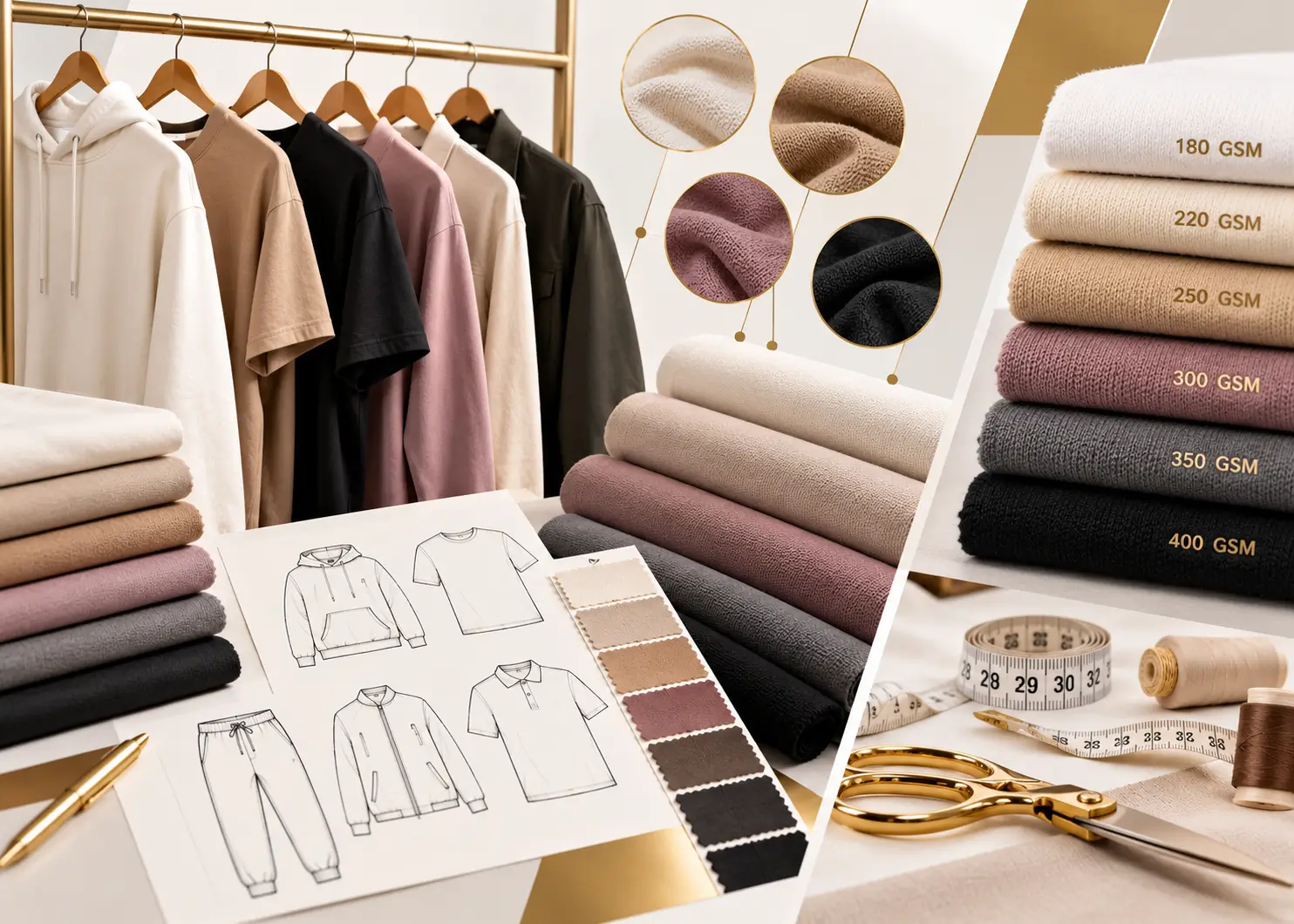
Fabric selection directly affects the material side of the quotation.
GSM means grams per square meter and describes fabric weight. A heavier fabric can change material consumption and production requirements, so manufacturers need the correct specification when they’re costing the garment.
Fabric composition and construction also affect the finished product.
Cotton, polyester, blends, fleece, jersey, and performance fabrics can produce different results in weight, stretch, drape, durability, and appearance.
That’s why a custom apparel quote needs more information than a basic printing estimate.
The manufacturer needs to understand the actual material that will become the garment.
Key Information 3: Measurements and Size Specifications
Provide a measurement specification whenever you have one.
Depending on the garment, this can include:
- Body length
- Chest
- Shoulder width
- Sleeve length
- Waist
- Hip
- Inseam
- Leg opening
- Other garment-specific measurements
- Measurement tolerances
Measurements give the manufacturer a concrete specification for development and production.
If you’ve already created a size chart, include it with your production documents.
Do You Need a Tech Pack to Get a Custom Apparel Quote?
Not always.
A tech pack can make costing more precise because it puts important production specifications in one place, but you can start a manufacturing conversation with less information.
If You Have a Complete Tech Pack
A complete tech pack can include:
- Technical drawings
- Measurements
- Fabric specifications
- Color references
- Construction details
- Stitching requirements
- Trims
- Labels
- Artwork
- Packaging instructions
This gives the manufacturer a detailed production reference and reduces the number of open questions during costing.
If You Only Have a Sketch
You can still request an initial quote from a sketch.
A sketch communicates the overall design, silhouette, and visual direction.
But it may not define the fabric, GSM, measurements, construction, trims, or finishing; those missing specifications can affect the accuracy of an early estimate.
Treat an initial figure as dependent on the information you’ve provided at that stage.
If You Have a Reference Garment
An existing garment can communicate details that a sketch or photograph may not show clearly.
A reference garment can help demonstrate:
- Fit
- Construction
- Fabric
- Weight
- Seam placement
- Finishing
- Pocket configuration
- Proportions
If you send one, explain which features you want to reproduce and which ones you want to change.
That gives the manufacturer a much clearer development target.
If You Only Have an Idea
You can start with a concept.
Share your intended garment category, target customer, desired fit, preferred materials, inspiration images, and any other requirements you’ve already decided.
The manufacturer can then identify what still needs to be defined before detailed costing.
This approach can work well for emerging clothing brands that have a product idea but haven’t created a complete technical package yet.
The brief can become more detailed as the product moves through development.
How Long Does a Custom Apparel Quote Take?
There’s no single turnaround time for every apparel manufacturing project.
The time can depend on:
- Completeness of the production brief
- Product complexity
- Availability of specifications
- Number of styles
- Material requirements
- Sampling requirements
- Production capacity
- Logistics requirements
- Clarifications needed before costing
A straightforward request with complete specifications gives the manufacturer a clearer starting point.
An initial estimate can use the information available at the beginning of the project, while a more detailed quotation may follow after specifications, materials, and development requirements become clearer.
Sampling can then validate the physical product before custom bulk production begins.
What Should a Custom Apparel Quote Include?
A useful quotation should make the production scope easy to understand.
Depending on the project, check whether the quote identifies:
- Garment type
- Fabric and material specifications
- GSM
- Quantity
- Colors and size distribution
- Branding requirements
- Decoration
- Packaging
- Sampling or development costs
- Production requirements
- Shipping or logistics
- Applicable minimum order quantities
- Any assumptions or exclusions
Don’t compare two quotations based on the headline unit price alone.
If one quote includes custom packaging, labels, sampling, or shipping while another leaves those costs outside the quoted price, the numbers aren’t describing the same production scope.
Ask the custom apparel manufacturer to clarify anything that isn’t obvious.
How Innovate Apparel Turns Your Brief Into a Manufacturing Quote
At Innovate Apparel, the quotation process starts with the product rather than a single unit-price figure.
We review the information you’ve provided, identify the production requirements, and use that information to build a clearer manufacturing scope.
We Review the Product
First, we look at the garment itself.
That includes the product category, design references, construction details, measurements, and other available specifications.
A hoodie, for example, needs more definition than its product name; fabric weight, fit, hood construction, pockets, ribbing, panels, and finishing can all affect the work required to produce it.
Innovate Apparel also offer Apparel Design services incase you have a reference and need help with the design and customization.
We Assess Materials and Construction
Next, we review the material and construction requirements.
This can include fabric composition, fabric type, GSM, finish, stretch, color, construction, and other product-specific requirements.
The goal is to connect the design you want with the actual materials and manufacturing operations needed to produce it.
We Review Branding and Finishing
Branding becomes part of the garment specification when you need custom labels, decoration, or packaging.
Your project may include:
- Neck labels
- Woven labels
- Care labels
- Hangtags
- Patches
- Printing
- Embroidery
- Other decoration
- Packaging
Defining these elements early gives the quotation a clearer production basis.
We Confirm Quantity and Production Scope
Quantity doesn’t exist in isolation.
We review the expected units alongside the number of styles, colors, sizes, and applicable SKU requirements; MOQ can also affect planning when a project contains multiple styles or colorways.
We Prepare the Quote
Once the available specifications are clear, the project can move into costing.
The quotation should reflect the defined production scope, including the relevant garment, materials, customization, packaging, and logistics requirements.
If important specifications remain open, we’ll need to clarify them before the quotation can become fully defined.
We Move Approved Projects Into Sampling and Production
The quote isn’t the end of the manufacturing process.
Once the project specifications and commercial terms move forward, sampling can help validate the physical product before bulk production; approved specifications then give the production team a reference for planning, manufacturing, quality control, packaging, and shipment.
That keeps the quoted requirements connected to the garment that actually enters production.
What to Send Innovate Apparel for Your Quote
You don’t need to wait until every document is perfect.
Send the information you already have and clearly mark anything that still needs to be decided.
Required
- Product type
- Quantity
- Destination country
- Target delivery date
- Design or product reference
Recommended
- Tech pack
- Fabric preference
- GSM
- Size chart
- Color references
- Branding requirements
- Decoration requirements
- Packaging requirements
Optional
- Reference garment
- Existing sample
- CAD files
- Inspiration images
And if some specifications aren’t final yet, say so.
A clear “not decided yet” is more useful than an assumption that could send the quotation in the wrong direction.
Ready to discuss your apparel manufacturing project?
Get a custom apparel quote from Innovate Apparel.
FAQs About Getting a Custom Apparel Quote
How do I get a custom apparel quote?
What information do I need for a custom apparel quote?
At minimum, provide the product type, quantity, design or reference, destination, and delivery date. Fabric, GSM, measurements, colors, branding, and packaging details improve quote accuracy.