How to Start a Hoodie Business: Complete Guide
2026 has not been an economy-friendly year, and it’s just been two months since its start. Everyone is looking for different, easy-to-implement ways to earn some extra bucks.
To be honest, you don’t need a fashion degree or huge capital to launch. What you need is a clear strategy, quality products, and smart marketing.
This guide by Innovate Apparel walks you through every step needed to start a hoodie business.
Here’s what you’ll learn:
- How to find and validate your profitable niche
- The exact costs and legal steps to launch properly
- Product sourcing and quality control methods
- Marketing strategies that actually drive sales
- How to scale from side hustle to full-time income
Let’s break down exactly how to start a hoodie business in 2026.
Steps to Start Your Hoodies Business in 2026
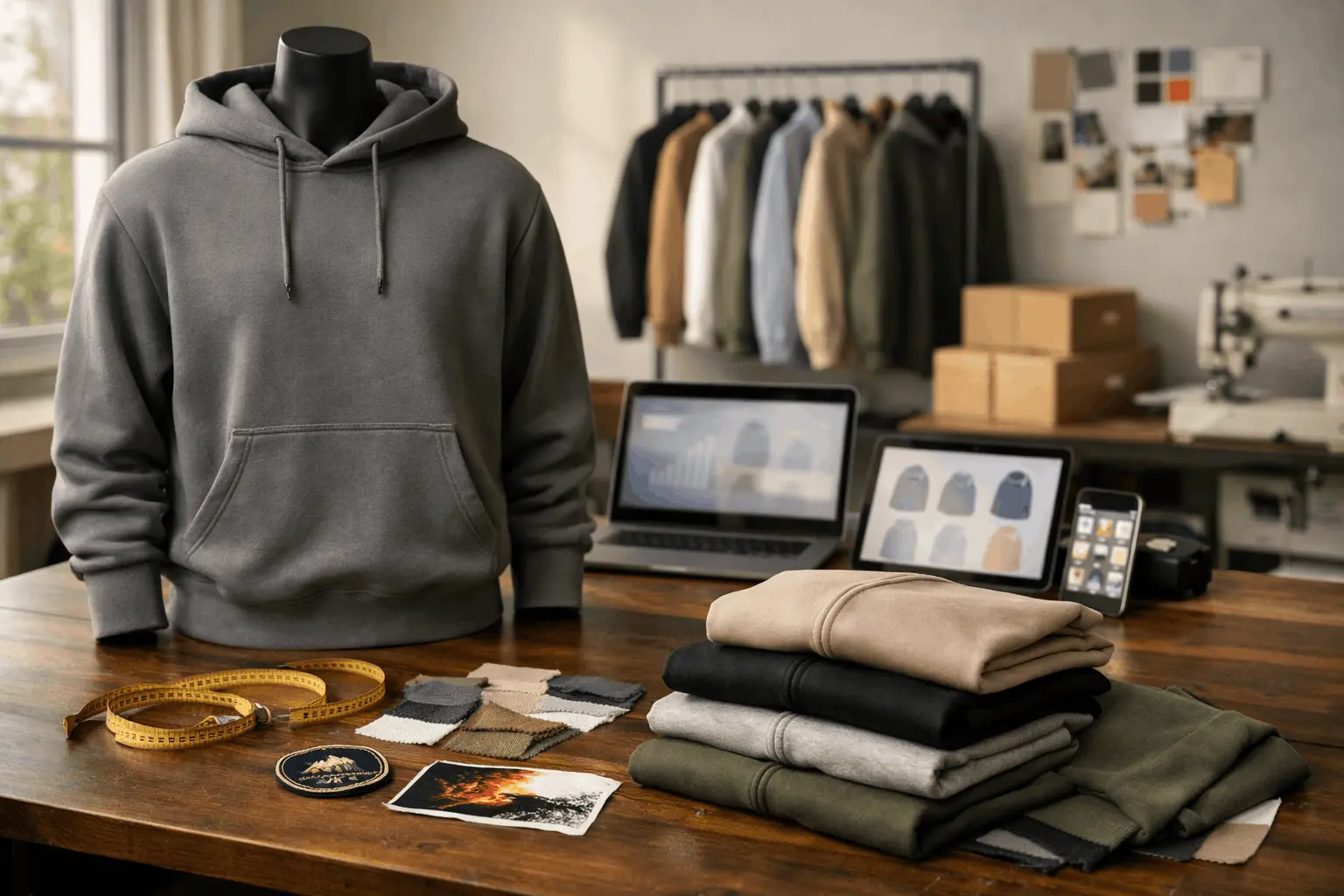
Step 1: Define Your Hyper-Specific Niche & Target Audience
We can collectively agree that the niche is saturated, and we need to stand out among the competitors. We must find some business hoodie ideas to consider before starting. How can we do that?
Begin by preparing a checklist or a notebook to answer the basic questions below.
Question 1: Who are you serving?
Pick a specific audience:
- Fitness enthusiasts who want performance hoodies
- Pet lovers (dog moms, cat dads, specific breeds)
- Gamers looking for comfortable streaming gear
- Remote workers who value all-day comfort
- College students at specific universities
- Hobbyist communities (fishermen, hikers, photographers)
Remember, the more specific, the easier everything becomes. You’ll know exactly what designs to create, where to market, and what messaging resonates. This will help you make your plan of hoodies for business precise.
Question 2: What specific problem are they trying to solve?
Pick a practical need:
- Fitness enthusiasts who want breathable hoodies that don’t overheat during workouts
- Dog moms who want stylish apparel that subtly shows breed pride
- Gamers who need hoodies that stay comfortable during 6+ hour streams
- Remote workers who want “Zoom-ready” comfort wear
- College students who want campus-identity apparel that isn’t generic
- Hikers who want lightweight layering for unpredictable weather
The clearer the problem, the stronger your product positioning.
Question 3: What emotional connection drives their purchase?
Understanding people is not that difficult, and when it comes to their purchases, it’s best you relate it to something which has an emotional connection.
Think of it: if a piece of art reminds you of a childhood memory, you wouldn’t hesitate to buy it, would you?
- Pride in their fitness journey
- Love for their dog
- Passion for gaming culture
- Comfort and productivity
- School spirit
- Adventure lifestyle
Your product should highlight their identity and feelings.
Similarly, you can add as many questions as you can: let me add two more, but you will answer them without any help.
- Question A: What kind of designs would resonate most?
- Question B: Who are you NOT serving?
Research your audience deeply
Now, what you did above was the fundamental step of researching about your audience. Don’t guess what they want, find out by:
- Joining their communities: Reddit, Facebook groups, Discord servers, and Instagram hashtags. Watch what they talk about, complain about, and get excited over.
- Studying their language: How do they describe comfort? What features matter to them? Use their exact words in your marketing.
- Finding the gaps: What are competitors missing? Maybe gaming hoodies lack headphone cord management. Maybe pet hoodies don’t feature enough breeds.
Once you have done the above, let’s head to the next step.
Step 2: Establish Your Brand Identity & Vibe
People will remember you based on your brand identity. That’s how important it is.
Good identity, vibe, or visuals, whatever you name it – it is essential for the first impression.
- Your brand name: Make it memorable, easy to spell, and relevant to your niche.
- Your story: Why did you start? Exceptional storytelling is what makes you a hit.
People connect with authentic stories; feel, embrace and implement.
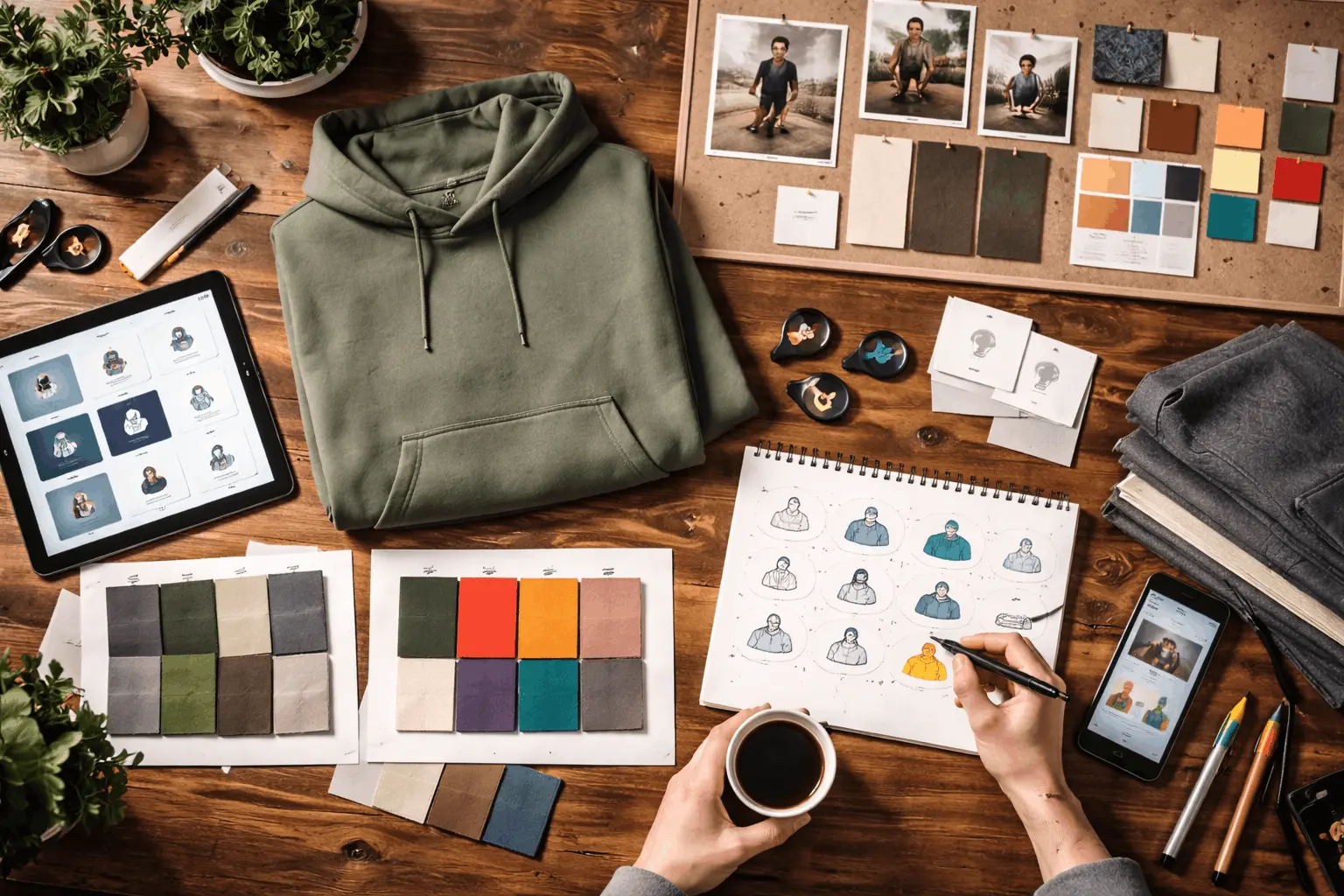
Remember: Based on our experience, we would suggest that you think about what your audience would like, rather than what you would.
- Creating your visual identity
Brand colors: Pick 2-3 colors that reflect your vibe
- Bold/edgy brand: Black, red, white
- Natural/sustainable brand: Earth tones, greens, browns
- Youth/energetic brand: Bright colors, contrasts
Logo design: Keep it simple and versatile. It should work:
- Large on your website header
- Small on hoodie tags
- As a social media profile picture
Use Canva, hire a designer on Fiverr ($30-100), or use AI logo makers.
- Define your brand voice
How does your brand sound in captions, emails, and product descriptions?
For professional audiences:
- “Premium sweatshirts for business professionals”
- “Comfort meets sophistication”
- Polished, confident tone.
Write down 3-5 statements and pick one from them that matches your brand USP.
- Friendly, bold, authentic
- Professional, innovative, quality-focused
- Fun, inclusive, community-driven
Use these as guardrails for all communications.
- Create a cohesive aesthetic
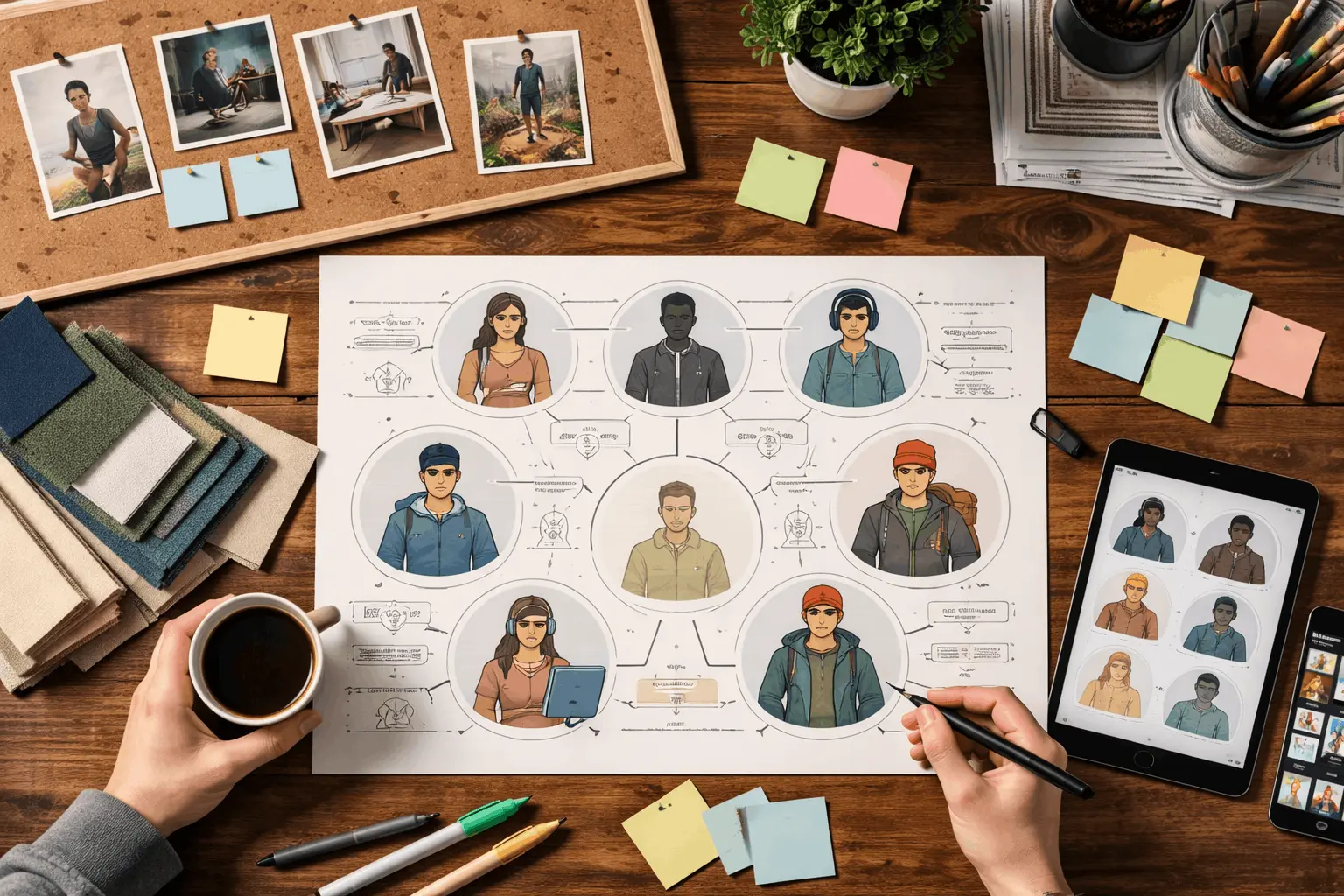
Build boards which showcases what your brand could be, such as:
- The lifestyle your brand represents
- Color schemes and photography styles
- How customers will wear your hoodies
- Settings and vibes that match your brand
Once you finalize the visual consistency, you have successfully completed one of the fundamental steps of starting a hoodie business.
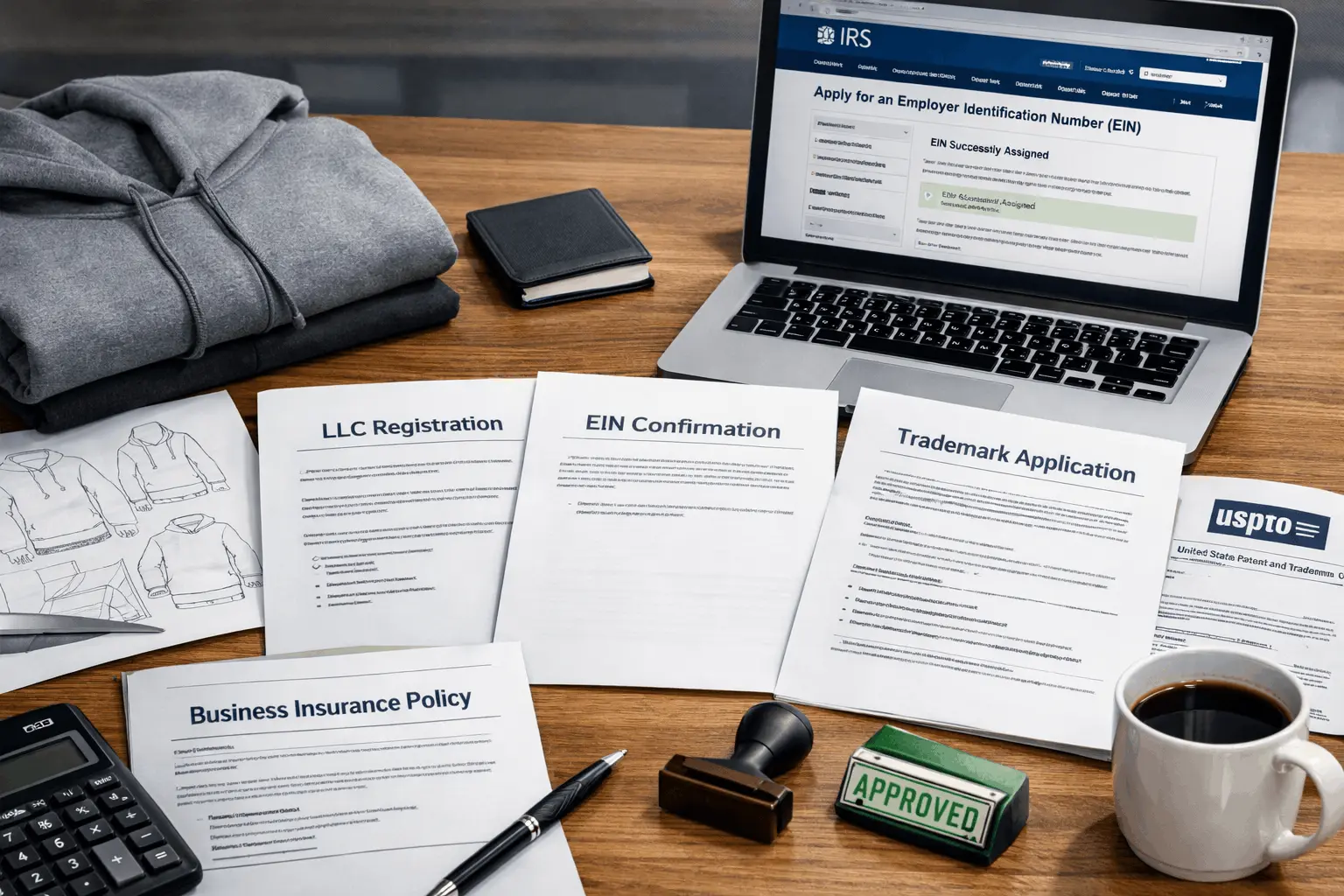
Step 3: Protect Your Hoodie Business
Most of the people aren’t familiar with what the legal setup is and how it protects your business. Here’s exactly what you need.
- Choose your business structure
LLC (Limited Liability Company) – Best for most:
- Separates personal assets from business debts
- Flexible tax options
- Professional credibility
- Costs: $50-500 depending on your state
Sole Proprietorship – Simplest but risky:
- No separation between you and the business
- Personal assets at risk if sued
- Easy to set up
- Use only if testing very small
- Register and get your EIN
Steps to make it official:
- Register your business name with your state
- Get an EIN (Employer Identification Number) from the IRS
- Open a business bank account – keep finances separate from personal
- Set up accounting software – QuickBooks, Wave (free), or FreshBooks
This takes 1-2 hours and costs under $200 in most states.
- Protect your brand with trademarks
When to trademark:
- Your brand name
- Your logo design
- Unique slogans or phrases you use
Costs: $250-400 per trademark filing through USPTO.gov, or $500-1,500 with an attorney.
Don’t skip this. Without trademarks, someone can copy your brand name once you’re successful. File trademarks after you’ve validated your business but before scaling big.
This process can be delayed for later too. But its better if you do it as early as possible.
- Get business insurance
- Product liability insurance protects you if someone claims your hoodie caused injury or harm.
- General liability insurance covers business-related accidents.
Typical costs: $300-600 annually for basic coverage.
Step 4: Product Mastery & Quality Validation
The quality of your hoodie determines whether your customers buy once or keep coming back for more. This is obvious; even you would do that if you were a customer.
Get this right before you launch your hoodie.
- Choose Your Production Model
Print-on-Demand (POD) – Best for beginners
- No inventory risk
- Easy design testing
- Higher per-unit costs
- Less production control
Bulk Manufacturing – Best for scaling
- Lower per-unit costs
- Higher margins
- Requires upfront investment
- Inventory risk
The smartest choice is to go for bulk manufacturing if you want to get a higher margin with low production costs. This is where Innovate Apparel’s hoodie manufacturing services come in handy.
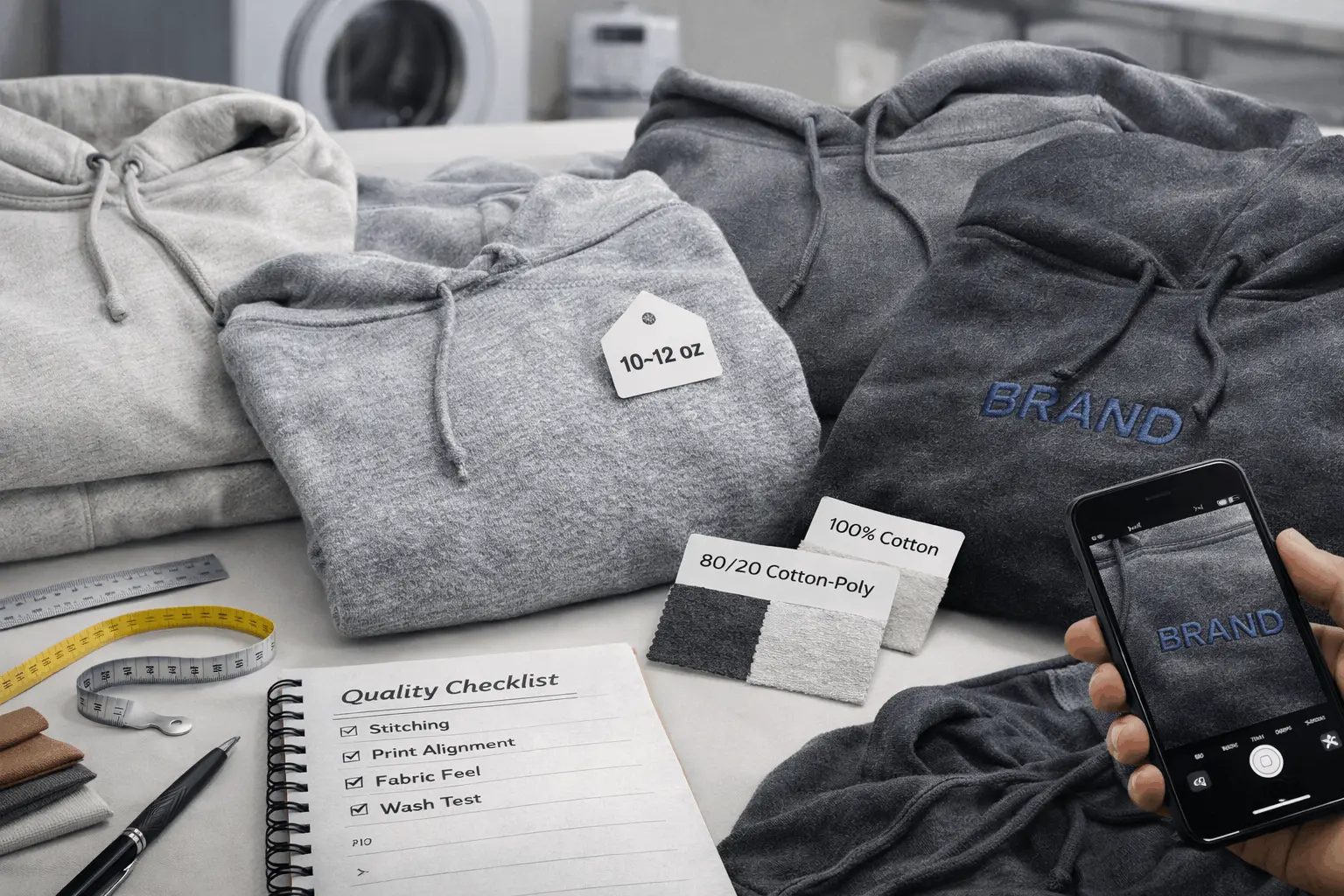
- Select the Right Hoodie
Focus on three things:
Fabric Weight
- 7–9 oz: Lightweight
- 10–12 oz: Versatile (safest option)
- 13+ oz: Premium/heavyweight
Material Blend
- 80/20 cotton-poly = best balance of softness + durability
- 100% cotton = softer but shrinks more
And always order samples before committing.
- Choose the Right Printing Method
Your hoodie’s color or print must not fade instantly, so choosing the right printing method is quite significant. The most common hoodie types in 2026 are the embroidery and DTG hoodies.
- DTG – Best for detailed designs and beginners
- Screen Printing – Most durable and cost-effective at scale
- Embroidery – Premium look for logos
- Heat Transfer – Okay for small runs, less premium
- Validate Quality Before You Launch
Never sell a hoodie you haven’t personally tested.
Order at least three samples (different sizes). Manufacturing varies — one good sample isn’t enough.
Check for the following when inspecting the quality of the hoodie:
- Stitching and seams
- Print alignment and color accuracy
- Fabric feel and weight
These should be followed by a Wash Test (Critical).
- Wash 3–5 times.
- Look for fading, cracking, shrinkage, or pilling.
If it doesn’t survive multiple washes, ask yourself – are the hoodies worthy?
Document everything: Take photos of quality issues, measure exact dimensions, save customer feedback. This will guide you in making the final decision.
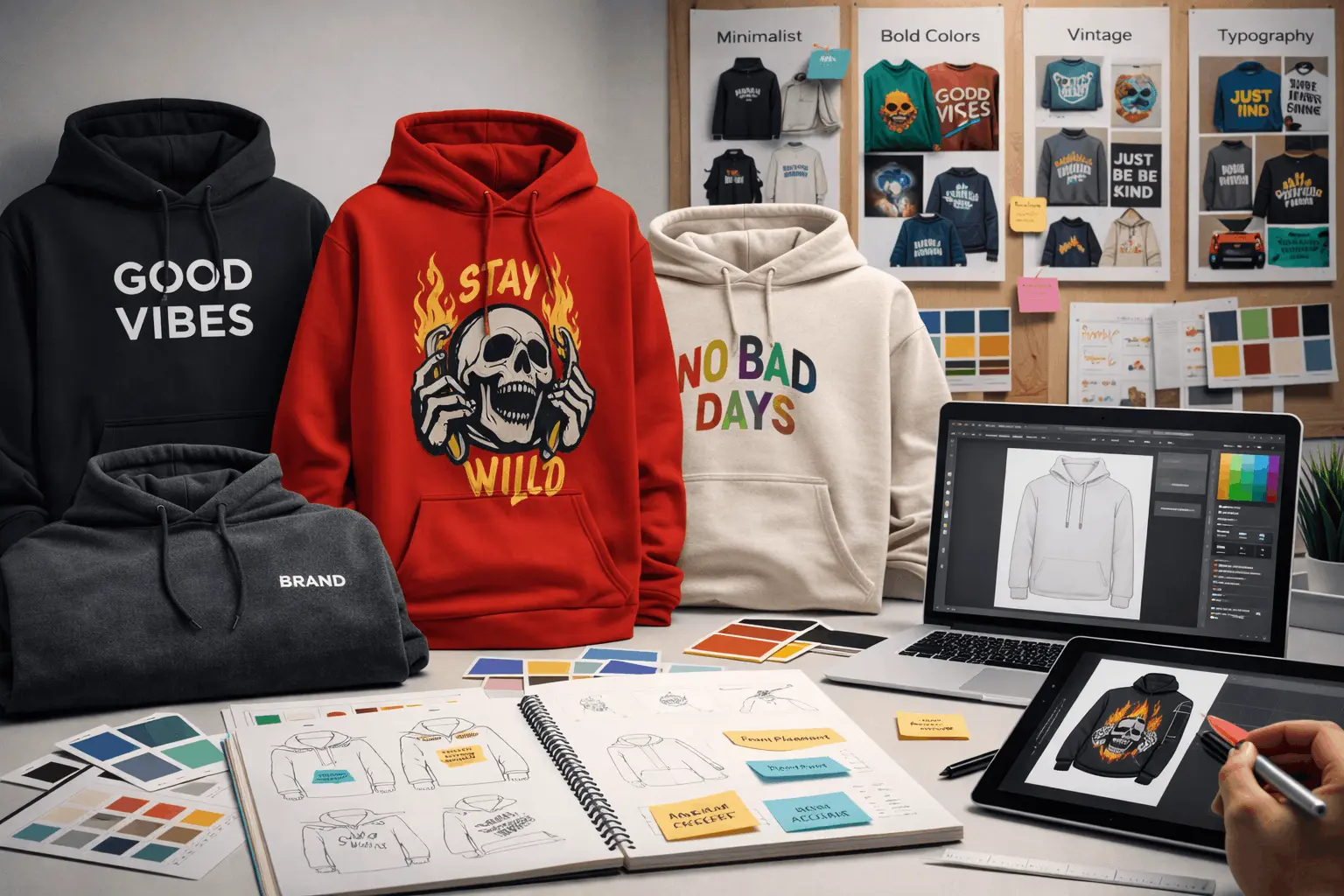
Step 5: Exceptional Hoodie Designs
Great designs sell hoodies. Generic designs get ignored. Here’s how to create winners.
- Research what actually sells
Look at the data:
- Browse best-sellers on Etsy – Search “hoodies” + your niche, filter by best-selling
- Check top hoodie products – See what designs rank high
- Study successful socials in your niche – What styles get the most engagement?
- Read customer reviews on competitor products – What do buyers love about the designs?
Look for patterns, not designs to copy. These aspects will help you shine brighter.
- Minimalist text vs detailed graphics
- Bold colors vs subtle tones
- Humor vs inspirational vs aesthetic
- Placement preferences (front, back, sleeves)
- Get designs created
Option 1: Hire professional designers
Where to find them:
- Fiverr: $5-150 per design, huge selection
- Upwork: $50-100/hour for experienced designers
- Dribbble: Find and hire top talent directly
How to brief designers:
- Share 3-5 reference designs you like
- Describe your target audience in detail
- Provide your brand colors and fonts
- Explain the vibe (edgy, cute, professional, etc.)
- Specify file requirements (vector format, resolution)
Option 2: Create designs yourself
Tools for non-designers:
- Canva: Templates, fonts, easy interface (free-$13/month)
- Adobe Illustrator/Photoshop: Professional tools, simplified (free-$10/month)
Simple designs that work:
- Clean typography with one powerful phrase
- Minimalist line art or icons
- Retro/vintage text treatments
- Clever wordplay in nice fonts
You don’t need complex graphics to succeed. Some of the best-selling hoodies are simple text designs.
Test, then expand: Launch your first collection, see what sells best, create more variations of winners.
Step 6: Set Up Your Sales Channel
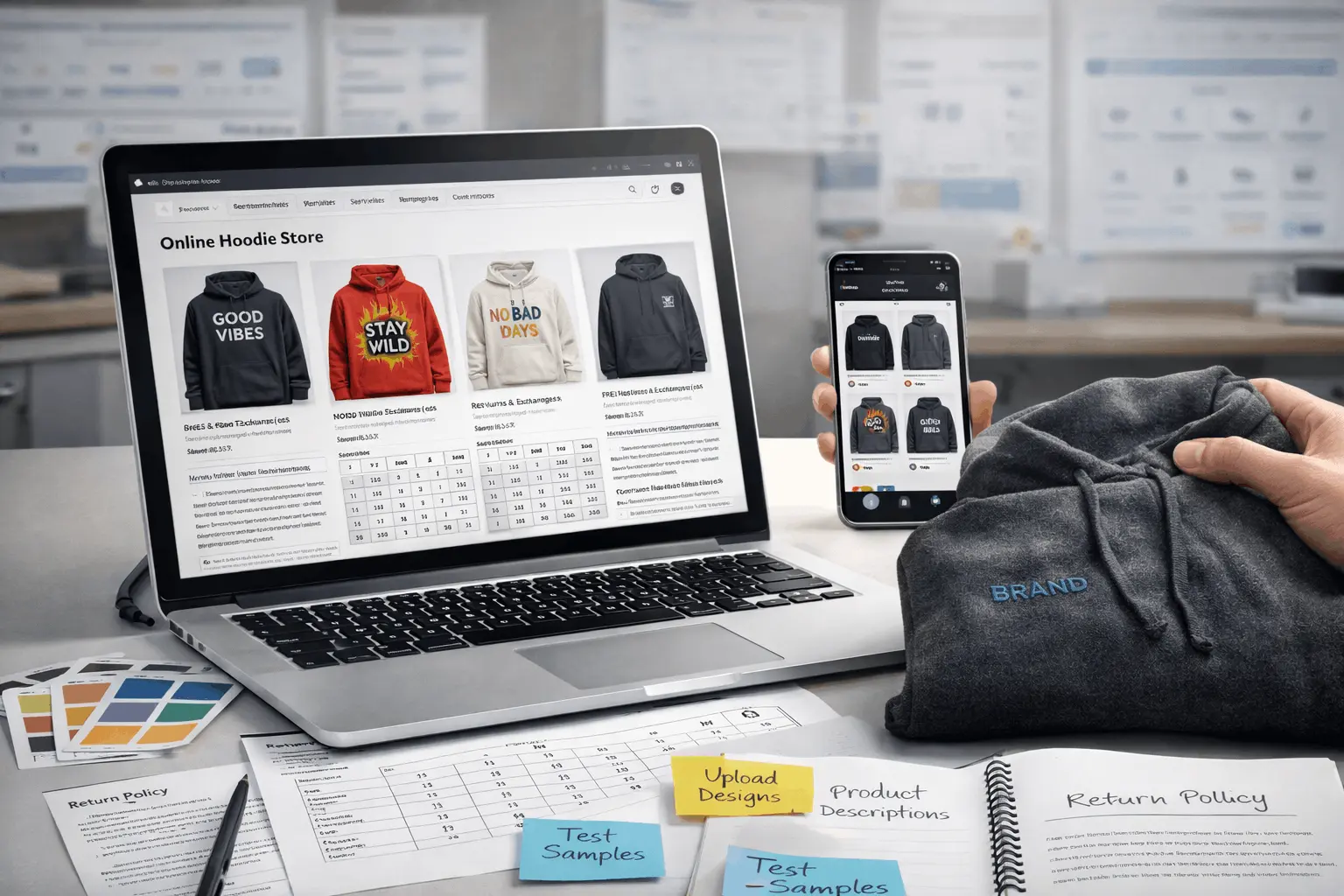
At this stage, your designs are ready. Now, to sell hoodies online, you need a place or channel, whatever you name it.
Your sales channel affects your profit margins, customer ownership, and long-term growth. Choosing correctly early on prevents major restructuring later.
You can begin from:
- Marketplaces like Etsy or Amazon
- Social commerce through Instagram or TikTok
- Your own WooCommerce Store or Shopify
Before launching, make sure your foundation is solid. Upload multiple designs, include detailed size charts, write clear product descriptions, and create a transparent return policy. Most importantly, order samples and test them yourself. Never sell apparel you haven’t physically inspected.
Launching is about entering the market with standards.
Step 7: Price for Profit
Pricing is one of the most misunderstood parts of starting a hoodie business. Many believe lower prices will generate more sales. But in reality, underpricing often attracts low-commitment buyers and leaves no room for growth.
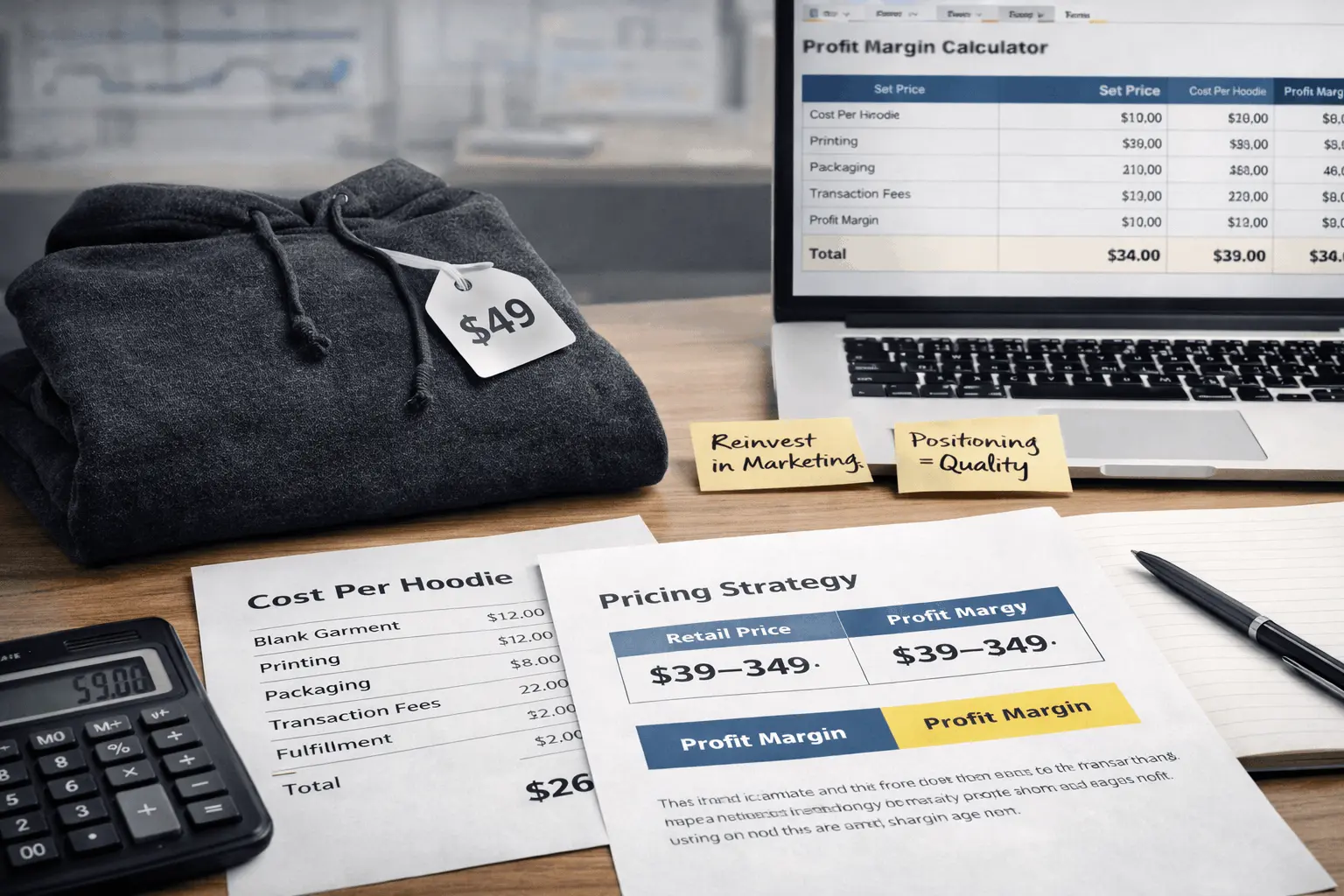
Start by calculating your true cost per hoodie.
Include everything: the blank garment, printing, packaging, transaction fees, and any fulfillment charges.
If your total cost per hoodie is $26, that number is your baseline aka cost price.
If your hoodie costs $26 to produce, selling it in the $39 – 49 range creates enough room to reinvest in marketing and operations while staying competitive in the mid-market segment.
Pricing should reflect your positioning.
Avoid competing on being the cheapest. Compete on quality, identity, and clarity. Your pricing communicates your confidence.
To get the best hoodie manufacturing rates, you can get in touch with Innovate Apparel team.
Step 8: Build a Basic Financial Model
If you want to move beyond a hobby, you must understand your numbers.
A basic financial model requires visibility.
Start by identifying your monthly fixed costs. These may include your website subscription, design software, email tools, small marketing budget, domain fees, and any business registration expenses. Even a lean hoodie business can have $300 – 400 in monthly fixed costs.
Next, calculate your profit per hoodie. If you sell at $45 and your total cost is $26, your gross profit is $19 per unit.
Now calculate your break-even point. Divide your monthly fixed costs by your profit per hoodie. If your fixed costs are $350 and your profit is $19, you must sell 19 hoodies just to cover expenses. Only after that do you begin generating actual income.
This math changes how you think. It removes guesswork and emotional decision-making.
If you want to earn $2,000 per month in profit, you add that to your fixed costs and divide by your per-unit profit. Suddenly, your goals become measurable, not abstract.
Track revenue, costs, ad spend, profit, and return rate weekly.
You just need awareness.
Financial clarity gives you control.
Securing Your Hoodie Business Future
Once you achieve consistent sales, your focus shifts from launching to protecting and strengthening the business. Quality control becomes non-negotiable.
If you plan to grow long-term, consider trademarking your brand name and logo once demand is validated. Protecting your identity early prevents expensive conflicts later.
As demand becomes consistent, you may increase the amount of bulk manufacturing orders. This can lower costs and improve margins, but it should only happen after proven demand.
Finally, begin building small systems. Document how you process orders, handle returns, and communicate with customers. Even if you operate solo, systems reduce errors and prepare you for growth.
A hoodie business becomes sustainable when it no longer relies purely on your memory and motivation.
Ready to Start Your First Hoodie Business?
Starting a hoodie business does not require massive capital or industry connections. It requires clarity, standards, and discipline.
- Choose the right sales channel.
- Price for sustainability.
- Understand your numbers.
- Protect your quality.
- Strengthen your structure.
Most brands fail not because the market is saturated, but because they launch without financial awareness or operational control.
Keep your strategy simple. Execute consistently. Improve based on data.
The small business hoodies market rewards brands that are specific, intentional, and reliable.
If you build with that mindset, you won’t just start a hoodie business – you’ll build something that lasts.
Frequently Asked Questions
Is the hoodie business still profitable in 2026?
What type of hoodies sell the most?
Can I start a hoodie business from home?
How do I market my hoodie brand with a low budget?
Should I start with print-on-demand or bulk manufacturing?
What fabrics are commonly used in custom tracksuits?
Common fabric options include moisture-wicking polyester (performance), French terry cotton blends (casual comfort), fleece (warmth), technical fabrics with stretch (athletic movement), sustainable materials like organic cotton or recycled polyester (environmental responsibility), and luxury options like merino wool blends.
What is the typical cost per piece for custom t-shirts?
Costs vary based on quantity, fabric quality, and customization. Budget options start around $5-8 per piece for simple designs in larger quantities. Mid-range t-shirts cost $10-20 per piece. Premium options with specialty fabrics range from $25-50+ per piece.