Finding a clothing manufacturer is easy. Finding a sustainable clothing manufacturer that can support your apparel requirements and substantiate its environmental and social claims requires much more due diligence.
A manufacturer may describe its production as sustainable, ethical, responsible, or eco-friendly. For a clothing brand, sustainability needs to become something you can evaluate with evidence.
That means looking beyond a manufacturer’s sustainability page and asking practical questions about certifications, production processes, quality controls, and documentation.
This guide explains how to find, evaluate, and verify a sustainable clothing manufacturer before committing to production.
Sustainability Standards Are Changing in 2026
Sustainability standards continue to evolve, so older certification guides can quickly become outdated.
Textile Exchange published the final Materials Matter Standard on December 12, 2025. The standard becomes effective on December 31, 2026, and becomes mandatory for eligible Tier 4 audits from December 31, 2027. The transition brings several existing Textile Exchange material standards into a more unified framework.
The transition does not mean brands should stop asking manufacturers about current certifications. During the transition period, eligible organizations can continue under current standards while preparing for the new framework.
For a clothing brand sourcing recycled materials or other materials affected by the transition, ask suppliers how they plan to manage the change.
This gives you another useful sourcing question:
“How are you preparing for the Materials Matter Standard transition?”
It can reveal whether a supplier actively manages its certification and traceability requirements.
What Makes a Clothing Manufacturer Sustainable?
A sustainable clothing manufacturer takes measurable steps to reduce environmental and social impacts throughout its production activities. Those efforts can involve material sourcing, energy consumption, water management, chemical use, waste reduction, worker welfare, supply chain transparency, and responsible manufacturing practices.
There is no single certificate that automatically proves every part of a factory’s operations meets every sustainability expectation. Different standards address different materials, processes, management systems, or social conditions.
A useful evaluation therefore starts with several areas.
Factor 1: Sustainable Material Sourcing
Materials make up a major part of a garment’s environmental profile, but the material alone doesn’t tell you everything about how the finished garment was produced.
When evaluating a manufacturer, ask where its fabrics come from and whether it can provide documentation to support its material claims.
Look for evidence related to:
- Organic and Recycled fibers
- Responsibly sourced and Certified materials
- Supplier documentation
For example, the Organic Content Standard
verifies organic material content and chain of custody. It does not address the broader chemical, social, or environmental performance of production beyond the integrity of the organic material claim.
A certified organic fiber can support an organic material claim while leaving other parts of manufacturing to be assessed separately.


Factor 2: Energy and Emissions
Ask how the factory manages energy and whether it measures its consumption.
Look for actual records, targets, policies, or management systems rather than relying on statements such as “low-carbon production.”
ISO 14001:2026 is the current edition of ISO’s environmental management systems standard. It provides a framework for organizations to establish and improve an environmental management system. It does not mean a certified facility has zero environmental impact.
Factor 3: Water Management
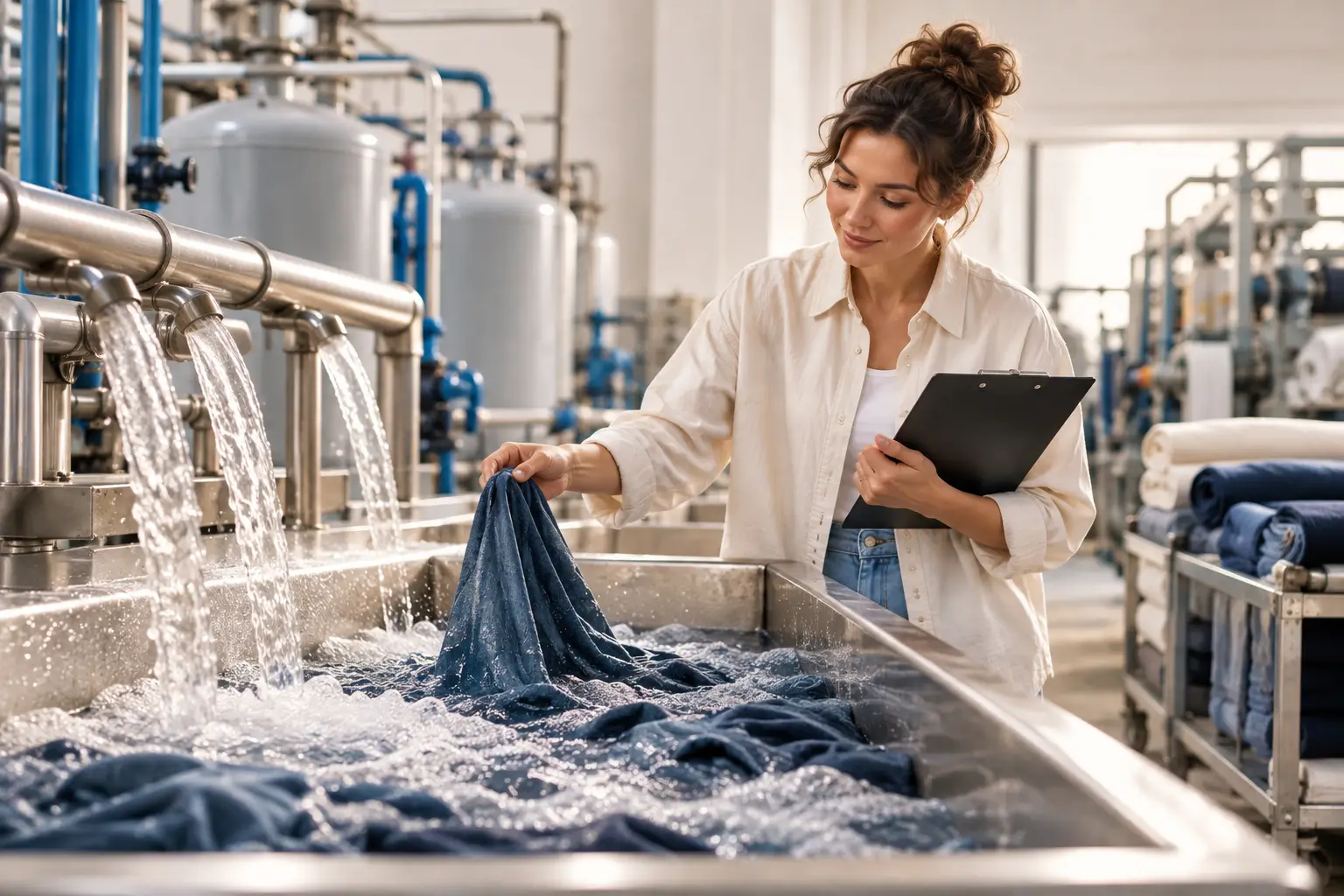
Water use can become particularly important when manufacturing involves dyeing, washing, printing, finishing, or other wet processing.
Ask whether the facility measures:
- Water consumption
- Water reuse
- Wastewater treatment processes
A manufacturer should be able to explain how it handles wastewater generated during production.
If the manufacturer performs dyeing or finishing, ask specifically which facility performs those processes. A factory may assemble garments in one location while sending fabric to another facility for wet processing.
Factor 4: Chemical Management
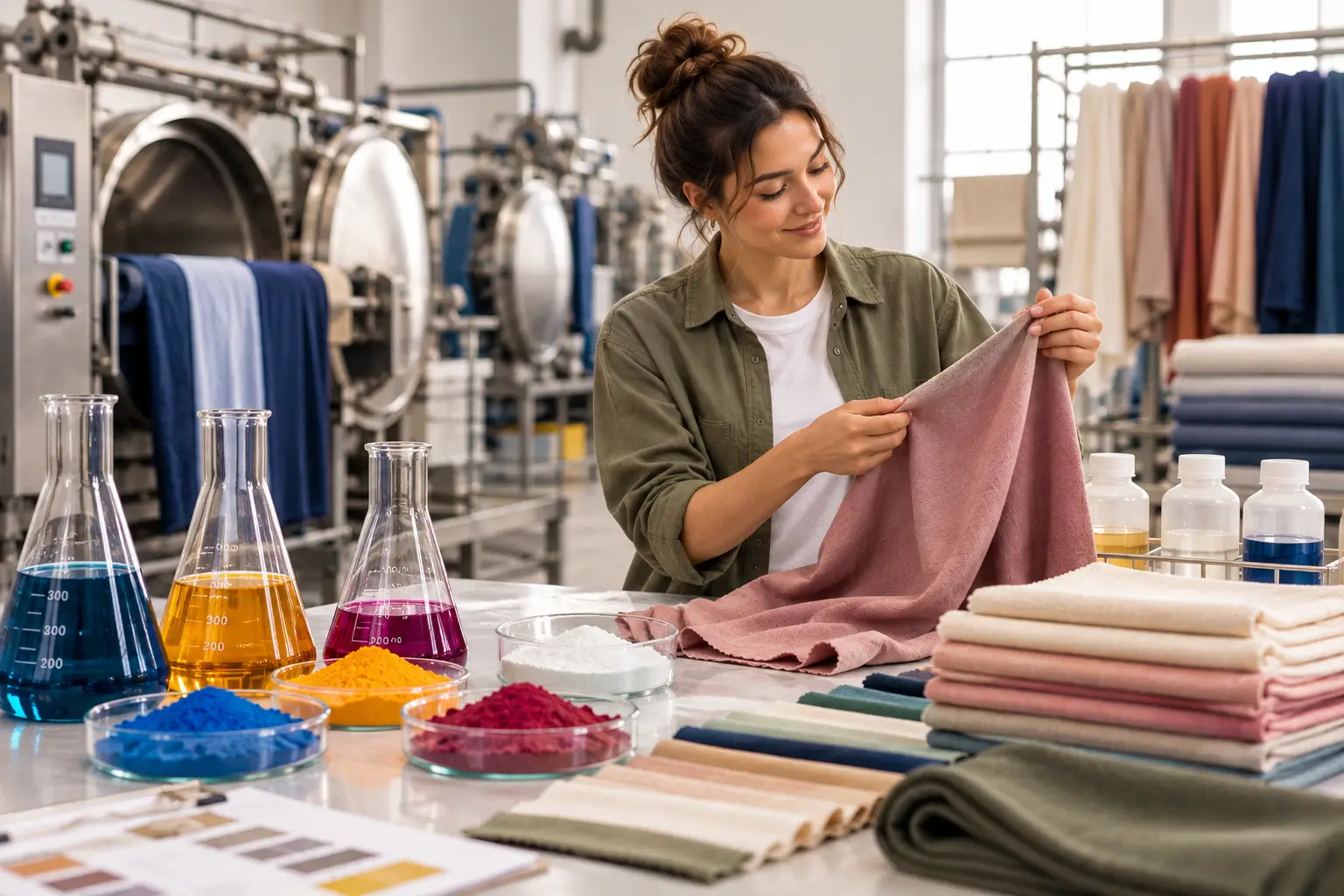
Chemical management deserves specific attention because textile production can involve dyes, auxiliaries, finishes, cleaning agents, printing chemicals, and other substances.
You can ask:
- Which chemicals are used during production?
- Which facilities perform dyeing and finishing?
OEKO-TEX STANDARD 100 focuses on testing textiles and their components for harmful substances. It is therefore useful evidence for textile safety.
Factor 5: Waste Management
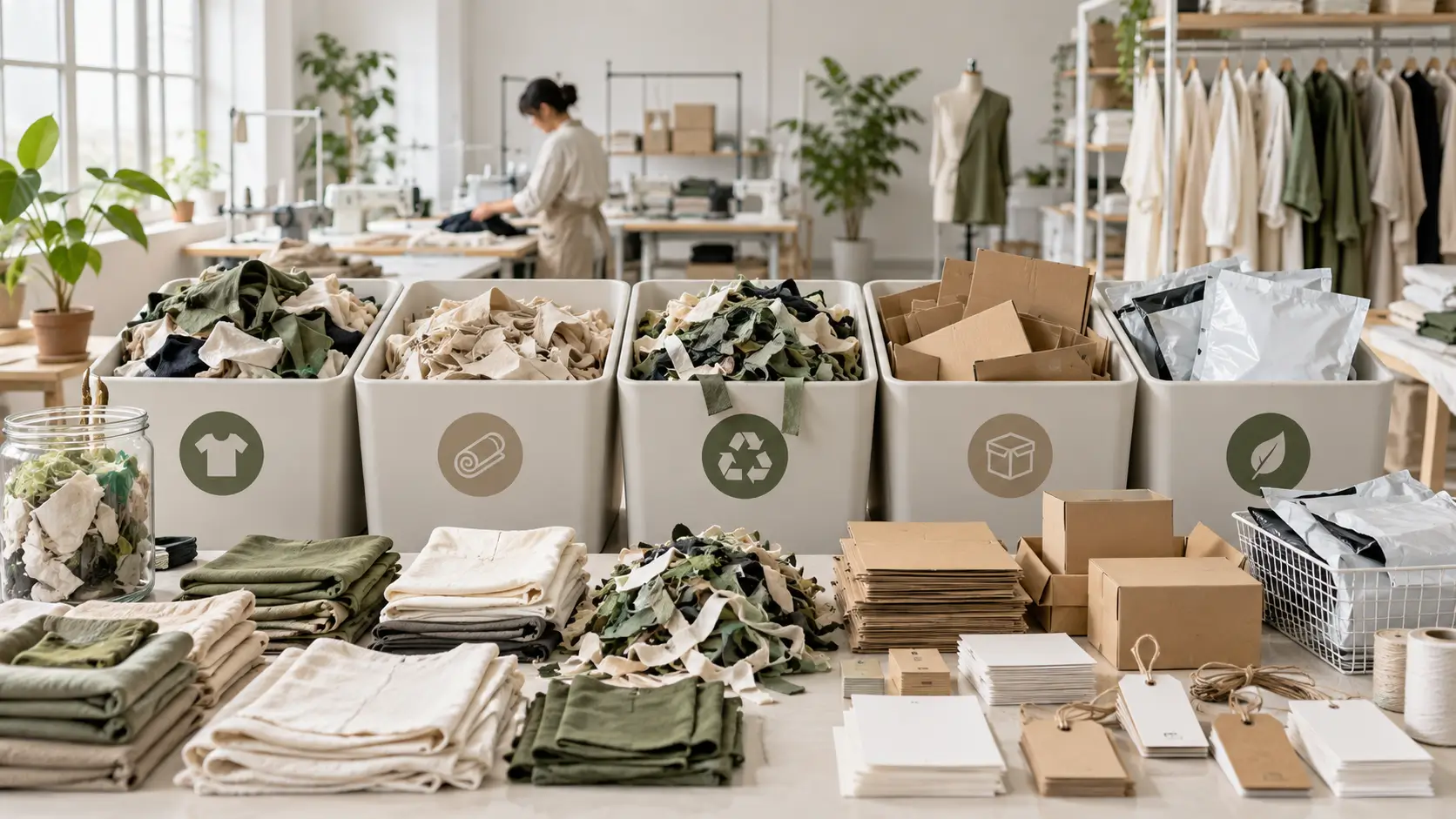
A clothing factory generates waste through cutting, sewing, sampling, packaging, trimming, printing, and other production activities.
Ask how the manufacturer handles:
- Fabric cutting waste
- Defective garments
- Textile scraps
- Packaging waste
Find out whether the factory measures waste and whether it reuses, recycles, recovers, or disposes of different waste streams.
A strong manufacturer should be able to explain its waste management process rather than simply claiming that it operates a “zero-waste” factory.
Factor 6: Worker Welfare
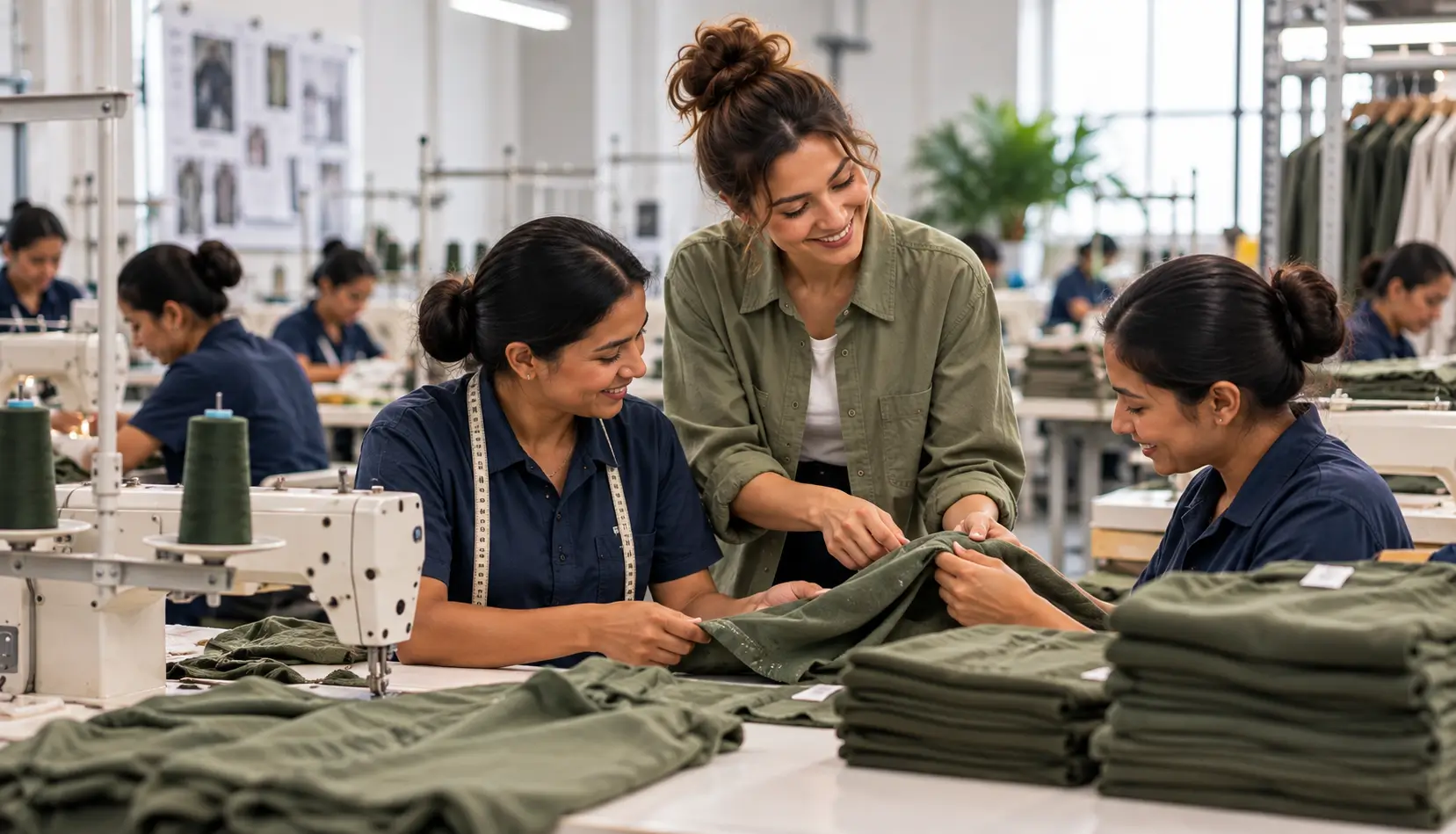
Sustainability also includes people. When evaluating an ethical clothing manufacturer, investigate working conditions alongside environmental practices.
Consider:
- Workplace safety
- Working hours
- Wages and benefits
- Child labor prevention
- Worker rights
- Health and safety
Social certifications and audits can provide useful evidence, but you should still understand what each assessment covers.
For example, SA8000:2026 focuses on decent work and strengthens requirements around worker involvement, human rights, safe and fair working conditions, and responsible business practices.
Factor 7: Supply Chain Transparency
A manufacturer should be able to explain where your materials come from and what happens to them throughout production.
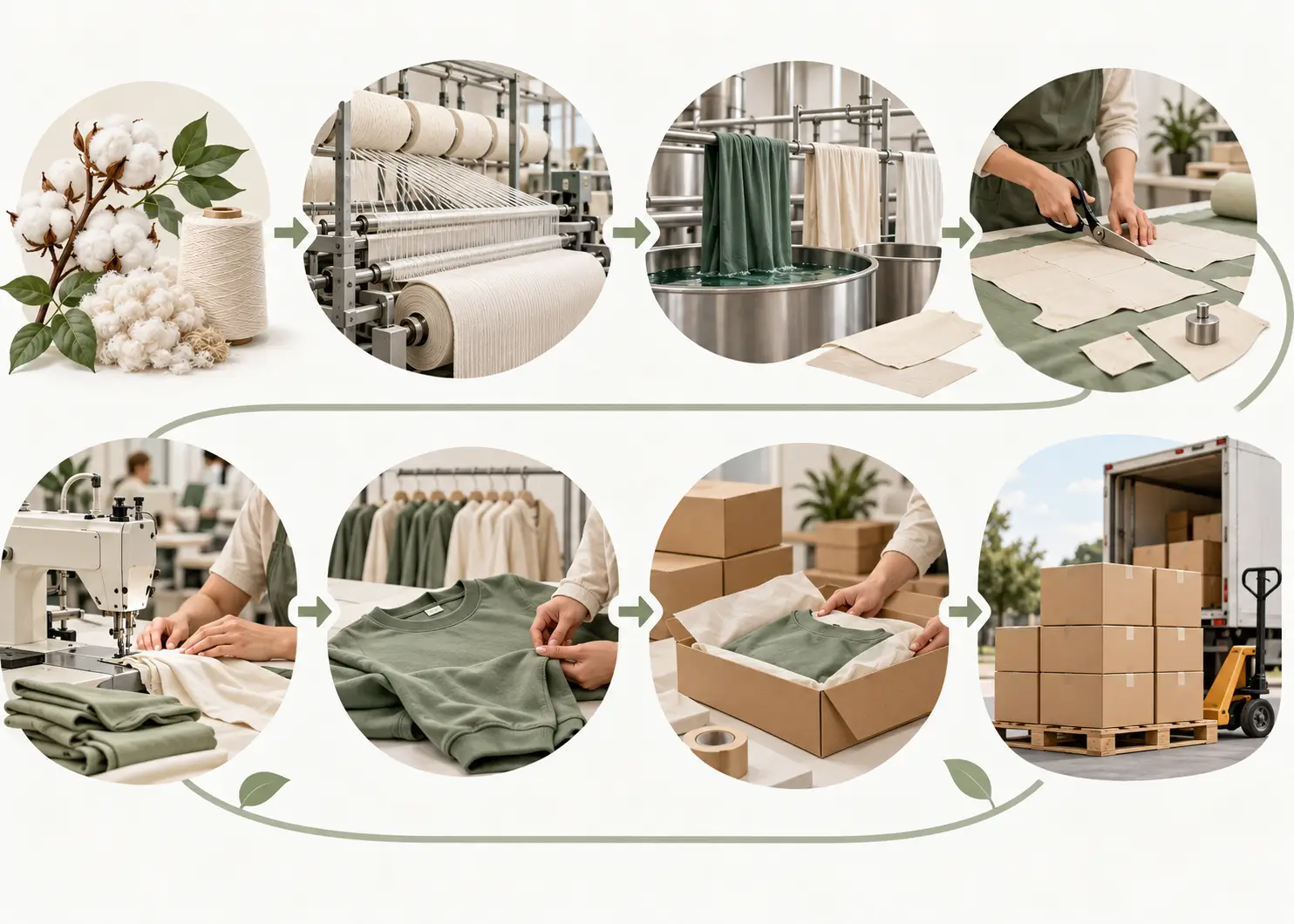
A simplified supply chain might look like:
Raw material → yarn → fabric → dyeing → cutting → sewing → finishing → packaging → shipping
Ask which stages your manufacturer controls and which stages it outsources.
You should also ask whether the manufacturer can identify the facilities involved in critical processes.
Decide What Type of Sustainable Manufacturer You Need
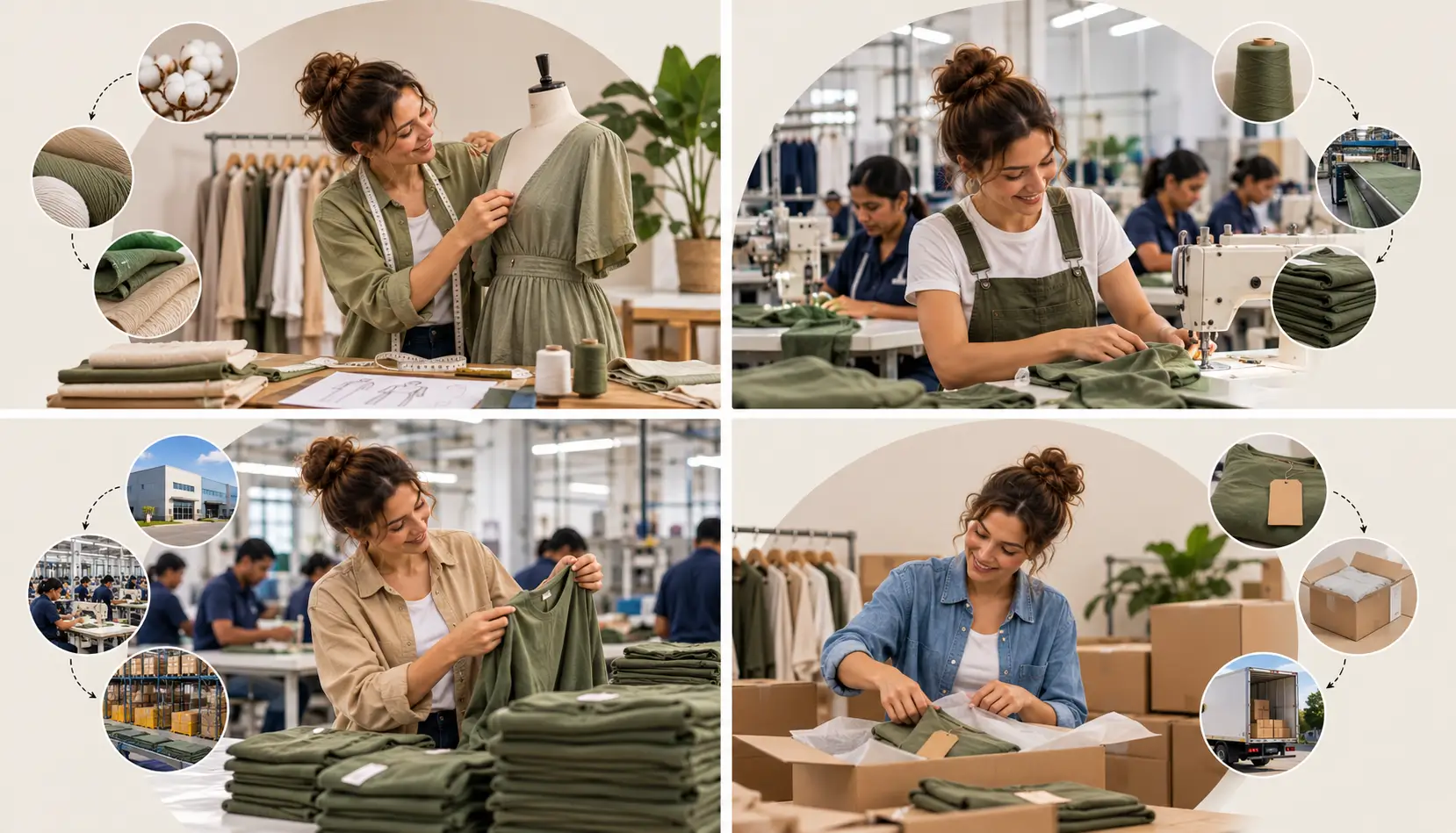
Before searching for a manufacturer, determine what type of production relationship fits your brand. Different manufacturing models provide different levels of customization and supply chain control.
Full-Package Manufacturer
A full-package manufacturer can manage multiple stages of production, potentially including:
- Fabric sourcing
- Trims
- Pattern development
- Cutting
- Sewing
- Printing
- Embroidery
- Finishing
- Labels
- Packaging
This model can simplify supplier coordination because one manufacturing partner manages a larger portion of the production process.
Cut, Make, Trim Manufacturer
A Cut, Make, Trim, or CMT manufacturer typically focuses on garment construction.
You may provide the fabric, trims, patterns, and technical specifications while the factory handles cutting and sewing.
CMT can give experienced brands more control over material sourcing. It also means you need stronger coordination across suppliers.
Private Label Manufacturer
A private label manufacturer typically offers existing garment styles that brands can customize with their own labels, colors, packaging, or other branding elements.
This model can help brands launch products without developing every garment from scratch.
Also, take a look at: 15 top private label manufacturers in the USA.
Ask about:
- Existing styles
- Fabric options
- Material certifications
- Customization
- Labels
- Packaging
- MOQ
- Sample development
Custom Bulk Clothing Manufacturer
A custom clothing manufacturer develops garments around your specifications.
This model works well for original collections where you control the fit, construction, fabric, trims, branding, and finishing.
You will usually need stronger product-development documentation, including a tech pack.
For more information, you can check Innovate Apparel’s custom bulk clothing manufacturing page and reach out in case you need personalized assistance.
Where to Find Sustainable Clothing Manufacturers
Once you know what you need, start building your sustainable clothing manufacturer list. Use several sourcing channels rather than relying on a single marketplace or directory.
For brands specifically looking for hoodie production, our guide to top custom hoodie manufacturers in the USA can help you identify potential suppliers to research further.
- Sustainable Manufacturer Directories: Specialized directories can help you identify manufacturers that promote sustainable materials or responsible production practices.
- Textile and Apparel Sourcing Platforms: Industry sourcing platforms can help you discover manufacturers across different production regions. Use supplier profiles to build your initial list, then verify their sustainability claims independently.
- Trade Shows: Textile and apparel trade shows can give you an opportunity to meet manufacturers, inspect samples, discuss materials, and ask technical questions directly. Trade events can also help you identify manufacturers that specialize in specific product categories, materials, or production methods.
- Industry Associations: Industry associations can provide manufacturer directories, sourcing resources, standards information, and networking opportunities.
- Referrals and Industry Networks: Ask designers, apparel professionals, sourcing consultants, and other clothing brands about manufacturers they have worked with. When someone recommends a manufacturer, ask what they actually experienced.
- Search Engines and Direct Outreach: Search directly for manufacturers using specific phrases such as:
- “sustainable clothing manufacturer”
- “eco-friendly apparel manufacturer”
- “ethical clothing manufacturer”
- “organic cotton clothing manufacturer”
- “recycled clothing manufacturer”
- “sustainable private label clothing manufacturer”
- “low MOQ sustainable clothing manufacturer”
Sustainable Clothing Certifications You Should Know
Certifications can provide valuable evidence, but each standard has a defined scope.
Certification or standard | What it helps verify | What it does not automatically prove |
GOTS | Organic textile processing plus environmental, chemical, social, and traceability requirements within its scope | That every operation of a company meets every sustainability criterion |
OEKO-TEX STANDARD 100 | Testing of textiles and components for harmful substances | Overall environmental sustainability |
GRS | Recycled material content, chain of custody, and additional processing requirements | That every product made by the factory is recycled |
RCS | Recycled material content and chain of custody | Full factory sustainability |
OCS | Organic material content and chain of custody | Full environmental or social performance |
ISO 14001:2026 | Environmental management system framework | Zero environmental impact |
SA8000:2026 | Social accountability and decent-work practices | Overall environmental performance |
WRAP | Facility-level social compliance and responsible production practices | Complete environmental sustainability |
Greenwashing Red Flags to Watch For
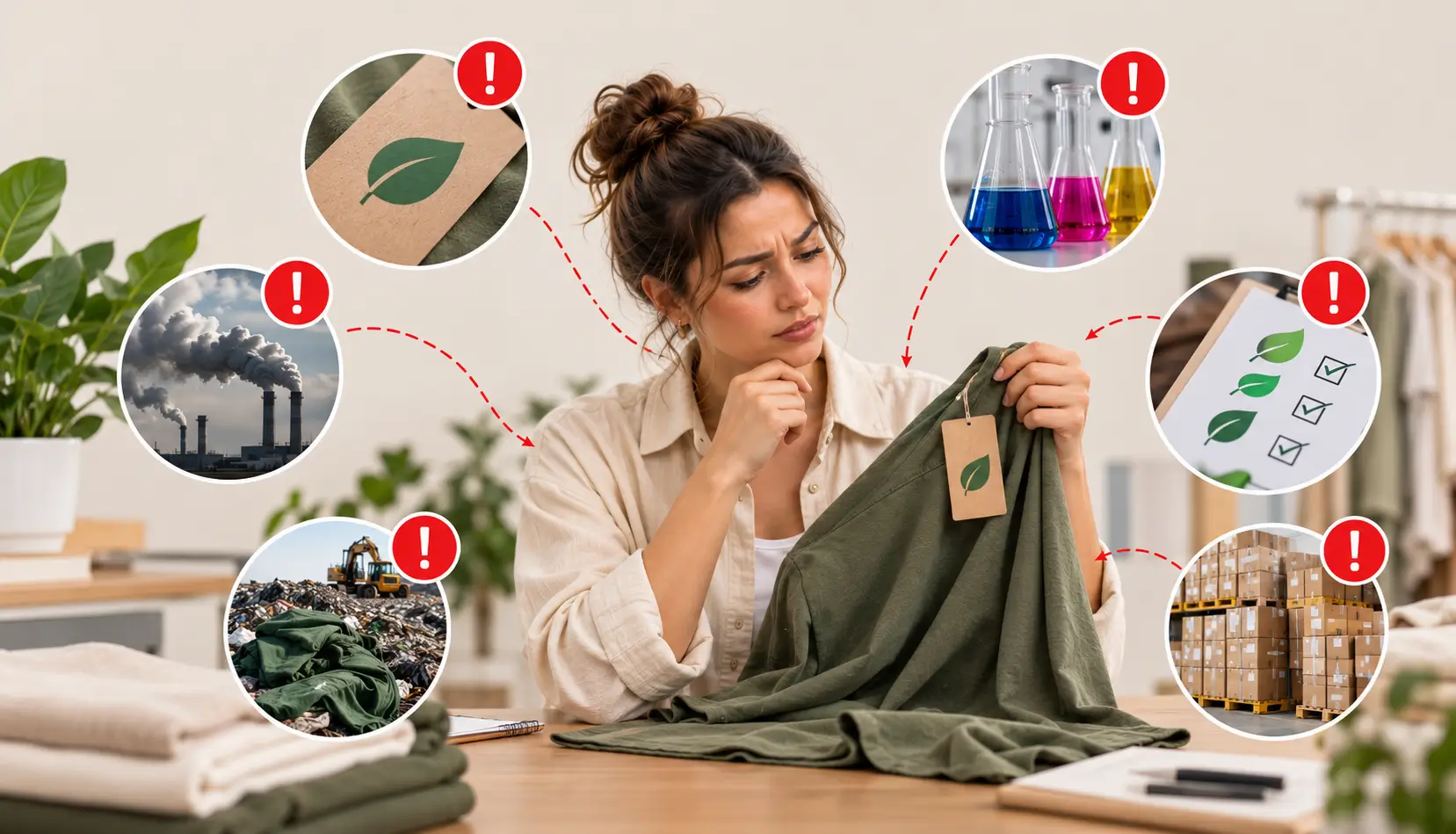
Greenwashing can make supplier evaluation difficult because sustainability language can sound impressive without providing enough evidence.
Look for specific claims and ask what supports them.
Red Flag #1: Vague Sustainability Language
Terms such as “100% eco-friendly,” “green factory,” and “fully sustainable” need supporting evidence.
Ask what the manufacturer means and how it measures the claim.
Red Flag #2: Certification Logos Without Details
A collection of certification logos does not tell you whether the certificates apply to your product.
Request the actual documentation.
Red Flag #3: One Sustainable Material Presented as Proof of Total Sustainability
Using organic cotton does not automatically make every part of the manufacturing process sustainable.
Evaluate material sourcing separately from factory operations.
Red Flag #4: No Information About Factory Conditions
A manufacturer that discusses fabrics but provides no information about worker safety, labor practices, or factory conditions requires further investigation.
Red Flag #5: No supply chain Transparency
If a manufacturer cannot explain where important materials come from or which facilities perform key processes, ask additional questions before relying on its claims.
Red Flag #6: Refusal to Provide Documentation
A manufacturer does not need to provide every internal business record.
It should, however, be able to provide reasonable evidence for the sustainability claims it expects you to rely upon.
Red Flag #7: Unusually Cheap Pricing With Extraordinary Sustainability Claims
A very low price combined with extensive sustainability claims deserves closer examination.
Ask how the manufacturer achieves its pricing and what the quote includes.
Red Flag #8: Carbon-Offset Claims Without Reduction Information
Ask whether the manufacturer actually reduces operational emissions and how it measures them.
Offsetting and emissions reduction are different activities.
Red Flag #9: Recycled Claims Without Traceability
Ask how recycled content is verified and whether chain-of-custody documentation supports the claim.
Red Flag #10: A Sustainability Page With Only Marketing Language
Look for measurable information, documentation, certifications, policies, audits, targets, and actual production practices.
A sustainability page should lead you toward evidence.
How to Choose the Right Sustainable Clothing Manufacturer
Once you have completed your research, bring the information together into a repeatable selection process. You will now move from “how to find a sustainable manufacturer” to “how to choose the right sustainable manufacturer.”
Step 1: Define the environmental, social, material, and traceability requirements that matter most for your products.
Step 2: Create a shortlist of manufacturers that meet your product, MOQ, location, and production requirements.
Step 3: Request certificates, policies, audit records, material documents, and other evidence that supports the manufacturer’s sustainability claims.
Step 4: Verify each certification by checking the certificate holder, facility, scope, validity, certification body, and covered processes.
Step 5: Compare each manufacturer’s production capabilities to ensure they can meet your garment specifications and quality requirements.
Step 6: Compare equivalent quotes and calculate the total landed cost, including manufacturing, packaging, shipping, duties, taxes, and other applicable costs.
Step 7: Request samples and evaluate the fabric, fit, construction, printing, embroidery, labels, trims, and finishing.
Step 8: Compare each sample against your tech pack and defined quality requirements before approving production.
Step 9: Conduct a factory visit, audit, or independent inspection when appropriate for your order size, product, and sourcing risk.
Step 10: Start with a controlled production run to evaluate the manufacturer’s consistency before committing to larger volumes.
Step 11: Monitor product quality, delivery performance, material consistency, documentation, defect rates, communication, and sustainability requirements throughout production.
Step 12: Scale production once the manufacturer consistently meets your product specifications and sustainability requirements.
Made Up Your Mind on Sustainable Manufacturer?
Choosing a sustainable clothing manufacturer requires more than finding a factory that uses organic cotton or displays sustainability certifications.
Start by defining what sustainability means for your products. Decide which materials, environmental practices, worker standards, traceability requirements, and production controls matter most to your brand.
Then build a manufacturer shortlist.
The strongest sourcing decisions come from matching each sustainability claim with the evidence required to support it.
Looking for a sustainable clothing manufacturer you can trust? Partner with Innovate Apparel to bring your next apparel collection to life.
Frequently Asked Questions
How do I know if a clothing manufacturer is sustainable?
What is the difference between an ethical and sustainable clothing manufacturer?
An ethical clothing manufacturer generally focuses heavily on people, labor conditions, worker rights, workplace safety, and responsible business practices. Sustainable clothing manufacturing can cover a broader range of environmental and social considerations, including materials, water, energy, chemicals, waste, emissions, traceability, and worker welfare.
The terms overlap, so evaluate the manufacturer’s actual practices rather than relying on the label.
What is the most sustainable fabric for clothing?
There is no single fabric that is automatically the most sustainable for every garment. Evaluate fiber origin, production practices, durability, processing, material certification, intended use, and end-of-life options.
A material with strong sustainability credentials may perform poorly for a particular product if it does not provide the required durability or performance.