
How to Start a Fitness Clothing Line: Complete Guide
Launching a fitness apparel business can be both exhilarating and daunting. Many new entrepreneurs don’t know where to find the right sources of supply or how to start a fitness clothing line from the ground up. The positive news is that anyone can create a thriving activewear label with effective planning, research, and implementation.
This is a guide by Innovate Apparel that separates the process into steps. At the end, you would have learned industry knowledge, product development, branding, manufacturing, and about fitness clothing manufacturers, so you can launch with confidence.
The fitness wear business has transformed a lot beyond gym clothing. The current consumers desire clothes that are stylish, comfortable, and functional, be it during exercise or just living a busy pace of life. People are ready to spend more on the quality of well-designed and high-quality activewear that supports their values and personality.
This introduces the industry as the ideal place where entrepreneurs looking for how to start a fitness clothing line, have good design ideas, good materials, and considerate branding.
A Unique Set of Eyes on the Fitness Apparel Industry
Industry Overview
The fitness apparel business market is booming throughout the world. Innovate Apparel has witnessed that more people are adopting healthy lifestyles than ever before, and it is this that has been driving the demand for quality, trendy, and functional active wear. For anyone researching how to start a fitness clothing line, this growing demand creates a strong foundation for new brands to enter the market. Customers are also demanding fashionable attire that is hardworking and can be worn anywhere, be it in the gym or simply enjoying the sporting lifestyle.
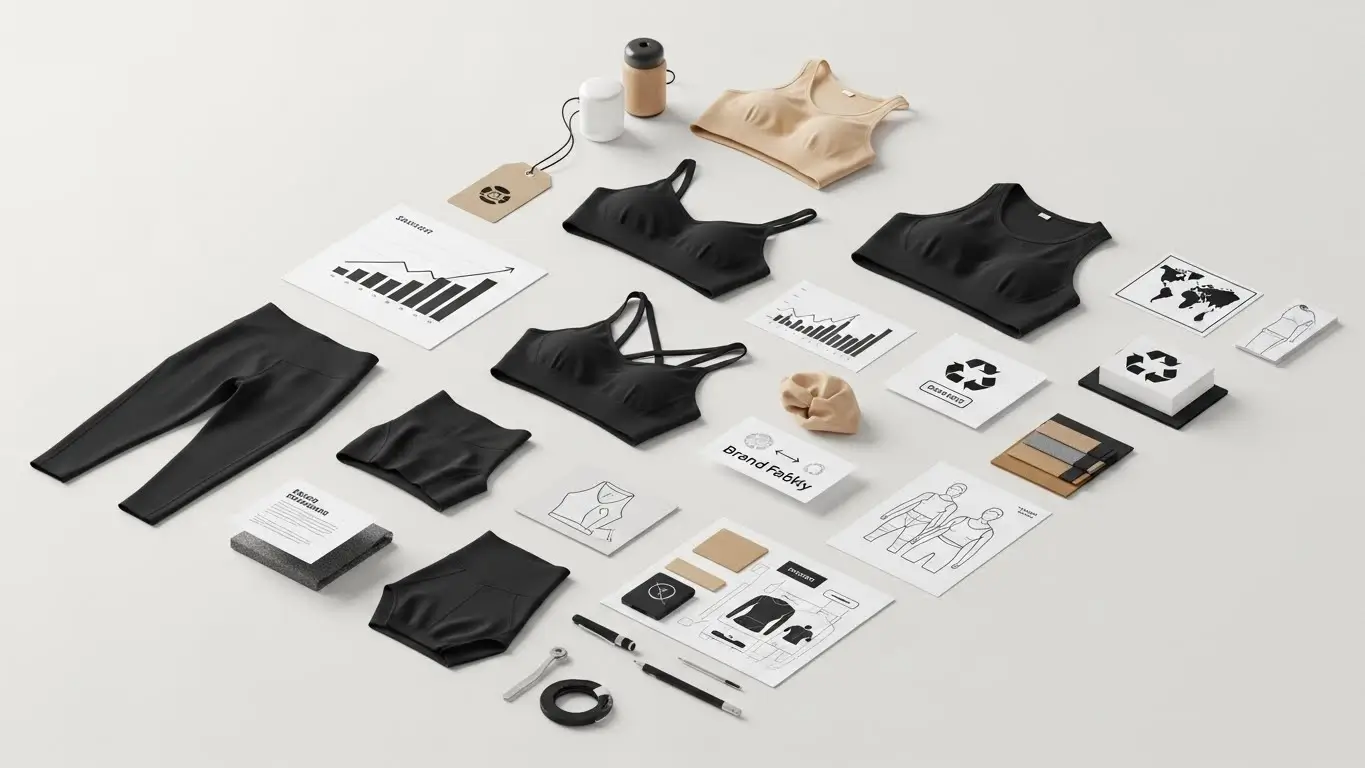
According to the recent data presented on the market, the activewear segment is still in its upward trend, and sustainable fitness clothing is a growing niche. The sustainable athleisure market is expected to reach US$ 176.05 billion by 2030, growing at a CAGR of ~12.5% from 2025 to 2030. The newcomers get the opportunity to attract a wide range of customer groups, including athletes and healthy people, who desire comfortable and daily outfits for fitness.
One of the major problems with sustainable fitness clothing is the drawbacks. Customers are becoming more interested in an environmentally friendly brand, based on recycled materials and less waste. More engagement and loyalty are given to small brands that focus on being sustainable even in small brands. According to The Wall Street Journal, numerous brands are struggling to absorb the cost of sustainable manufacturing technologies. This trend creates space for new start-ups to stand out from mass-market competitors and attract customers who value both fashion and sustainability, an important insight for anyone exploring how to start a fitness clothing line.
What This Means for New Fitness Apparel Brands:
- There is room for new players who focus on high-quality performance wear.
- Eco-conscious consumers offer an expanding and loyal market segment.
- Unique fabrics, sustainable materials, or designs can give you a competitive edge.
- Athleisure continues to blur the line between gym wear and everyday fashion.
- Brands that balance style, comfort, and ethics can differentiate quickly.
Reality Check
Although the potential of the fitness apparel industry is enormous, there are challenges to it. Many of the new businesses researching how to start a fitness clothing line often overlook the level of competition in this space. Traditional companies such as Nike, Adidas, and Gymshark dominate consumer mindshare, making differentiation essential for any new brand.
An effective fitness-related apparel brand must not be limited to cool styles but also pay attention to fit, clothing, and functionality. Consumers are discriminating, and one ill-conceived product can damage brand image.
Further, manufacturing and supply chain management are complicated fields. The process of selecting the most appropriate fitness clothing suppliers and fitness clothing manufacturers is critical in the provision of quality, time delivery, and cost effectiveness.
Innovate Apparel has learned that brands that take time at the outset to research manufacturers and strike reasonable deals are usually spared a lot of headaches in the future. Realistic attitude involves the knowledge of production schedules, minimum order levels, cost of materials, and adherence to regulations so as to avoid expensive errors.
How to Safeguard Your Brand During Early Stages:
- Conduct a competitive analysis before developing your first product.
- Test prototypes extensively for comfort, durability, and performance.
- Research multiple manufacturers and request samples before committing.
- Clarify production schedules, MOQs, and pricing structures upfront.
- Stay informed about industry regulations to ensure compliance and avoid setbacks.
Success Factors
There are a number of major considerations that make it successful in the fitness clothing industry. To begin with, there is a need to have a strong brand identity. Innovate Apparel realized that brands that communicate clearly, have unique stories, and speak with a consistent voice should touch customers more.
This assists in creating emotional linkages and loyalty not only to the functionality of the product. Second, there is the quality of the products. Customers will be ready to spend on things that will be long-lasting, comfortable, and productive in exercises.
Marketing is another important success factor. The use of social media, influencer partnerships, and targeted advertising would assist a new brand to reach its optimal audience in a brief period of time. The other lesson learned is that the customer experience in the form of convenient navigation on the site and the presence of customer care foster customer trust and create repeat customers.
Lastly, the regular modification of the company to the needs of the market, customer reviews, and sustainability factors can ensure the development in the long run. Whenever a brand can strike a balance between style and performance and ethical practices, then it can be in a position to reign supreme in the present competitive market.
To Position Your Brand for Sustainable Success, You Should:
- Craft a brand story that resonates with your target audience.
- Invest in premium materials and reliable manufacturing.
- Build a strong social presence and use influencers strategically.
- Offer a smooth, trustworthy online shopping experience.
- Monitor customer reviews and adjust your products or strategy accordingly.
- Embrace sustainability as a core part of your brand identity.
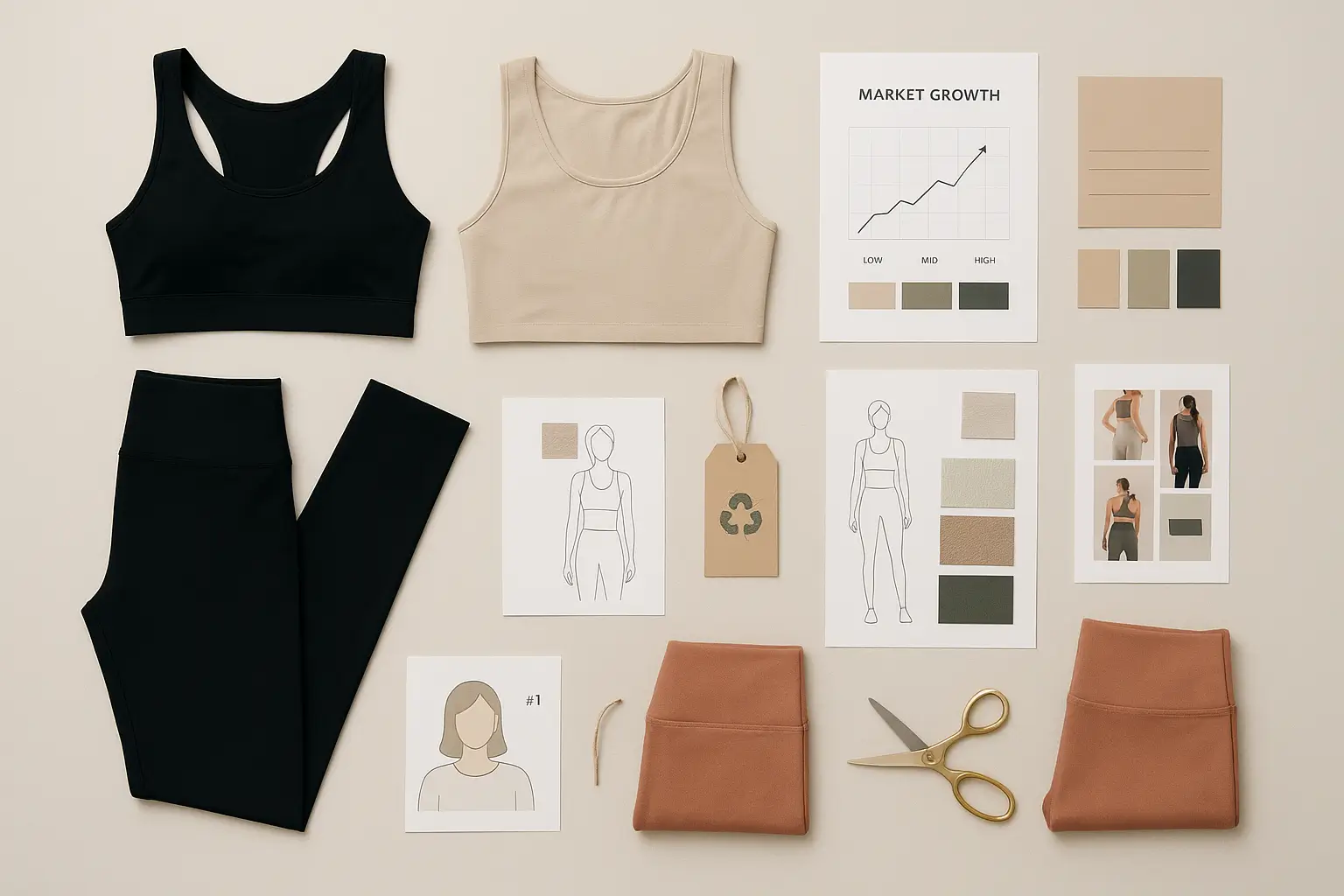
Find Your Unique Position in the Market
Analyze the Competitive Landscape
Competition is something that you need to know before you roll out your brand. Anyone learning how to start a fitness clothing line should begin with a thorough competitor analysis to gather insights on product pricing, design, marketing strategies, and market gaps. Monitor large and small brands to identify what is being successful and the areas holding potential. Some of them, like high-performance sports apparel, are specialty brands, and others are trendy athleisure. These differences can be determined by you, thus carving yourself a niche.
Listening to client feedback and conversation on social media. They tell us what people are fond of, what angers them, and where their rivals fail. Early identification of these gaps enables a brand to design its products to suit the unmet needs. In the case of a new brand of fitness clothing, the brand can be differentiated by offering more sizes, better moisture-wicking fabric, or other greener alternatives than the previous brands.
When Evaluating Competitors, Pay Attention To:
- Price ranges: Where do your competitors position themselves?
- Design and style direction: Minimalist, bold, or lifestyle-oriented?
- Fabric & material quality: Are they using advanced, eco-friendly, or basic fabrics?
- Customer complaints: Fit issues? Durability problems? Limited sizes?
- Marketing methods: Influencers, TikTok, community-building, email marketing, etc.
- Brand values: Are they promoting sustainability, inclusivity, or high performance?
Define Your Niche
It is important to define a niche in order to be outstanding. Competing to attract everybody usually results in lost messages and unresponsive products. Narrow down your target to a specific set of customers, fashion, or category of product. You might target yoga enthusiasts, gym-goers, high-intensity, or plus-size fitness gear as an example. A definite niche enables you to engage in marketing, create special products, and have a devoted audience.
Lifestyle and values can also be part of your niche. The influencing factor, Innovate Apparel, noticed that brands that cited sustainability, ethical production, or inclusive size usually form a good community about the products. Defining your niche will allow you to build a brand that the customers would be proud to relate with and purchase again and again, as well as refer their friends.
Identify Your Target Customer
It is important to know your target customer. Innovate Apparel, a leading fitness clothing manufacturer, proposes to develop an elaborate customer profile containing age, gender, exercise, style preferences, and budgets. This aids in making decisions regarding the type of products, design, materials, and marketing channels. As an example, younger customers can choose fashionable and bold designs, and professionals can choose simple and flexible athleisure.
When evaluating competitors and identifying your target customers, examine:
Pricing Strategy:
- Budget brands: $15-$40 per item (Old Navy, Target’s All in Motion)
- Mid-range: $50-$80 per item (most DTC brands, Gymshark)
- Premium: $90-$150+ per item (Lululemon, Alo Yoga, Outdoor Voices)
Where do you want to position yourself? Consider that higher prices require justification through quality, brand prestige, or unique features.
Innovate Apparel also observed that having close communication with the potential clientele based on surveys, social media polls, and test launches is informative in a way that it can be acted upon. Understanding what your customers care about is comfort, style, sustainability, or price, so you could design products and messages that conform to their expectations. The right knowledge of your target customer will minimize the chances of coming up with products that are not selling.
Build a Brand That Resonates
Brand Foundation Elements
A good brand is a narrative, values, and personality, not a logo or product, but the narrative, values, and personality that is appealing to your audience. The associated brands that take the time to grow the core perform well in the long run.
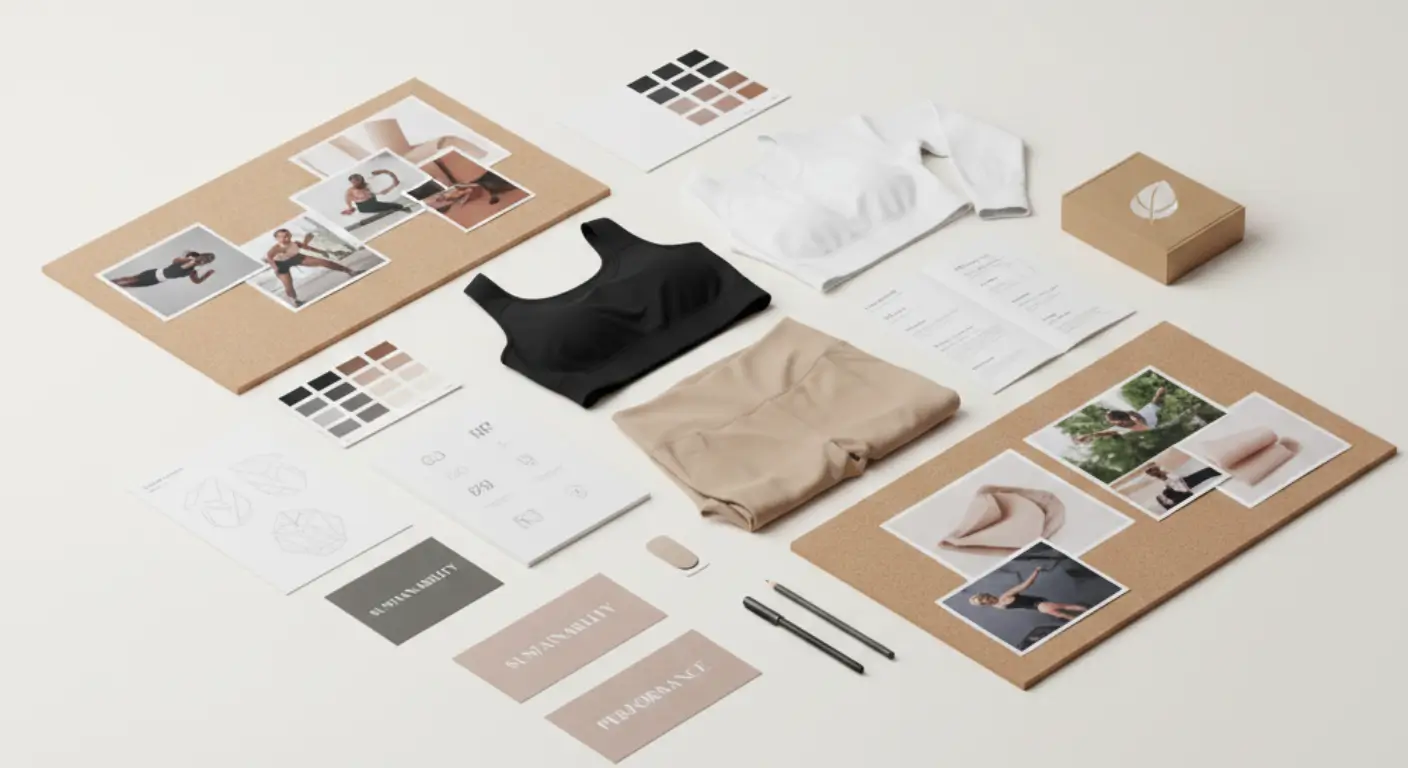
Brand Name: Your name must be catchy, easy to pronounce, and it must be representative of your brand’s mission. Do not use generic names that end up drowning in the market. Consider the way it will go on labels, packaging, and social media.
Brand Story: A strong story is one that generates emotion. The more successful brands have real stories behind why they are the case or who inspired their founder, the more people become engaged. It can be regarding the spread of good health, inclusiveness, or sustainability; be open about it.
Brand Values: Values are instructions on decisions, product design, through marketing tone. They assist your followers in knowing what you believe in. As an example, the focus on environmentally friendly fabrics or community health promotion can appeal to responsible customers.
Brand Voice: It is consistency in communication that fosters trust. Being casual, inspirational, or informational, your brand voice should correspond with the expectations of your audience. A brand that fails to alter its tone in messages through emails, social media, and websites appears more business-like and friendly.
Visual Identity
Customers recognise your brand to them through visual identity, which they hold on to. This involves your logo, colour scheme, typeface, and image. The experience that Innovate Apparel attained was that the production of professional visual elements is linked with professionalism and reliability, and the customers are likely to trust what you provide them.
Colors are emotional, and by color blue, one can attach an image of reliability and trust, green can be attached to sustainability, and with red, one can attach a picture of energy or passion. Your typography should also be in line with your brand: minimalistic with modernized sans-serif, active and energetic treatment with big fonts. Good pictures of your products in action, with movements and fit, will make the customer see the worth of your clothes.
Brand Positioning
Positioning is a way in which your brand is seen relative to other rivals. Innovate Apparel observed that those brands that articulate their unique selling points do so at a faster rate. Are you going for luxury, affordable, or eco-friendly? Are you aiming at athletes, recreational gym-goers, or athleisure consumers? Are you learning how to start a gym clothing brand?
Identify what you are aiming for and make sure that everything in branding and marketing supports your position. Regular positioning is a source of credibility and will make your target audience see the need to use your brand very soon.
Design Products your Customers will adore.
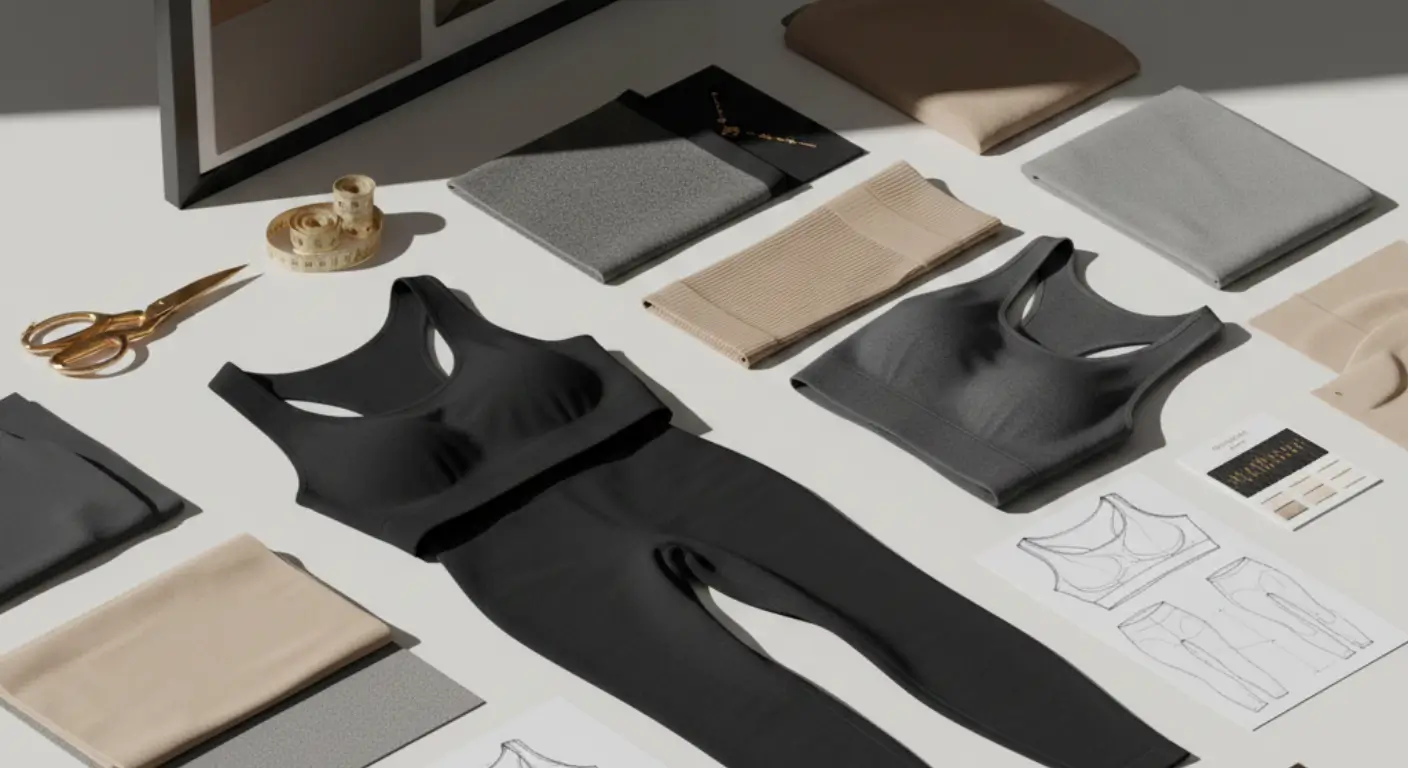
Create Products Your Customers Will Love
Choosing Your Launch Products
The choice of the products to launch is of great importance. A small and specific product line, appropriate to your niche, is what Innovate Apparel would recommend initially. The most popular are leggings, sports bras, gym shorts, performance tops, and hoodies. This will enable you to achieve quality perfection, customer feedback, and cut down on initial costs.
Begin with all-purpose things that can attract various activities. As an example, high-performance leggings, which can be worn both in the gym and as casual, can appeal to fitness customers and, at the same time, attract athleisure customers. When a business launches a large number of products simultaneously, the products usually end up being of low quality, and customers will be overwhelmed. Curation will enable your brand to gain a reputation and customer loyalty over time.
Design Considerations
Design is more than beautifying; it affects the comfort, performance, and fit – also aura, as gen-z says these days. Consumers love the fact that such things as moisture-wicking clothes, breathability, stretch, reinforced seams, and ergonomic fits are considered. The functionality should have the capability to support the activity the product is intended to support, e.g., yoga, running, or a high-intensity training experience.
Green materials are being appreciated. Providing eco-friendly choices proves to be responsible and a brand differentiation. Innovate Apparel has observed that adding a little but classy design accessories, unique stitching, color accents, or branded logos can ensure that your products can become your key recognizable additions, which will increase their appeal.
To Create Standout Fitness Apparel, You Should:
- Match fabric performance to the activity your product supports.
- Prioritize quality construction and fit testing before production.
- Explore sustainable or recycled materials as a brand differentiator.
- Develop signature design elements that customers can instantly recognize.
- Blend functionality with style so products work in the gym and in daily life.
Partner With the Right Gym Wear Manufacturer
Selecting an appropriate manufacturing partner plays a very important role in providing quality products. One should consider the possibility of Private Label Gym Wear Manufacturing to preserve the identity of the brand, but gain access to professional production opportunities.
Look at aspects like production capacity, quality assurance, lead times, and ethical practices. Innovate Apparel observed that those brands that collaborate with manufacturers that have experience in the field of fitness apparel, not just in general clothing, achieve performance results and returns less. A good collaboration will guarantee high quality of your product, and your brand will be able to grow without compromises.
Other vs Innovate Apparel
Other brands are content with generic suppliers, yet Innovate Apparel is about innovation. It is a big difference to collaborate with a manufacturer that gets your vision of the brand, materials, and design expectations. Innovate Apparel realized that brands that are ready to work hand in hand with their manufacturers tend to come out with better-fitting and quality products that customers identify and like.
The difference between your fitness clothing line and that of other competitors would be innovation in materials, sewing, and functionality, as their only solutions available are those in off-the-shelf products. So if you are looking for how to start a gym clothing line, you should get in touch with the Innovate Apparel active team.
To Get the Best Results From Your Manufacturer, like Innovate Apparel:
- Communicate your design expectations clearly and share detailed tech packs.
- Work collaboratively during sampling and fit-testing stages.
- Ask for customization options instead of accepting standard catalog items.
- Discuss material innovations and explore advanced fabric technologies.
- Maintain open communication to improve quality and solve issues quickly.
The Complete Production Timeline
Week 1-2: Sampling Phase
What happens:
- Manufacturer creates initial samples based on your specifications or chosen private label designs
- For custom designs: They interpret your tech pack and create first prototypes
- For private label: You receive samples of existing catalog items
Your role:
- Review samples carefully
- Wear them, wash them, work out in them
- Check fit across size range (order multiple sizes)
- Note any issues: fit problems, construction flaws, fabric issues
- Provide detailed feedback to manufacturer
Common issues in first samples:
- Sizing runs small or large
- Fabric is see-through or wrong weight
- Seams are uncomfortable or misaligned
- Colors don’t match expectations
- Features missing or placed incorrectly
Timeline: 7-14 days to receive samples, 3-7 days for your review
Week 3: Sample Revisions (if needed)
What happens:
- Manufacturer adjusts based on your feedback
- Creates revised samples (typically 1-2 revision rounds included)
- You review again
Critical: Don’t skip this step. Approving samples means “proceed with bulk production exactly like this.” Any issues will be repeated across hundreds of pieces.
Timeline: 7-10 days per revision round
Week 4: Approve Final Sample & Place Bulk Order
What happens:
- You officially approve final sample (in writing)
- Place bulk production order with confirmed quantities, colors, sizes
- Pay deposit (typically 30-50% of total)
- Manufacturer schedules your production slot
Details to confirm:
- Exact quantities per SKU (style/color/size combination)
- Delivery timeline
- Payment terms and schedule
- Shipping method and responsibility
- Quality standards and inspection process
Timeline: 1-3 days for paperwork and payment
Week 5-8: Bulk Production
What happens:
- Manufacturer produces your order
- Steps: Fabric cutting, sewing, quality control, finishing (pressing, folding), labeling, packaging
- You receive periodic updates (good manufacturers send progress photos/videos)
Your role:
- Stay in regular contact
- Request photo updates weekly
- Address any questions or concerns immediately
- Don’t make changes during production (causes delays and errors)
Timeline: 3-6 weeks depending on order size and manufacturer capacity
Week 9: Quality Control & Shipping
What happens:
- Final inspection by manufacturer
- Any defective pieces removed or fixed
- Products folded, bagged, boxed
- Shipping arranged (you pay balance before shipment)
Shipping options:
- Domestic (USA manufacturing): 3-7 days via UPS/FedEx ($150-$500)
- Air freight (overseas): 7-14 days ($800-$2,000 for small orders)
- Sea freight (overseas): 4-8 weeks ($2,000-$5,000 for container, most cost-effective for large orders)
Timeline: 3-7 days for packing, plus shipping time
Week 10: Receive & Inspect Inventory
What happens:
- Products arrive at your location
- YOU inspect every piece (or hire inspection service)
- Check for defects, damage during shipping, accuracy of order
Inspection checklist:
- Count quantities—did you receive what you ordered?
- Check each size—are measurements accurate?
- Inspect stitching—no loose threads, skipped stitches, or holes?
- Test fabric—no pilling, discoloration, or texture issues?
- Verify colors—match approved samples?
- Check labels—correct placement, spelling, care instructions?
- Try on samples—fit matches approved samples?
- Assess packaging—arrived in good condition?
What to do if issues found:
- Document everything with photos and detailed notes
- Contact manufacturer immediately (within 24-48 hours)
- Most reputable manufacturers will replace defective items or provide credit
- This is why choosing reliable manufacturers matters—they stand behind their quality
Timeline: 1-3 days for thorough inspection
Total Timeline Summary:
USA Manufacturing (Private Label):
- Sampling: 1-2 weeks
- Revisions: 0-1 weeks
- Production: 3-4 weeks
- Shipping: 3-7 days
Total: 5-8 weeks from order to receiving inventory
USA Manufacturing (Custom):
- Sampling: 2-3 weeks
- Revisions: 1-2 weeks
- Production: 4-6 weeks
- Shipping: 3-7 days
Total: 8-12 weeks
Overseas Manufacturing:
- Sampling: 2-3 weeks
- Revisions: 2-3 weeks
- Production: 6-10 weeks
- Shipping (sea): 4-8 weeks
Total: 14-24 weeks (3.5-6 months)https://innovateapparel.co/
Budget Your Fitness Clothing Line Launch
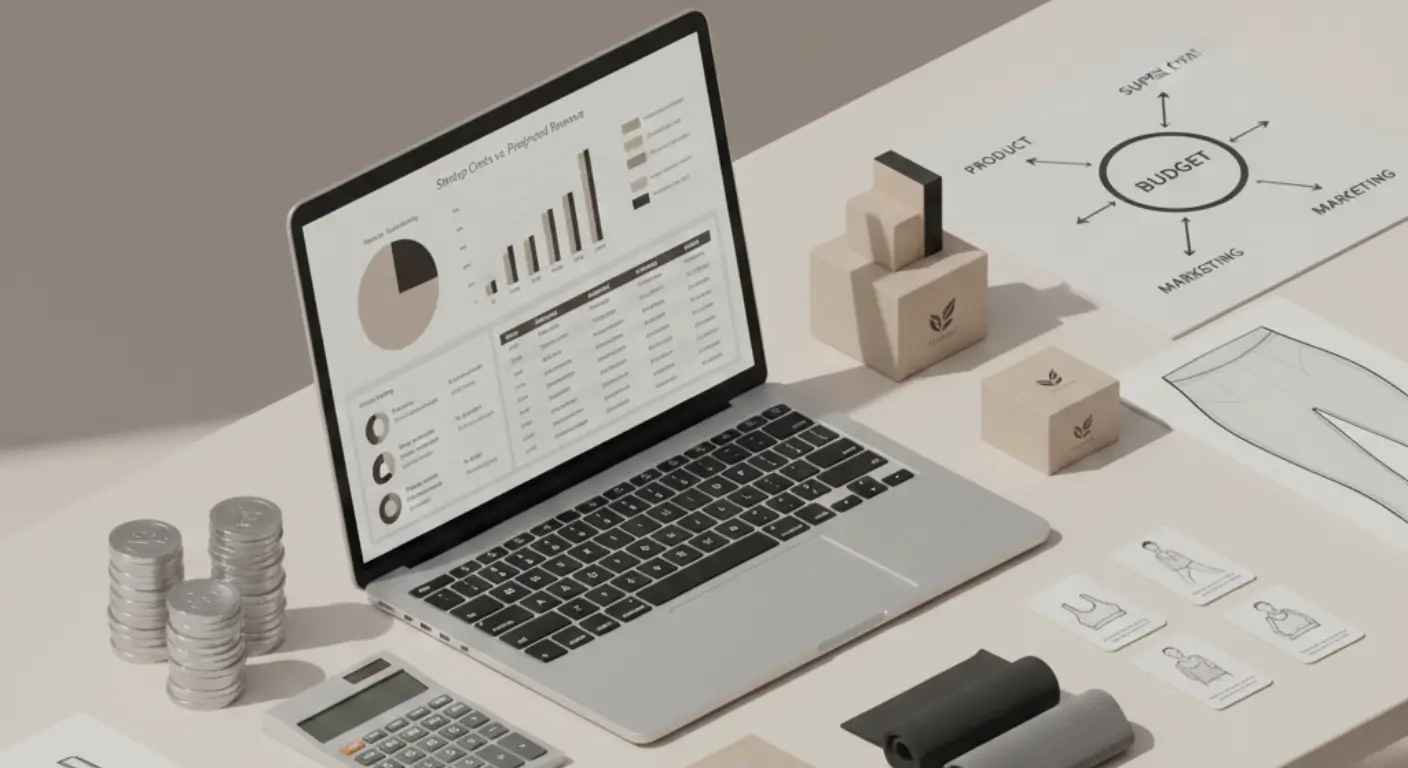
Efficient budgeting will succeed or fail your launch. It is recommended that all costs should be taken into account, not only the product development, but also the manufacturing, branding, website setup, marketing, and initial inventory. Start with a realistic budget that does not focus on the quantity but quality, particularly in the initial collection.
This should also take into consideration marketing and customer acquisition. To become popular, social media campaigns, influencer partnerships, and targeted advertisements are necessary. Brands that are considerate in their financial planning as well as in how they budget their money and distribute funds, are more likely to launch with fewer problems in cash flow, and other problems can also quickly pivot according to the feedback of their initial customers.
Launch Your E-commerce Website
The basis of your fitness clothing brand is your e-commerce website. Having a clean and easy-to-navigate site would increase conversions and trust. Make sure that your product pages are educational, that there are high-quality images and sizing guides, as well as descriptions. Add safe payment and easy checkout services.
Combine your site and social media, and marketing tools. The email capture feature, time-based offers, and customer reviews are useful in capturing customers and generating repeat buys. The professional appearance of the site has a huge influence on first impressions, and it is an important aspect to rely on when establishing the credibility of your brand.
Build Buzz Before You Launch (Pre-Launch Strategy)
Building anticipation ahead of your launch can result in early sales and interactions. Teaser campaigns, social media countdowns, early access to subscribers, and influencer partnerships are some of the tactics that Innovate Apparel recommends. Get emails and create a community of people who are interested in your brand.
Sampling and reviews of the products are also known as pre-launch strategies. Brands that build early sneak previews or behind-the-scenes engagement with their potential customers tend to build more interest and loyalty. This will be a sure-footed way of making your introduction in a competitive market, not a secret.
Learn From Others’ Mistakes
Innovate Apparel studied the market and noticed common mistakes from new fitness clothing brands. These include overextending the product line too soon, underestimating manufacturing timelines, neglecting marketing, and ignoring customer feedback. Learning from these missteps is essential.
Focus on quality over quantity, maintain consistent communication with your manufacturer, and listen to early adopters. Brands that adapt quickly to feedback, maintain transparency, and prioritize customer experience tend to grow faster and sustain success in a competitive industry.
Quick Steps: How to Start a Fitness Clothing Line?
Step 1: Find Your Unique Position in the Market
Step 2: Build a Brand That Resonates
Step 3: Design Products Your Customers Will Love
Step 4: Partner With the Right Gym Wear Manufacturer aka Innovate Apparel
Step 5: Budget Your Fitness Clothing Line Launch
Step 6: Build Your E-Commerce Website
Step 7: Pre-Launch Strategy (Build Buzz Before Launch)
Step 8: Navigate the Production Process
Step 9: Launch & Marketing Your Fitness Clothing Line
Finalized a Fitness Clothing Line for Your Brand?
Launching a fitness clothing line is a journey that combines creativity, planning, and persistence. By understanding the industry, defining your niche, building a strong brand, creating high-quality products, partnering with the right manufacturer, budgeting wisely, and marketing effectively, you can create a brand that resonates with customers and thrives in the growing activewear market.
Choosing a reliable gym wear manufacturer ensures your products meet expectations, helping your brand earn trust and loyalty. With the right strategy and commitment, your idea of how to start a fitness clothing line can grow from an idea into a successful business that inspires and empowers customers every day.