
Small Batch Hoodie Production: Low MOQ Manufacturing Guide
Launching a clothing brand does not need huge initial investments or a stockpile in the warehouse. Small-scale production of hoodies has changed the way entrepreneurs, designers, and businesses are used to bringing their apparel concepts to life. Low minimum order quantity (MOQ) manufacturing provides the flexibility that modern brands require, whether you are trying out a new design concept, launching a limited collection, or creating a sustainable brand model.
The conventional model of producing hoodies required that you come up with an order of 500, 1000 or even higher of a particular style. This posed a great adversity to startups and small businesses. The current scenario in manufacturing is different. Low MOQ manufacturers realise that brands require space to experiment, prove designs, and expand naturally without facing the burden of overstock.
This change will enable you to experiment with reactions, enhance your designs according to the genuine customer responses, and conduct cash flow in a better way. You are not gambling as to what may be sold; you are getting educated as to what does get sold. As Innovate Apparel recognizes this, we’ve prepared a guide on low MOQ hoodie manufacturing. Let’s learn more about small batch hoodie manufacturing by diving deeper into this guide.
What Is Small Batch Hoodie Production?
Small batch hoodie production is a process of hoodies that takes the form of 25 to 500 hoodies at a given time. Small batch production, as opposed to mass production, which binds you to a thousand of the same product, allows you to make limited batches of custom designs without taking on too much financial risk.
It is like bulk production of the hoodies, but with a modified production that can fit small amounts. Manufacturers that are prepared to produce small quantities in large volumes have more flexible installations, reduced lead times and systems that are able to process a number of small orders in an efficient manner as opposed to a few huge orders.
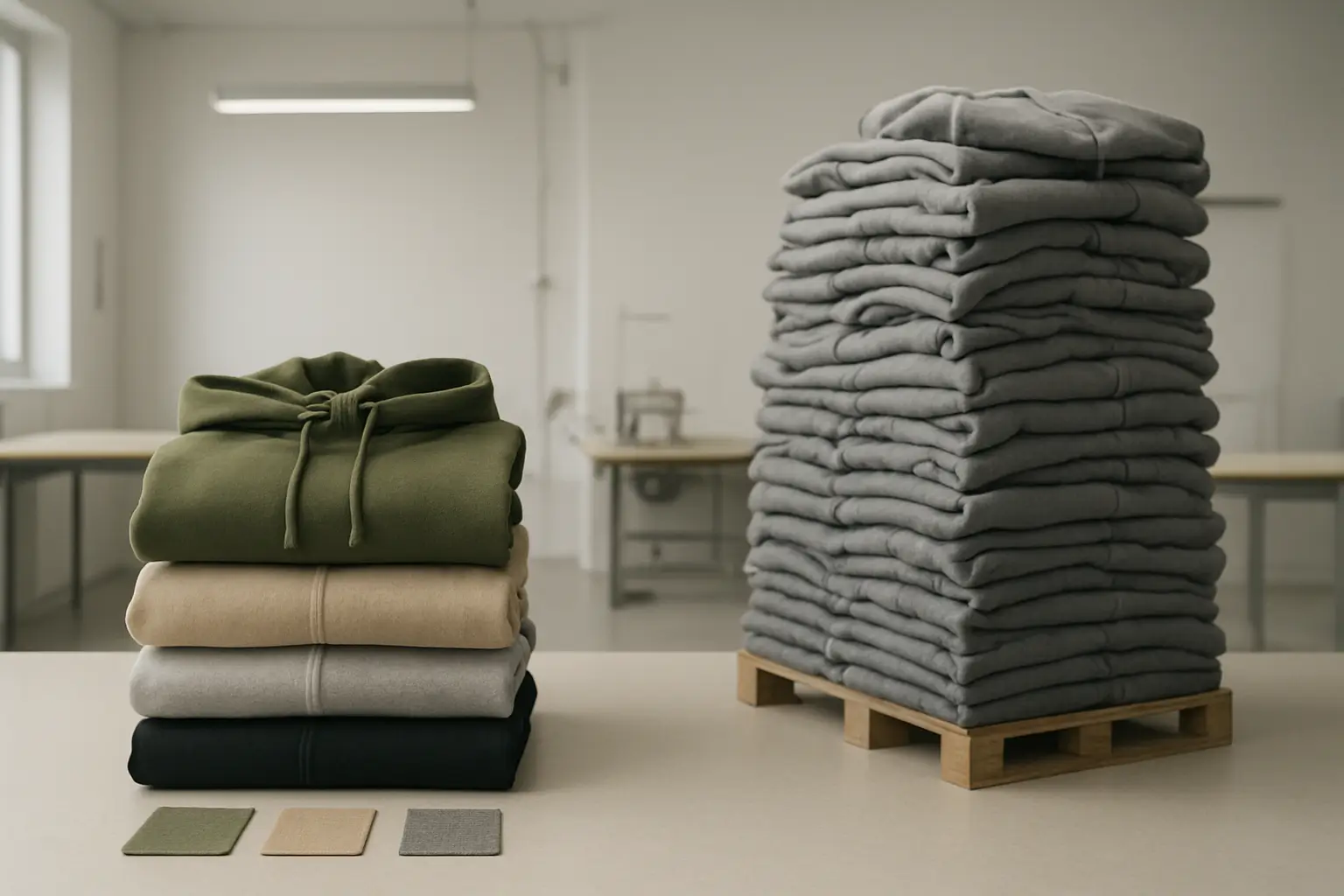
This method of production has a number of functions. In the case of new brands, it acts as a trial ground, an avenue of launching without putting money into the farm. In case of established brands, it allows releases on limited edition, seasonal collections, or special cooperations. In print-on-demand businesses that are growing, it will be the bridge between single orders and mass production.
The economics differ from traditional manufacturing. While your per-unit cost will be higher than ordering 5,000 pieces, the total investment and risk drop dramatically. You’re paying for flexibility, speed to market, and the ability to iterate quickly based on what your customers actually want.
Small batch production also aligns with sustainable fashion principles. You produce what you can sell, reducing waste and avoiding the environmental impact of unsold inventory sitting in landfills. It’s manufacturing that matches demand rather than hoping demand matches your manufacturing decisions.
Key Benefits of Low MOQ Manufacturing
1. Lower Financial Risk
The most evident benefit of low MOQ production of hoodies is the lower capital requirements. You can start by putting in a small investment of between $2,000 – $5,000 in a small batch production run instead of putting in big investments of $15,000 – $30,000 in a big batch production run. This enables bootstrapped startups, side hustlers, and small business ventures that are experimenting in new markets to make hoodies.
2. Market Validation Before Scaling
Minimal production is a real world market research. The design concepts, price points, and preferences of the customers can be tested using real products instead of relying on surveys or assumptions. The information you get after selling 100 hoodies would mean so much more than what you could guess 1,000 customers wanted.
3. Inventory Management and Cash Flow
Stocking inventory ties up cash and creates problems in storage. Small batch production of hoodies keeps your stock low and the cash flowing. You can be just in time and order new batches as old ones are sold, instead of keeping hundreds in the warehouse.
4. Creative Freedom and Experimentation
Low MOQ manufacturing removes the fear factor from trying new ideas. Want to test a bold graphic concept? Launch a collaboration with an artist? Create a limited edition product? Small batch production makes experimentation financially viable.
5. Faster Time to Market
Small batch manufacturers normally have shorter lead times compared to mass production oriented factories. Rather than spending 12-16 weeks to place your order, you can spend 3-4 weeks. Such expediency will allow you to capitalize on the trends, launch collections that are conditioned by some events or seasons and continue the chain of your brand evolution.
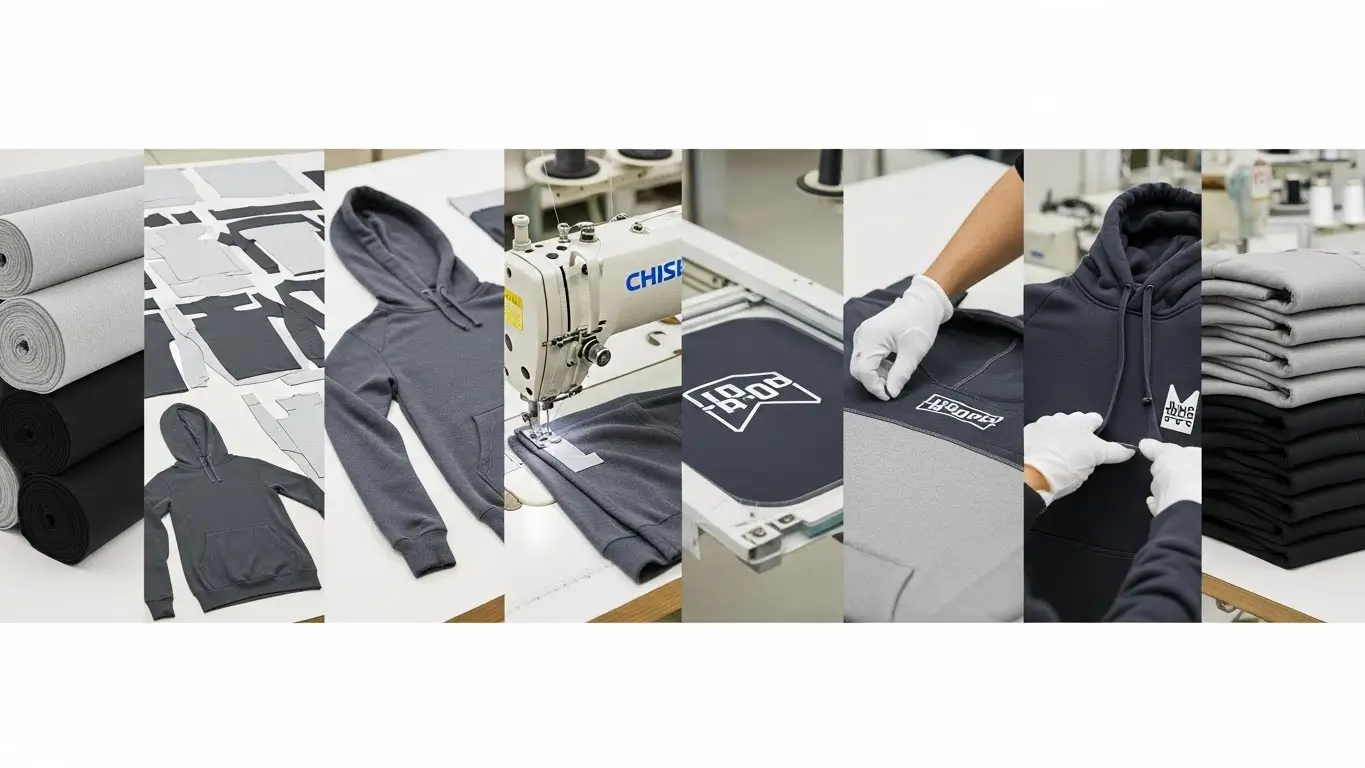
Small Batch Hoodie Production Process
The small batch hoodie production will assist you in planning and being realistic. Although manufacturers differ in terms of particular workflow, the majority of them have a general structure. Innovate Apparel has divided the production process into 5 phases, so you can easily understand them.
Phase 1: Design and Specification
Your design vision is translated into technical specifications, and the process commences. You will have to supply or collaborate with the hoodie manufacturer in establishing tech packs. They are elaborate reports that state all the features about your hoodie, such as size, materials and how you are going to decorate it.
Your manufacturer must know precisely what fabric and weight are required, what colour options are needed, what size options are necessary, what label and tag options are needed and other customizations such as special zippers, custom drawstrings, or special stitching. The more specific you are, the fewer surprises you will have.
Phase 2: Sampling and Approval
Prior to the actual production, manufacturers will normally prepare samples so that you can approve. This is a very important step as you see and feel the real product, check size, colour verification and quality. The sample cost varies between $30 – $150, and it typically depends on complexity.
Review samples carefully. Check every detail against your specifications. Try them on or have representatives from your target size range test them. It’s far easier and cheaper to make changes at the sample stage than after producing 200 units.
Phase 3: Material Sourcing and Preparation
After approving samples, materials are sourced, and the manufacturer prepares to begin hoodie production. In the case of custom hoodie manufacturing, this would consist of the purchase and procurement of blank hoodies or fabric, ordering any custom items, such as woven labels or speciality zippers, and preparing screens or embroidery files to be used to decorate the item.
The sourcing schedules of materials are dependent on availability. The hoodie manufacturing of standard fabric colours and weights takes shorter times in shipment compared to the custom dye lots or the speciality material, which may require more days or weeks. Discuss material lead times upfront to set accurate production schedules.
Phase 4: Production and Quality Control
The real small batch hoodie production process starts with the cutting of fabric to pattern, construction of the garments, electronic application of any print, embroidery, or any other customization, and labelling, tags, and packaging. During production, there are quality control gates that guarantee uniformity and help in the early detection of defects.
Small batch manufacturers might be doing several orders at once, thus you will need to wait in their queue depending on the order complexity and the number of orders in their queue. The plain printed hoodies may be ready in a week or two, whereas the freshly made hoodies with complicated embroidery may take 3-4 weeks.
Phase 5: Final Inspection and Delivery
Manufacturers should do final quality checks before shipment. They should verify printing mistakes, building flaws, size standards, and packaging. This last checkpoint will eliminate the delivery of faulty products that will have to be returned or replaced.
The ways of shipping and schedules vary depending on your location and urgency. Domestic orders could be delivered within a few days through ground shipping, whereas international orders could sail through the air or sea through air and sea shipping based on your time schedule and budget concerns.
Finding the Right Hoodie Manufacturer
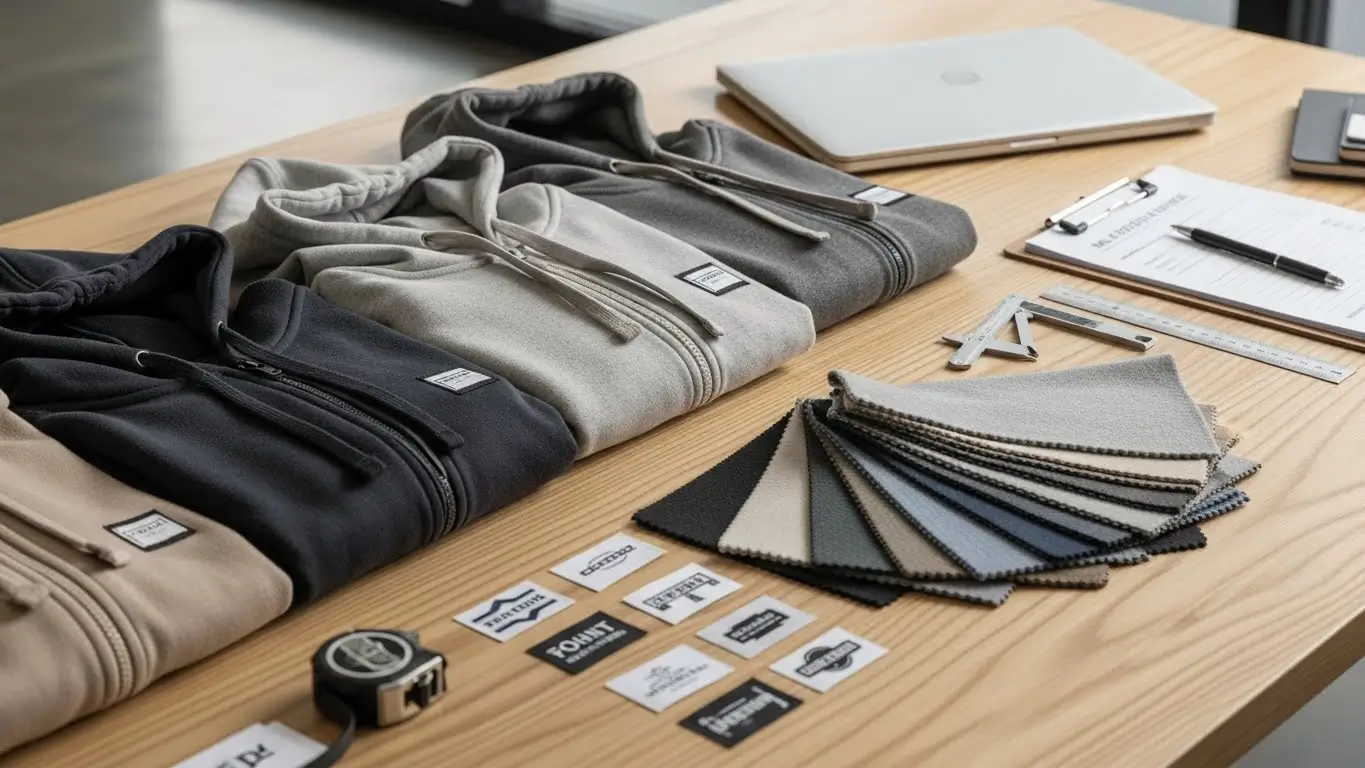
The choice of the right hoodie manufacturing partner is the key to small batch hoodie production. The bad decision causes problems in quality, a lack of deadlines, and communication frustrations. The right partner is like a great asset in developing your brand. Let’s break it down into a few simple steps.
Research and Vetting Process
- Identify Suitable Manufacturers
- Check Minimum Order Requirements
- Utilize Multiple Research Channels
- Focus on Similar Brands
- Review Websites and Portfolios
- Assess Capabilities and Reliability
Key Questions to Ask Potential Partners
- What is their true MOQ, not just the advertised number?
- What are their typical lead times from order confirmation to delivery?
- Do they offer sampling, and what are the costs?
- Can they handle your preferred decoration methods – screen printing, embroidery, direct-to-garment printing, or other techniques?
- Do they work with your desired hoodie materials, or are they limited to certain fabric types and weights?
- How quickly do they typically respond to questions?
- What are their business hours, especially if working across time zones?
Evaluating Quality and Reliability
Ask for samples even when you have to pay. Looking at real products that they have already produced gives you more than what a site describes. Cohesion of the check stitching, quality of print or embroidery, hand-feel of the fabric and general construction.
Request to be referred to existing or previous customers, especially those who place the same amount or type of products. Talking to other clients will give information about the reliability, problem-solving methods, and the way the manufacturer can cope with the problems when they are present.
Red Flags to Watch For
- Lack of Samples or References: Manufacturers who won’t provide samples or references should raise concern.
- Full Payment Upfront: Be cautious of those requiring full payment upfront without clear terms.
- Poor Communication: Consistently slow or unresponsive communication can indicate future issues.
- Unusually Low Pricing: Extremely low prices compared to competitors may signal quality compromises or hidden fees.
- Overpromising Timelines: Manufacturers who promise unrealistic timelines may lead to problems during production.
- Dismissing Concerns: If a manufacturer dismisses your concerns about specifications, it can create complications later.
- Trust Your Instincts: If you feel uncomfortable or have concerns during initial conversations, those feelings may intensify under stress.
- Focus on Partner Compatibility: Find a manufacturer you trust and feel confident working with, especially through challenges.

Cost Breakdown
Knowledge of the real price of small batch hoodie production will aid you in setting appropriate prices for products and effective budget management. It is not just the apparent price on a per-unit basis of manufacturing.
Per-Unit Manufacturing Costs
Hoodie manufacturing costs are usually within the range of 15-25 dollars each per item at Innovate Apparel, with the base cost depending on the complexity of customisation. Simple designs with basic screen printing fall on the lower end, while hoodies with intricate embroidery, multiple print locations, or premium materials reach the higher end of this range.
Order quantity affects per-unit economics even within small batch production. Manufacturing 50 hoodies might cost slightly more per piece than 200 units because setup costs are distributed across fewer pieces. This economy of scale principle applies even at low volumes.
Shipping and Hidden Costs
All-inclusive shipping on 100 hoodies usually results in costs of between 50 and 200 dollars, according to the distance and speed. International shipping contributes significantly more. Consider the possible customs fees (10-30% on overseas production) in case of dealing with foreign suppliers.
Rush production charges above-premiums of 15-30% of rush timelines. You should have a 10-15 percent contingent in your budget due to unforeseen expenses such as design changes, hiring a professional photographer (200-500), or the third party to quality check (100-300 per run).
Total Investment Tip:
An average markup of your selling price should be 2.5-4x your overall per-unit cost, and it should include marketing, platform fees, payment processing, customer service, and profit margin. This implies that more affordable hoodies that can be sold at $30 each may be sold at $75-120 based on your business model and market placement.
Customization Options
The small batch hoodie production provides a significant level of customization, which is beneficial to your brand. Being aware of the options that are available and the cost implication, enables you to make strategic decisions.
Decoration Methods
- Screen printing is used to create vivid and long-lasting prints to be used in bold graphics and logos. It is ideal when the design is 1-6 colours, and it is cost-effective when the batches are 50-100 items.
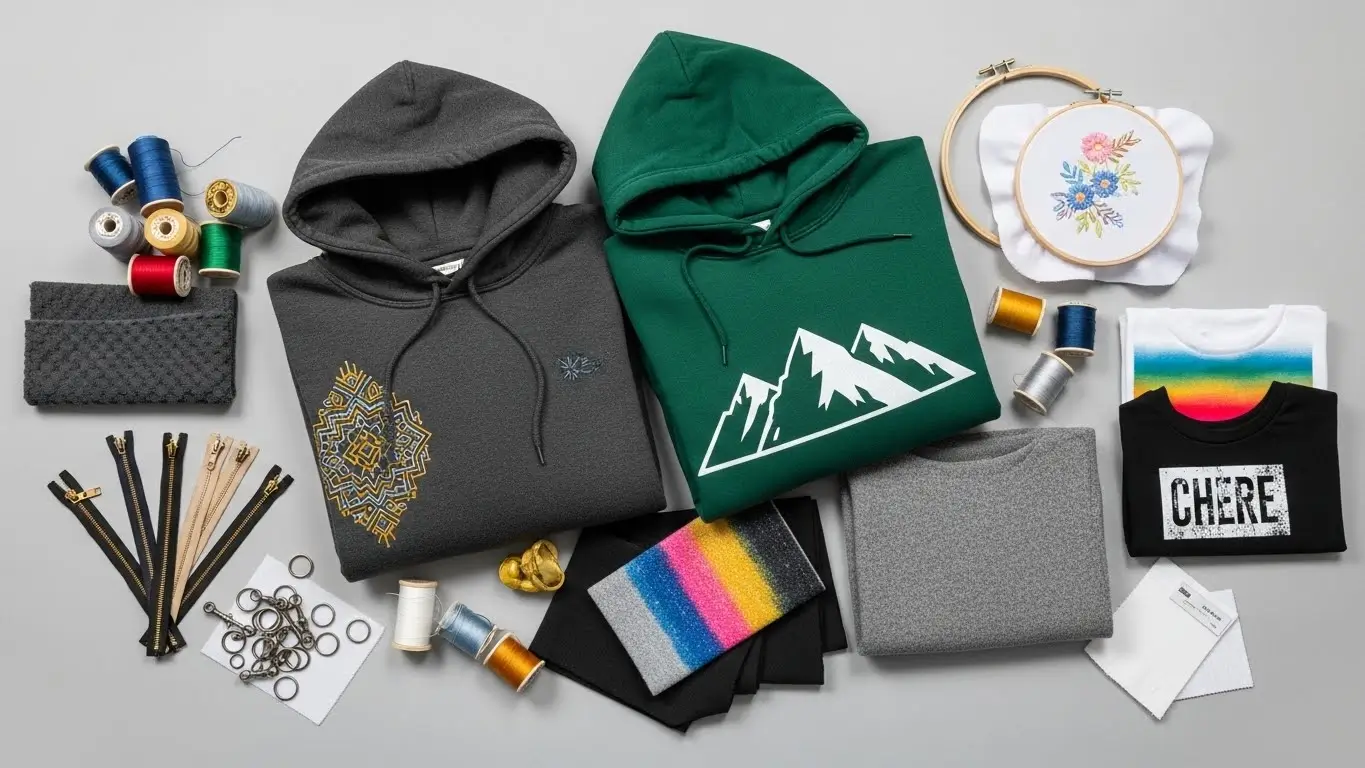
- Embroidery gives it a high-quality look with textured designs and raised designs. It is more expensive (3-10 dollars per unit) than screen printing, but it generates an image of value which is worth the extra cost.
- Direct-to-garment (DTG) printing allows image-quality and full-colour, but setup costs are nonexistent. Printing costs between $5-15 per unit and is good when complex designs are required or when very small quantities are needed.
- Heat transfer is suitable for small batches or personalization, where the hoodies vary, but it does not last as long as screen printing or embroidery.
Fabric and Material Choices
Cotton-polyester blends (50/50 and 80/20) are of good value and are durable. Extra soft premium all-cotton costs an extra $3-8 per unit but is extra soft. Active brand performance fabrics provide an extra cost of $5-12 per unit. Organic cotton or recycled polyester (are considered sustainable) and have a premium between $8-15, which is more attractive to customers who want their products to be eco-friendly. You may also visit our top 10 fabric choices for premium hoodies.
Hoodie Variations
Pullover hoodies represent the most economical style. Zip-ups add $3-$8 per unit but justify higher retail prices. Oversized and cropped fits tap current trends with adjusted patterns. Speciality details like lined hoods, contrast stitching, or thumb holes add $2-$7 per unit but create distinctive products. Select one from 30+ types of hoodies, so it is easier for the hoodie manufacturer.
Practical Application Tips
Tip # 1: Start Smaller Than You Think
New brands almost always overestimate first demand. The initial level of production should be small, 50-75 units, which seems to be a tight limit but secures your capital and gives you time to learn without incurring high financial costs. It is always easy to re-order when demand is better than expected, and impossible to do the same with excess inventory.
Size distribution deserves careful consideration. Resist ordering equal quantities of every size. Research suggests approximately 10% XS, 20% S, 30% M, 25% L, 10% XL, 5% XXL works for many general audiences, but your specific market may differ. Consider offering size exchanges if you misjudge distribution rather than carrying excess inventory in unpopular sizes.
Tip # 2: Build Margin Into Your Business Model
Calculate your total landed cost per hoodie, including all fees, not just manufacturing cost. Your retail price should typically be 2.5-4x your total cost, depending on your business model. Direct-to-consumer brands can work with lower multiples (2.5-3x) while wholesale or retail partnerships need higher multiples (3.5-4x) to accommodate retailer margins.
Factor in platform fees, payment processing, shipping costs, returns, and marketing expenses when calculating margins. A $25 total cost hoodie priced at $65-$75 retail provides healthy margins that sustain business growth while remaining competitive in most markets.
Tip # 3: Create Production Timelines Backward
Plan your production schedule by working backwards from your launch or delivery date. If you need hoodies by December 1st for holiday sales, subtract shipping time (1 week domestic), production time (3-4 weeks), sampling and revision time (2 weeks), and design finalization time (1 week). This means starting the process in early-to-mid October at the latest.
Build buffer time into every stage. Manufacturers occasionally run behind schedule, shipping delays happen, and revisions take longer than expected. Add 1-2 weeks of buffer to your timeline, especially for first-time production runs where learning curves cause delays.
Tip # 4: Document Everything
Keep detailed records of your specifications, communications, and approvals. Create a production folder with tech packs, approved sample photos, material specifications, and email confirmations. This documentation protects you if disputes arise and provides a reference for future production runs.
Photograph samples from multiple angles and in various lighting conditions. These photos help you verify that production units match approved samples and provide evidence if quality issues occur. Detail shots of stitching, prints, and labels prove valuable if you need to address problems with your manufacturer.
Tip # 5: Plan for Quality Issues
Even with excellent manufacturers, occasional defects occur. Budget for a 2-5% defect rate in your financial planning and inventory management. Decide in advance how you’ll handle defective units; some brands sell imperfects at a discount, others absorb the loss, and some negotiate replacements with manufacturers.
Inspect your full shipment promptly upon arrival. Check a representative sample of units (at least 10-20% of the order) for quality consistency. Document any issues with photos and contact your manufacturer immediately if problems exist. Most quality disputes are resolved much more easily when addressed quickly with clear evidence.
Tip # 6: Test Marketing Before Production
Consider validating demand through pre-orders or crowdfunding before committing to production. This approach reduces risk by ensuring you have buyers before manufacturing. While not suitable for every brand or product, pre-order models work well for limited editions, special collaborations, or new brands building initial audiences.
Create mockups and marketing content to test customer response before production. High-quality mockups cost little but reveal whether your design resonates with your target audience. Social media polls, email surveys to existing customers, or small test ad campaigns provide valuable feedback at minimal cost.
Tip # 7: Develop Manufacturer Relationships
Treat your manufacturer as a partner, not just a vendor. Clear communication, reasonable expectations, and professional conduct lead to better service, more flexibility, and priority treatment when rush situations arise. Manufacturers appreciate customers who understand production realities and work collaboratively rather than making unreasonable demands.
Pay invoices promptly and follow agreed terms. Manufacturers remember reliable customers and often extend favours, rush production, small quantity exceptions, or payment flexibility to customers who have proven trustworthy. Your reputation with manufacturers becomes valuable as your brand grows.
The Path to Success with Low MOQ Hoodies
The key to success lies in understanding the full production process, carefully selecting the right manufacturing partner like Innovate Apparel, accurately calculating true costs, and making strategic choices about customization options that balance quality, uniqueness, and budget constraints.
Start with thorough research, ask detailed questions, order samples, and begin with smaller quantities than you think you need. Learn from your first production run, gather customer feedback, and refine your approach for subsequent orders. The flexibility of low MOQ manufacturing means you can iterate quickly, respond to market demands, and grow your brand sustainably.
The hoodie market continues thriving, and small batch production ensures you can participate without the barriers that traditionally kept small players out of apparel manufacturing. With the right planning, realistic expectations, and commitment to quality, your custom hoodie vision can become a reality through accessible, small-batch manufacturing solutions.
Ready to start your hoodie production journey? Contact Innovate Apparel for the best hoodie manufacturing services – just a tap away.