How to Place Your First Order With a Clothing Manufacturer (Checklist)
Submitting an apparel quote request starts a conversation with an apparel manufacturer. The team reviews your design, checks production requirements, estimates costs, and identifies any missing information.
If you proceed, the order may move through sampling, approval, bulk production, quality inspection, and delivery.
If you’re wondering what happens after submitting apparel quote details to a manufacturer, the process depends on your garment specifications, order quantity, materials, and customization requirements.
A quote request doesn’t automatically place an order or start production. You still need to review the quotation, agree on the terms, and approve the required production stages.
By the end of this guide, you will learn exactly what happens after submitting an apparel quote.
Apparel Production Timeline: From Quote Request to Delivery
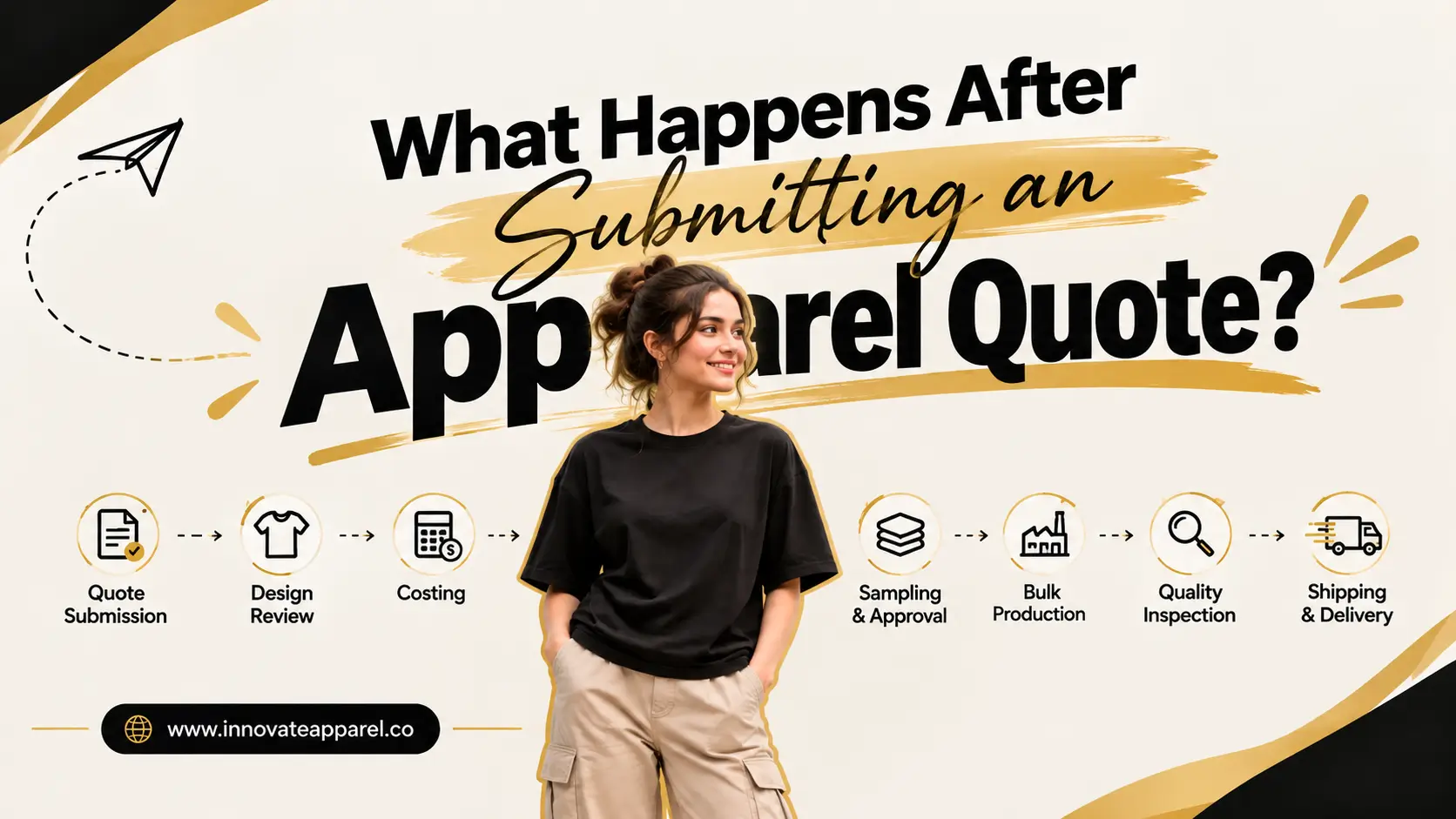
The apparel production timeline covers several stages, from the initial inquiry to the arrival of finished garments. Some stages may overlap, while others require your approval before the manufacturer can continue.
Stage | What happens | Your responsibility |
Quote submission | The manufacturer receives your inquiry and design files | Provide accurate product information |
Technical review | The team checks specifications and identifies missing details | Answer questions and clarify requirements |
Costing | The manufacturer assesses costs, MOQ, and feasibility | Review the quotation |
Order confirmation | Both parties agree on scope, price, and terms | Confirm the order details |
Sampling | The manufacturer develops the required sample | Review fit, materials, and construction |
Sample approval | The final sample and specifications receive approval | Confirm the approved version in writing |
Bulk production | The factory prepares materials and manufactures the order | Respond to required approvals and updates |
Quality inspection | Garments undergo the agreed checks | Review inspection findings where applicable |
Shipping and delivery | The order gets packed and dispatched | Confirm delivery details and inspect the goods |
The total timeline depends on fabric availability, garment complexity, sample revisions, production capacity, and shipping arrangements. Ask your manufacturer for a schedule based on your actual order rather than relying on a generic industry estimate.
Keep in mind: The time needed to receive a quotation differs from the time needed to manufacture and deliver your garments. A bulk production estimate may exclude quote review, sample development, material sourcing, and shipping.

What Happens When a Custom Clothing Manufacturer Receives Your Quote?
The manufacturer first checks whether your inquiry contains enough information to assess the product and estimate the work involved. A clear request helps the team understand what you want to manufacture, which materials you prefer, and how many garments you need.
The team will typically review:
- Product type: T-shirts, hoodies, sweatshirts, tracksuits, or other garments.
- Quantity: Units required per style and color.
- Size range: Sizes and proposed quantity distribution.
- Materials: Fabric composition, GSM, colors, and trims.
- Construction: Fit, stitching, seams, pockets, closures, and finishing.
- Customization: Printing, embroidery, labels, and packaging.
- Design files: Tech packs, sketches, artwork, or reference images.
- Delivery requirements: Destination country and target date.
These details help the manufacturer assess production feasibility and identify the information needed to prepare an accurate quotation.
What if your inquiry is missing information?
The manufacturer may request additional measurements, fabric details, artwork files, or quantity information before preparing a firm quotation.
You can often start a discussion with reference images and a product brief. However, the factory may need more technical details before it can accurately assess the project.
If your design requires a material or construction method that the factory cannot support, the team may explain the limitation or discuss alternatives. Resolve these questions before committing to development or production costs.
How Manufacturers Review Your Design Files
Receiving design files doesn’t automatically mean the factory can manufacture the garment exactly as shown. The technical review checks whether your specifications provide enough detail for costing, sample development, and production.
→ Get the best apparel design services at Innovate Apparel
What does a manufacturer check in a tech pack?
A clothing tech pack communicates how the garment should look and how the factory should construct it. Depending on the product, it should include:
- Technical sketches or clear reference images.
- Measurements, size specifications, and agreed tolerances.
- Fabric composition and GSM, where applicable.
- Construction and stitching details.
- Color references and material requirements.
- Print or embroidery artwork, placement, and dimensions.
- Labels, trims, and packaging instructions.
- Quantities by style, color, and size.
If you provide only a sketch or photograph, the manufacturer may need to clarify the fit, measurements, materials, or construction. A detailed tech pack gives both parties a shared reference and reduces the risk of misunderstandings.
The review may also reveal choices that affect cost. Heavyweight fabric, custom-dyed materials, specialized washes, and complex embroidery can require additional sourcing or production work.
What Happens After You Accept the Quote?
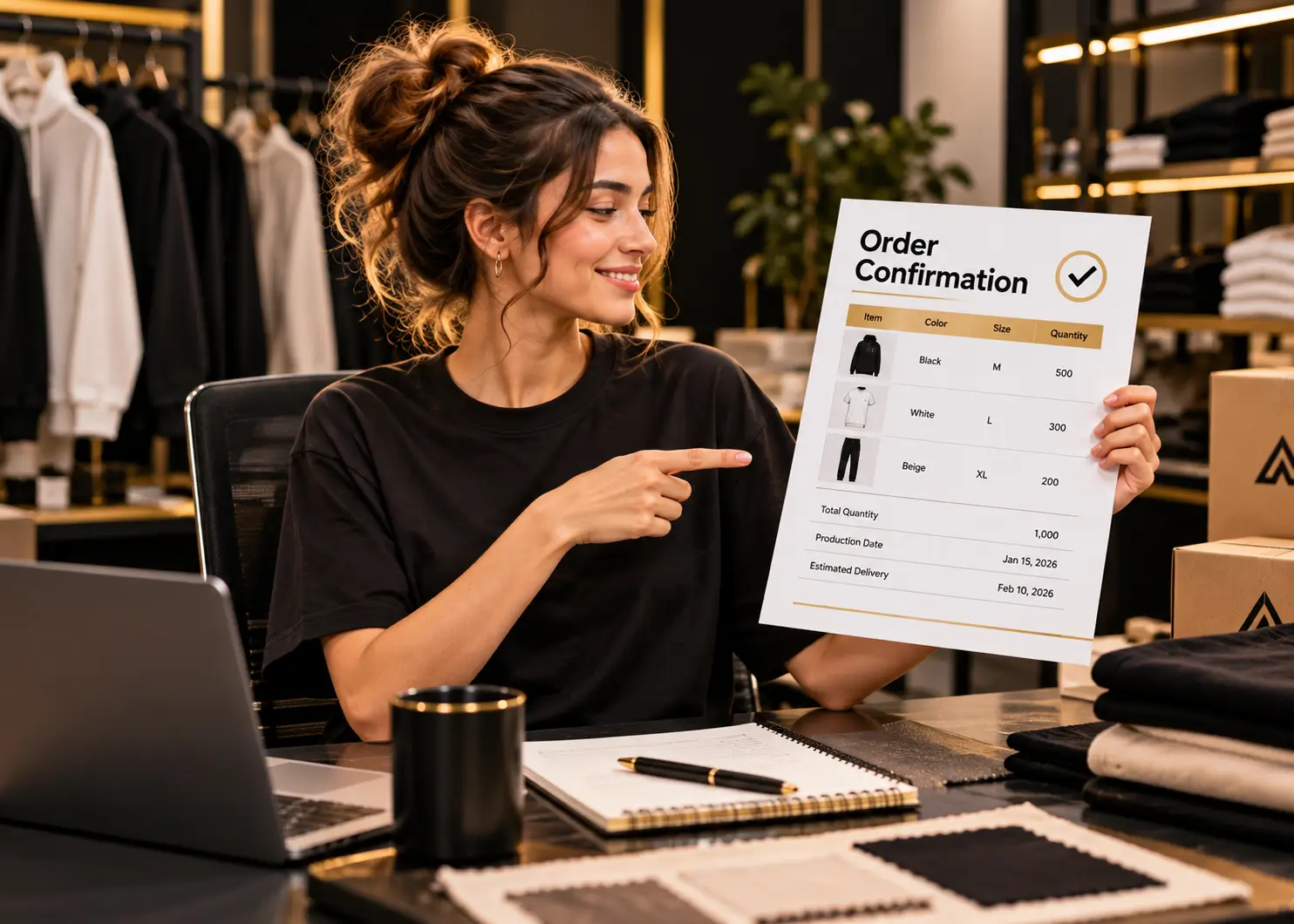
Accepting the quotation moves the project toward an order agreement. The manufacturer and buyer confirm the product specifications, commercial terms, and next steps before the relevant work begins.
Order confirmation and payment terms
Depending on the manufacturer’s process, the next documents may include a purchase order, pro forma invoice, or written order confirmation. Review the documents for:
- Final specifications and quantities.
- Unit price, total cost, and currency.
- Included services and additional charges.
- Sampling and development fees.
- Payment schedule and cancellation conditions.
- Production milestones and estimated completion.
- Shipping responsibilities and delivery charges.
Confirm which payment or approval authorizes each stage. Some manufacturers require payment before sampling, while others use a separate payment schedule for bulk production. The actual terms should appear in your agreement.
Accepting a quote doesn’t necessarily authorize bulk production. The factory may still need to develop a sample, source materials, receive payment, or obtain written approval of the final specifications.
When Does Sample Development Begin?
If your order requires sampling, the manufacturer develops a physical garment so you can evaluate the design before bulk production. The sample type and development sequence depend on the product and the agreed scope of work.
A prototype may test the initial design. A fit sample helps assess measurements and proportions, while a pre-production sample can represent the specifications approved for bulk manufacturing.
During development, the team may work on patterns, fabric selection, construction, decoration, and finishing. Material availability and design complexity can affect the schedule.
How long does apparel sampling take?
Sampling time varies according to the garment, sourcing requirements, development work, and the manufacturer’s workload. Ask for an estimate based on your product and confirm whether the fee includes revisions.
If the sample needs changes, the manufacturer may require additional time or charge a revision fee. Consolidate your feedback to reduce unnecessary back-and-forth.
What should you check before approving a sample?
Compare the sample with your tech pack and agreed requirements. Check:
- Fit, measurements, and proportions.
- Fabric composition, weight, texture, and appearance.
- Stitching, seams, hems, pockets, and closures.
- Color and finishing.
- Print or embroidery placement and dimensions.
- Labels, trims, and packaging requirements.
If something needs correction, send clear written feedback with measurements or annotated photographs where useful. Identify the sample version and record each required change.
Once the sample meets your requirements, approve that specific version in writing. Ensure the final tech pack, artwork, materials, and purchase order match the approved sample before bulk production begins.
How Manufacturers Calculate Your Apparel Quote
Once the clothing manufacturer USA understands your requirements, the team assesses the production work and prepares a quotation. The quote reflects the materials, construction, quantity, customization, and development services your order requires.
What affects the quoted price?
The main factors include:
- Fabric type, GSM, and material availability.
- Garment complexity and construction.
- Order quantity and minimum order quantity (MOQ).
- Number of styles, colors, and size variations.
- Printing, embroidery, and other decoration.
- Labels, trims, and packaging.
- Pattern development, sampling, and revisions.
- Shipping arrangements and applicable charges.
MOQ rules vary by manufacturer. Some factories set minimums per style, color, fabric, or production run. Confirm the actual requirements before finalizing your assortment.
What should an apparel manufacturing quote include?
Review the quotation carefully before making a commitment. Check whether it specifies:
- Unit price and total order value.
- Minimum order quantity.
- Sampling fees and revision costs.
- Included services and additional charges.
- Payment terms and schedule.
- Quote validity period.
- Estimated production timing.
- Shipping arrangements and cost assumptions.
Ask whether the price includes fabric sourcing, decoration, labels, packaging, and delivery. A lower unit price may exclude services that you still need to purchase.
If the quotation exceeds your budget, discuss specific adjustments with the manufacturer. Changing the fabric, simplifying construction, reducing colorways, or adjusting the order quantity may affect the total cost. Ask for a revised quote before approving any changes.
When Does Bulk Apparel Production Begin?
Bulk production begins after the manufacturer receives the required approvals and production authorization under your agreement. The team then prepares the order for manufacturing.
Depending on the product and production model, this may involve sourcing fabric and trims, preparing patterns, cutting fabric, sewing garments, applying decoration, and completing finishing work.
Some material sourcing may begin earlier, but the manufacturer should clarify which activities can start before final sample approval.
Also, take a look at Innovate Apparel’s Custom Bulk Manufacturing.

What can change the production schedule?
Several factors can affect the agreed timeline:
- Fabric or trim shortages.
- Late material approvals.
- Changes to the approved design.
- Revised quantities or colorways.
- Specialized printing, embroidery, or finishing.
- Delayed payments or buyer approvals.
- Production capacity constraints.
Ask the manufacturer to confirm the production milestones and explain how it communicates delays. Respond promptly when the team requests an approval or clarification.
How Quality Control and Shipping Work
Before dispatch, the clothing manufacturer checks the finished garments according to the agreed quality requirements. The order then moves through packing, shipping, and delivery.
What happens during apparel quality inspection?
Quality checks may cover measurements, fabric defects, stitching, color consistency, decoration, labels, finishing, and packing. The inspection process should reflect the specifications and acceptance criteria agreed before production.
Some manufacturers perform in-process checks and a final inspection. The scope varies, so ask which checks the factory performs and whether it can provide inspection records. Don’t assume every manufacturer inspects every garment or follows a particular inspection standard.
If inspectors identify defects, the manufacturer should follow the agreed procedure for documenting and addressing them. Depending on the contract and the issue, the parties may arrange rework, replacement, or another agreed remedy.
If you require independent inspection, discuss the arrangements before production begins.
How does shipping and delivery work?
Once the order completes the required production and inspection stages, the manufacturer prepares the garments for dispatch.
Before shipment, confirm the packed quantity, carton details, delivery address, expected dispatch date, and required documents. Depending on the order, these may include a packing list and commercial invoice.
Check who arranges freight, handles customs clearance, and pays applicable duties, taxes, and delivery charges. These responsibilities depend on the shipping terms and destination.
When the goods arrive, compare the delivered quantities, sizes, colors, labels, and visible condition with your purchase order. Document shortages or defects and notify the manufacturer within the agreed reporting period.
How Long Does the Apparel Production Timeline Take?
There isn’t one timeline that applies to every clothing order. Quote review, sampling, material sourcing, bulk production, inspection, and shipping each have their own requirements, and some stages can overlap.
Stage | Factors affecting duration |
Quote review | Completeness of the inquiry and product complexity |
Sampling | Pattern work, material availability, and sample workload |
Sample approval | Number of revisions and buyer response time |
Material sourcing | Stock availability, custom colors, and specialized trims |
Bulk production | Quantity, construction, customization, and factory capacity |
Inspection | Inspection scope and required corrections |
Shipping | Transport method, destination, and customs procedures |
Ask the manufacturer to provide an estimated schedule for your actual order and define when the bulk production lead time begins. The production estimate may exclude quote review and sample development.
Repeat orders can move faster when the specifications, patterns, and materials remain unchanged. Changes to fabric, fit, artwork, or quantity can introduce additional development or sourcing work.
What Can Delay an Apparel Order After Quote Submission?
Many delays begin with unresolved details or decisions that arrive after the manufacturer has started work. Use the following table to identify common risks and ways to reduce them.
Potential delay | How to reduce the risk |
Incomplete tech pack | Provide measurements, material details, artwork, and construction instructions |
Unavailable fabric or trims | Confirm material availability before approving the schedule |
Repeated sample revisions | Consolidate feedback and document each revision |
Late buyer approval | Assign someone to review samples and respond promptly |
Changes after approval | Confirm the cost and schedule impact before authorizing changes |
Delayed payment | Agree on payment milestones and meet the required dates |
Inspection failures | Define quality criteria before bulk production |
Shipping or customs issues | Confirm shipping responsibilities and documentation in advance |
A realistic schedule should account for the actual requirements of your product. Avoid committing to a launch date based only on the manufacturer’s bulk production estimate.
What Should You Do While Waiting for Your Apparel Quote?
Use the waiting period to prepare the information the manufacturer may need to finalize its assessment.
- Complete missing specifications: Gather measurements, artwork, fabric preferences, and other details requested by the team.
- Confirm your quantity and budget: Decide which quantities and variations you can support.
- Check your email: Respond promptly to technical questions.
- Prepare for sample review: Decide who will assess fit, materials, construction, and branding.
- Keep your launch date flexible: Wait for a confirmed production and shipping plan before making firm commitments.
If you need an update, send a concise follow-up that references your original inquiry and asks whether the manufacturer needs additional information.
Your Next Step: Submit Your Apparel Quote
Innovate Apparel offers custom apparel and private-label manufacturing services. Brands preparing an order can share their garment requirements, reference images or a tech pack, estimated quantity, customization details, and target delivery date to begin a discussion.
The next steps depend on the product and services required. Confirm the quotation, development scope, sampling arrangements, production schedule, and delivery terms with the team before committing to the order.
Ready to move from design file to production? Contact Innovate Apparel to discuss your project and clarify the next steps for your apparel manufacturing request.