
How Much Does It Cost to Start a Brand?
If you want to make your very own brand, you should keep in mind that the cost to start a clothing brand starts as low as $100 and goes on and on.
The more you invest, the higher the return percentage.
But everything takes time.
The reason the investment has no upper cap comes down to a handful of decisions you make early on. Your product type, your apparel manufacturer, how much inventory you buy, and how polished you want your branding to be.
Two people can start the same type of brand and spend completely different amounts based on these choices alone. For instance, someone starts a streetwear clothing brand and sells products at low cost, while another person sells it as a premium product.
This guide breaks down the real cost to start a clothing brand in 2026 so you can use it to plan your own launch.
What Determines the Cost to Start a Clothing Brand?
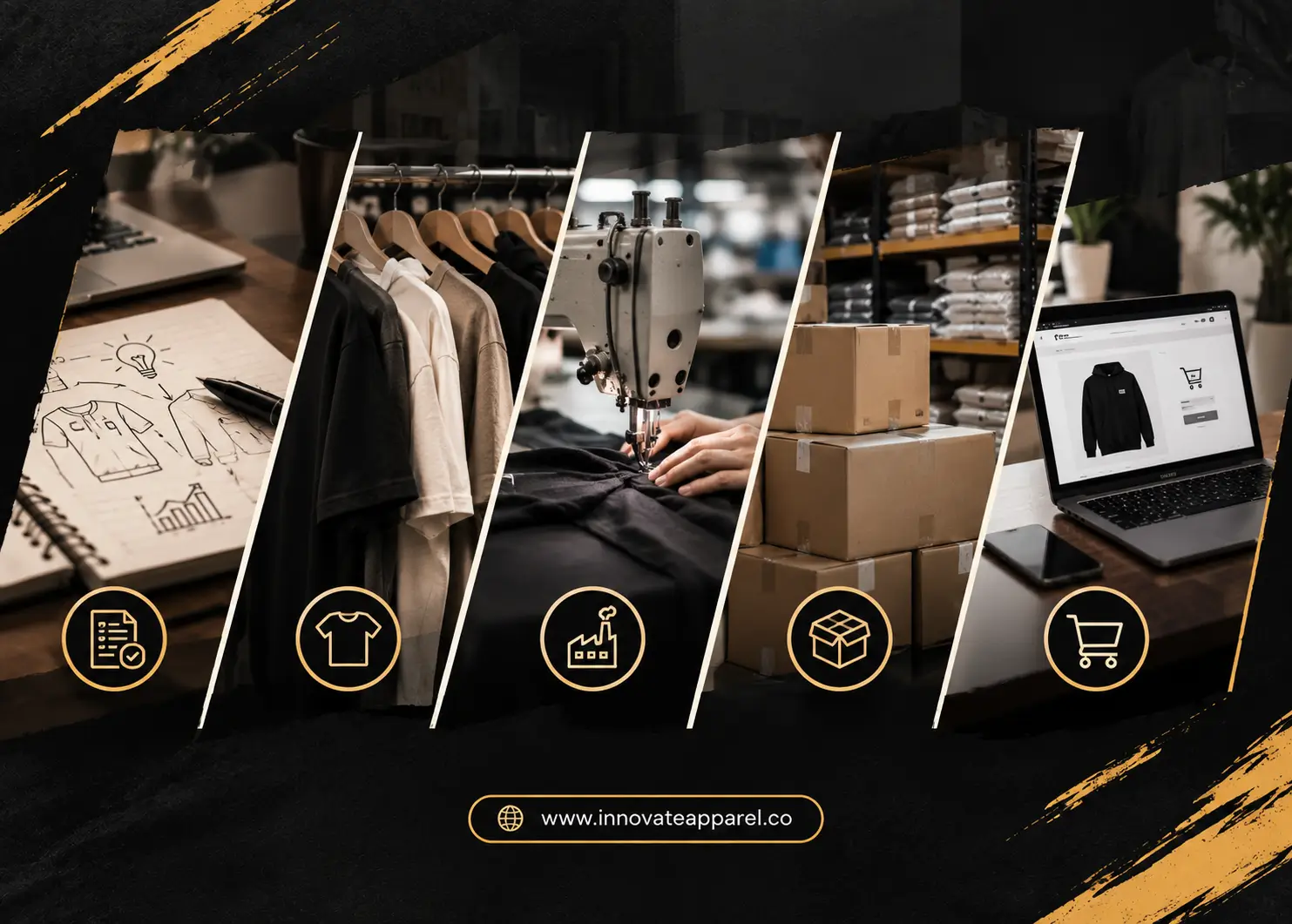
To start a successful clothing brand, you need to work on 5 factors.
- Your business model is the biggest one. Whether you choose print-on-demand, private label, or cut-and-sew has the biggest impact on your startup costs.
- Product type also matters. Basic T-shirts cost much less to develop and manufacture than hoodies, denim, outerwear, or custom garments.
- Manufacturing method plays a role too. Local vs. overseas manufacturing affects unit costs, minimum order quantities (MOQs), shipping, and lead times.
- Inventory size is another major factor. Producing a small test batch costs less upfront than ordering hundreds or thousands of units.
- Finally, your sales channel affects cost. Selling through your own website is cheaper to start than trying to get into retail stores.
Cost to Start a Brand - Breakdown
Here is a realistic look at what most new clothing brands spend across the core categories.
Expense | Low | Average | High |
Business registration | $0 | $100 | $300 |
Brand identity and logo | $0 | $250 | $1,200 |
Product design | $0 | $300 | $1,500 |
Samples | $50 | $500 | $2,000 |
Manufacturing (first run) | $0 | $2,000 | $15,000 |
Inventory storage | $0 | $200 | $1,000 |
Website | $0 | $500 | $3,000 |
Product photography | $0 | $400 | $2,000 |
Packaging | $50 | $500 | $2,500 |
Shipping and fulfillment | $50 | $400 | $1,500 |
Marketing | $0 | $5,00 | $5,000 |
Software and apps | $0 | $150 | $600 |
Miscellaneous | $50 | $300 | $1,000 |
This table covers the categories every clothing brand runs into at some point. Some rows will be $0 for certain models, like manufacturing costs for print on demand, and much higher for others, like private label brands ordering their first bulk run.
How Much Does It Cost Based on Your Business Model?
The clothing brand startup cost changes a lot depending on which model you choose. Here is how the four most common paths compare.
Model | Typical Startup Cost | Best For |
Print on Demand | $100 to $300 | First time founders testing an idea |
Private Label | $300 to $8,000 | Founders ready to build a real product line |
Cut and Sew | $1,000 to $20,000+ | Brands with unique designs or fits |
Wholesale | $1,000 to $10,000 | Founders focused on curation over design |
Here’s a better view of what each model is best for:
- Print-on-Demand (POD)
Best for: Beginners, creators, and entrepreneurs who want to launch quickly with minimal upfront investment and no inventory risk.
- Private Label
Best for: Businesses that want branded products with better profit margins while using existing garment designs.
- Cut and Sew
Best for: Fashion brands looking to create unique, custom garments with complete control over design, fit, and materials.
- Wholesale
Best for: Retailers who want to start selling quickly by purchasing finished products in bulk without developing custom apparel.
Where You Should (and Shouldn't) Spend Your Money
Knowing where to put your budget matters more than the total amount you have. Many new founders overspend on details that customers rarely notice and underspend on the things that actually affect sales.
Spend More On | Spend Less On |
Quality samples | Fancy packaging |
Fabric and materials | Business cards |
Product photography | Large inventory |
Branding fundamentals | Office space |
A functional website | Paid ads before validation |
Quality samples and fabric directly affect how your product looks and feels, which shapes reviews and repeat customers. Product photography is often the deciding factor in whether someone clicks buy, especially on Instagram or TikTok. A clean, functional website matters more than a flashy one.
On the other side, expensive packaging, printed business cards, and large inventory orders tend to drain a startup budget.
How to Reduce Your Clothing Brand Startup Cost
There are several practical ways to lower your clothing brand startup cost without cutting corners on quality.
- Start with fewer SKUs to keep production costs low and test the market.
- Validate demand before manufacturing through presales or waitlists to avoid making products that won’t sell.
- Avoid overordering inventory by starting with small production runs and scaling as demand grows.
- Outsource only when necessary instead of hiring a full team during the early stages.
- Focus on organic marketing like social media and content creation before investing in paid advertising.
Can You Start a Clothing Brand with $500?
Yes, starting a clothing brand with $500 is realistic. This budget traditionally covered a basic logo, a simple website, a handful of samples, and a small amount for organic marketing content.
But with the help of AI, you can easily create your own logo, website and few marketing materials.
So, now even with $500 you can opt for small MOQ private label or cut and sew production, though with a higher quantity you get better quotation.
At the end of the day, if your goal is to test a concept, validate demand, and learn the basics of running an online store, $500 is a genuinely workable starting point.
Tips to Keep Your Clothing Brand Startup Costs Low
Starting a clothing brand doesn’t have to mean spending thousands of dollars upfront. The key is investing in the areas that directly improve your product and customer experience while avoiding unnecessary expenses early on.
- Start with a Small Product Line
Launch with just 3 to 5 core products instead of a full collection. A smaller catalog reduces inventory costs, simplifies marketing, and allows you to test demand before expanding.
- Order Samples Before Bulk Production
Never skip the sampling stage. Testing product quality, sizing, and printing can save you from expensive production mistakes and customer complaints later.
- Invest in Quality Branding
A professional logo, consistent colors, and clear brand messaging help your business look credible without requiring a huge marketing budget.
- Focus on Organic Marketing First
Use platforms like Instagram, TikTok, Pinterest, and email marketing to build an audience before spending heavily on paid advertising.
- Track Every Expense
Create a startup budget spreadsheet and monitor every dollar you spend. Small costs like apps, packaging supplies, and payment processing fees can quickly add up.
Common Mistakes That Increase Clothing Brand Startup Costs
Many new entrepreneurs spend more than necessary because they invest in the wrong areas too early.
- Ordering Too Much Inventory
Buying hundreds of products before validating demand ties up cash and increases the risk of unsold stock.
- Ignoring Product Samples
Skipping samples to save money often leads to poor-quality products and costly reorders.
- Spending Too Much on Packaging
Premium boxes and custom inserts look impressive, but they rarely influence early sales as much as product quality and branding.
- Launching Without Market Research
Creating products without understanding your target audience can result in low sales and wasted marketing spend.
- Overspending on Paid Advertising
Running ads before optimizing your website, product pages, and branding usually results in a poor return on investment.
- Underestimating Hidden Costs
Many founders forget to budget for shipping, taxes, payment processing fees, returns, product photography, and software subscriptions, which can significantly increase the total clothing brand startup cost.
Is Starting a Clothing Brand Worth It?
Clothing has healthy margins when done right. Most brands aim for a markup of two to four times production cost, meaning a shirt that costs $8 to produce might sell for $25 to $35. Private label and cut and sew brands often see better margins than POD, since POD suppliers take a larger cut per item.
Growth potential is strong for brands that build a loyal audience, especially through social media and community driven marketing. That said, most new clothing brands fail not because the idea was bad, but because of common mistakes like overordering inventory, underpricing products, or spending too much on branding before validating demand.
Starting lean and reinvesting profits as sales grow is generally the safer path.
Get in touch with Innovate Apparel for quality manufacturing services at affordable rates.