
How to Start a Streetwear Clothing Brand
Thinking about starting a streetwear clothing brand? This sounds cool, and who wouldn’t love their own streetwear brand?
Well, a streetwear brand runs on identity, scarcity, and community. These elements are part of the product itself, not just marketing components.
We will walk you through the full process of building a streetwear brand from scratch. It covers brand identity, collection planning, manufacturing options, pricing, and launch strategy, along with the mistakes that trip up most new founders.
By the end, you will have a clear roadmap you can follow to make a successful streetwear clothing brand.
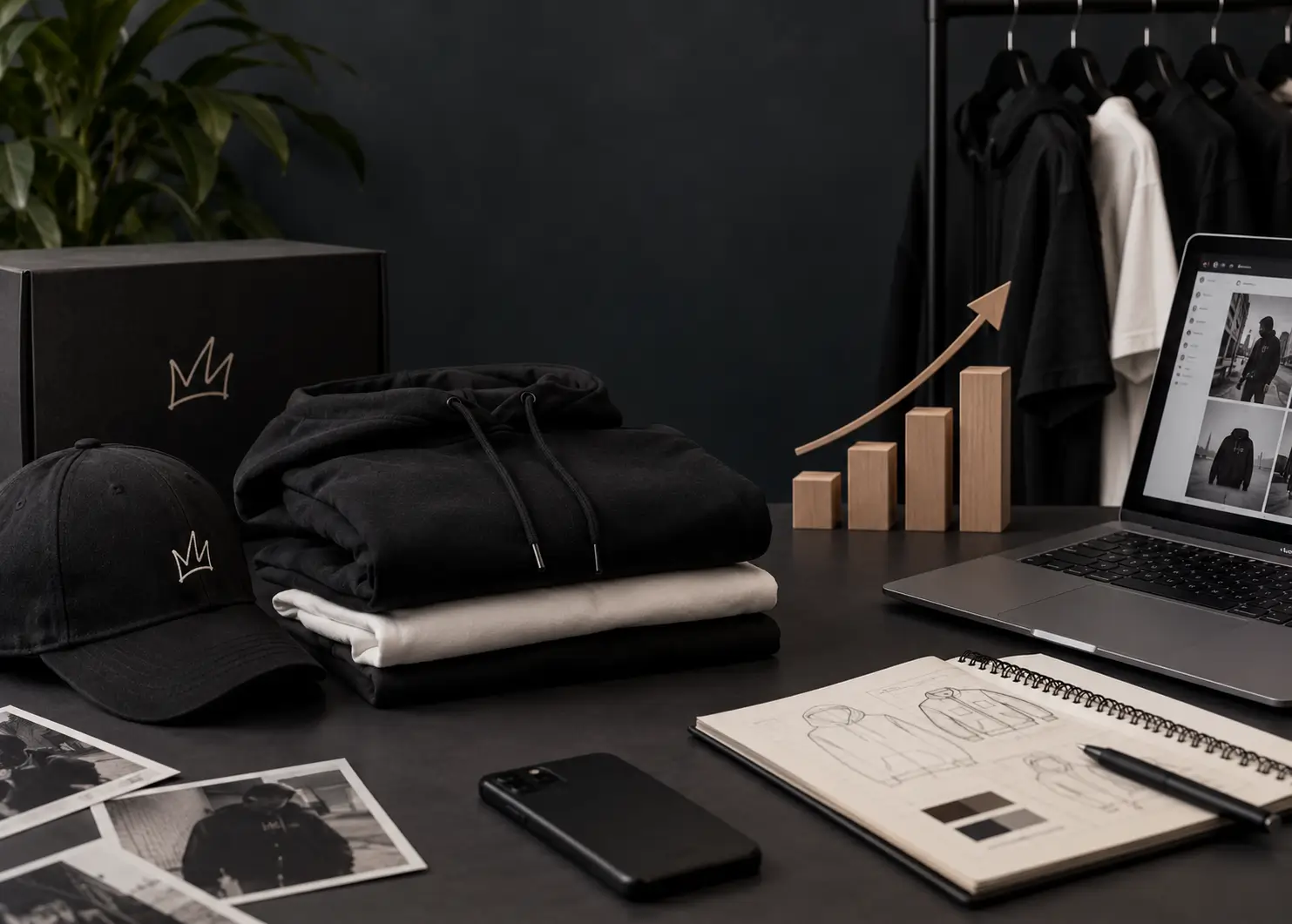
What Makes a Streetwear Brand Successful?
The first thing to ask is, what really is a streetwear brand?
A streetwear brand sells belonging. Customers buy into a specific identity, a specific scene, and often a specific level of exclusivity that makes owning the product feel like being part of something.
This distinction matters because it changes almost every decision you make going forward.
The successful streetwear labels share a few common traits worth understanding before you design a single graphic.
Core Traits of Successful Streetwear Brands:
- A clear identity that customers can immediately recognize and relate to
- An active community built around the brand
- Limited drops, which create demand through scarcity
- Consistent quality that matches the price point customers are paying
- A story behind the brand that goes beyond the clothes themselves
Follow the steps below carefully to execute a streetwear clothing brand.
Step 1: Define Your Brand Identity
Your brand identity is the foundation everything else gets built on, and skipping this step is the single most common reason new streetwear brands blend into the background.
First, you need to know exactly who you are making clothes for and why your brand exists in the first place. You must have a brand story.
Choose Your Niche
Streetwear covers a wide range of aesthetics, and trying to appeal to all of them at once usually results in a brand that feels generic. Picking a specific lane early gives your designs, your marketing, and your community a consistent direction to build around.
Common streetwear niches:
- Luxury streetwear, blending premium materials with street influenced design
- Minimal streetwear, focused on clean silhouettes and understated branding
- Oversized essentials, built around relaxed fits and basics done well
- Skatewear, rooted in skate culture and functional design
- Techwear, focused on utility, technical fabrics, and modern silhouettes
- Anime and pop culture inspired streetwear
- Graphic tee focused brands built around bold visual statements
- Hip hop influenced streetwear
- Brands rooted in a specific local or regional culture

Once you pick a niche, map it against your target customer and your price point. A brand targeting the techwear niche at a budget price point sends a confusing signal, since techwear customers generally expect premium materials and are willing to pay for them. Matching your niche to a realistic price range keeps your positioning coherent from day one.
Identify Your Target Audience
Your niche narrows the field, but you still need a clear picture of who your ideal customer actually is.
Think about:
- Age range: Identify the age group they belong to (e.g., teens or adults).
- Culture: Understand the culture, values, or lifestyle they identify with.
- Online presence: Find out which socials and communities they are active on.
- Brand preferences: Identify the brands they already wear, follow, or admire.
- Interests: Consider their hobbies, interests, and lifestyle choices.
- Shopping behavior: Understand how and where they prefer to shop.
This information shapes your design decisions and your marketing channels later on.
Avoid trying to describe your audience as “everyone who likes streetwear.” A useful audience description is specific enough that you could picture an actual person, down to what their Instagram feed probably looks like and which artists or scenes they follow.
Craft Your Brand Story
Your brand story is the reason your brand exists beyond making money, and it becomes the thread that ties your designs, your marketing, and your community together.
It needs to be genuine and specific to your own experience or perspective.
A strong brand story usually comes from something real, whether a specific city or neighborhood, a subculture, etc.
Customers can tell the difference between a story that is lived and one that is invented for marketing purposes, so start with something true.
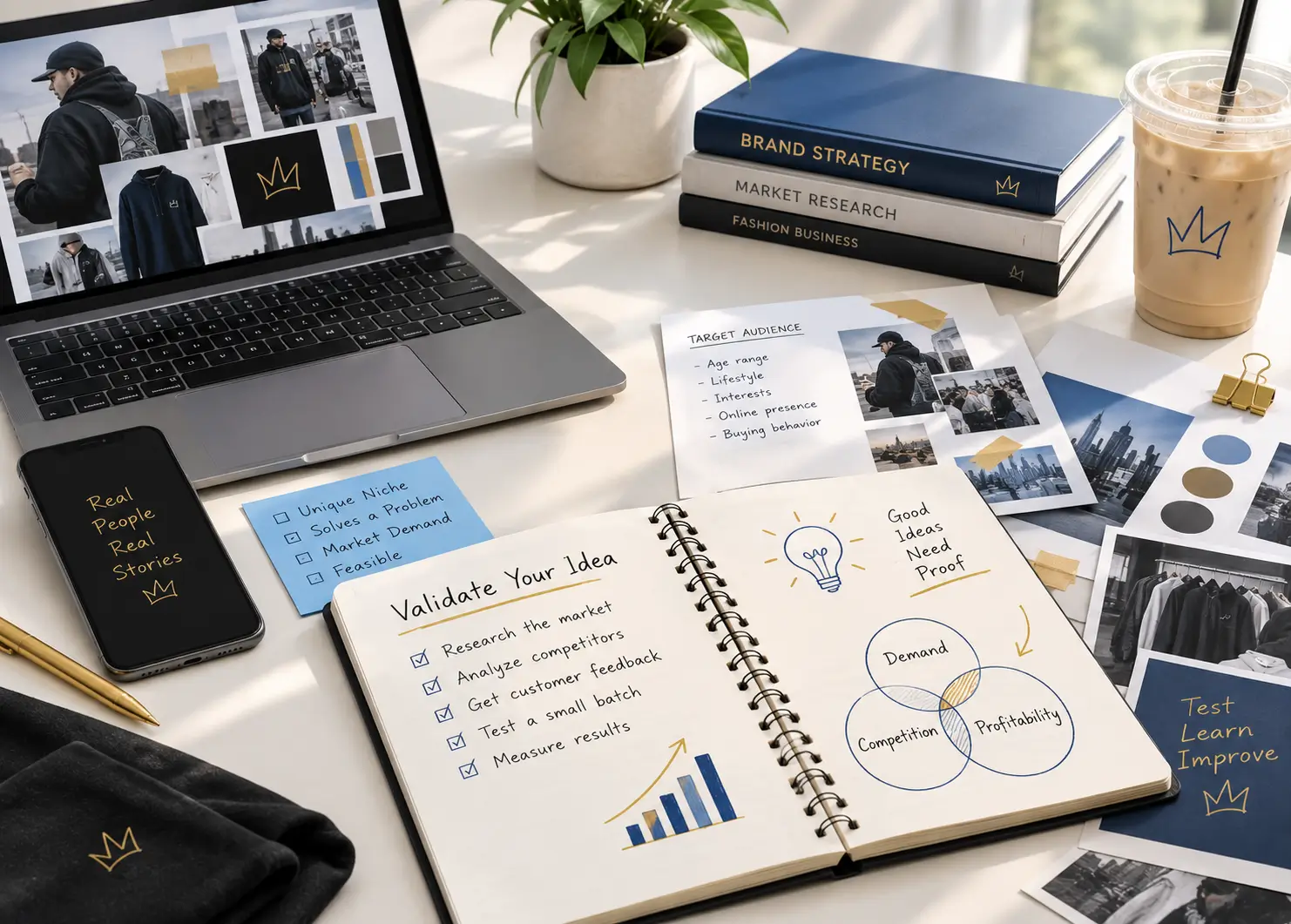
Step 2: Validate Your Idea Before Spending Money
You can’t really sell an idea without any research. Validating your idea first protects your budget and gives you real feedback to refine your designs before you commit to a no MOQ manufacturer.
Research Competitors
Look closely at brands operating in your chosen niche, paying attention to their pricing, their product range, and how their community engages with them online. This research shows you what is working, feels saturated, and where there might be room.
Test Demand
Before investing in a full collection, test interest in your concept through a small run. Post design concepts or mockups on social media to gauge reactions, or run a simple landing page with an email sign-up to see how many people are interested.
Collect Feedback
Reach out directly to people in your target audience and ask what they think of your concept, your designs, and your pricing ideas. Honest feedback from real potential customers, even a small group, is far more useful than assumptions made in isolation.
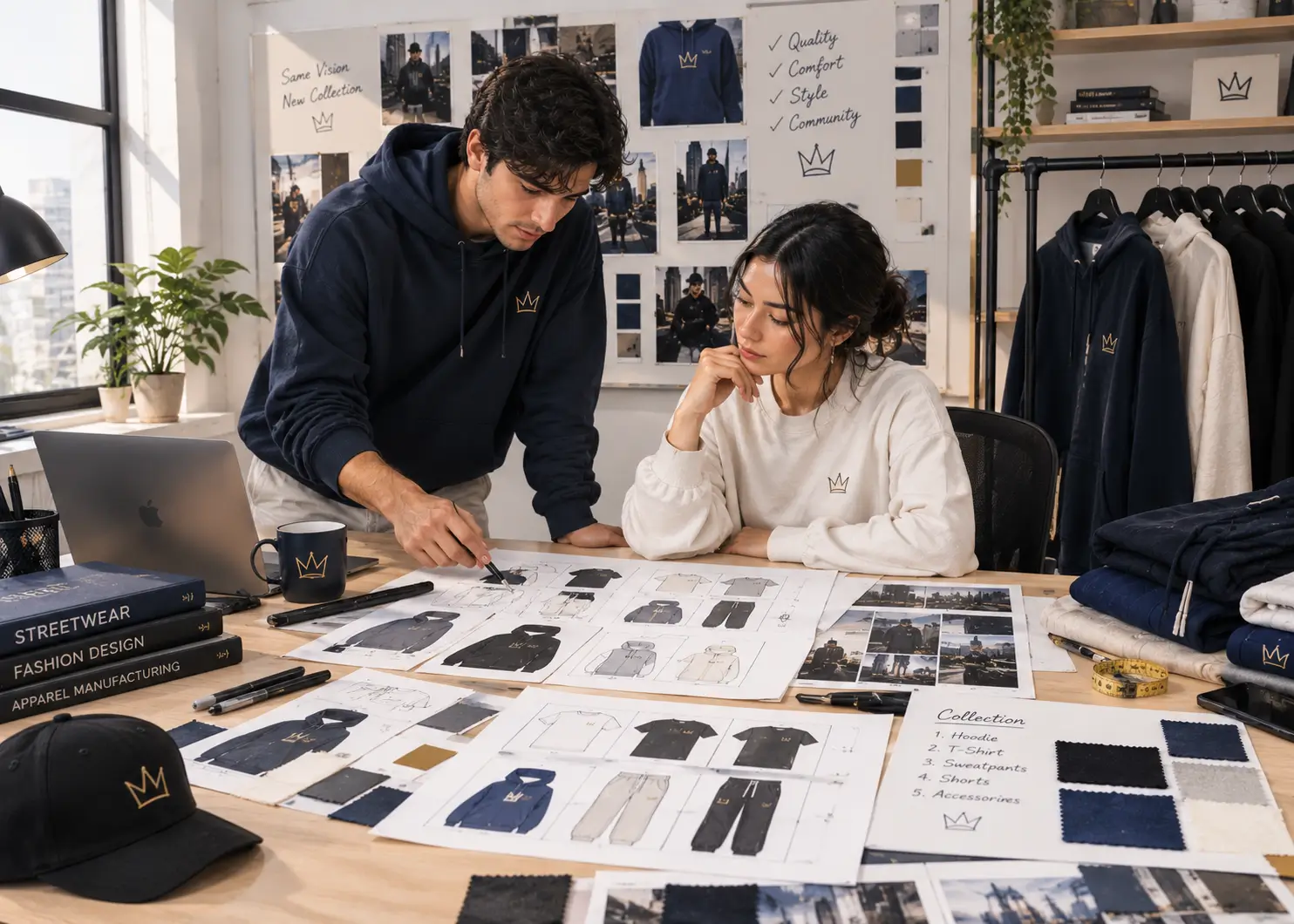
Step 3: Design Your First Collection
Your first collection sets the tone for your entire brand, so it is worth taking the time to get this right rather than rushing to launch with whatever comes together fastest.
Start With 3 to 5 Products
New brands often make the mistake of launching with too many products at once, which spreads their budget thin and makes it harder to nail quality on any single item. A tighter first drop lets you focus your budget and attention on fewer pieces done well.
A common structure for a first drop looks something like two tees, one hoodie, one cap, one pair of sweatpants, and one accessory. This gives customers enough variety to build a small outfit around your brand while keeping your production and inventory manageable.
Choose Fabrics
Fabric choice directly affects both the feel of your garments and your production cost, so this decision should be intentional rather than left entirely to your manufacturer. Heavier cotton blends are common in streetwear because they hold structure well and feel substantial, which matters for a customer’s perception of quality.
Create Graphics
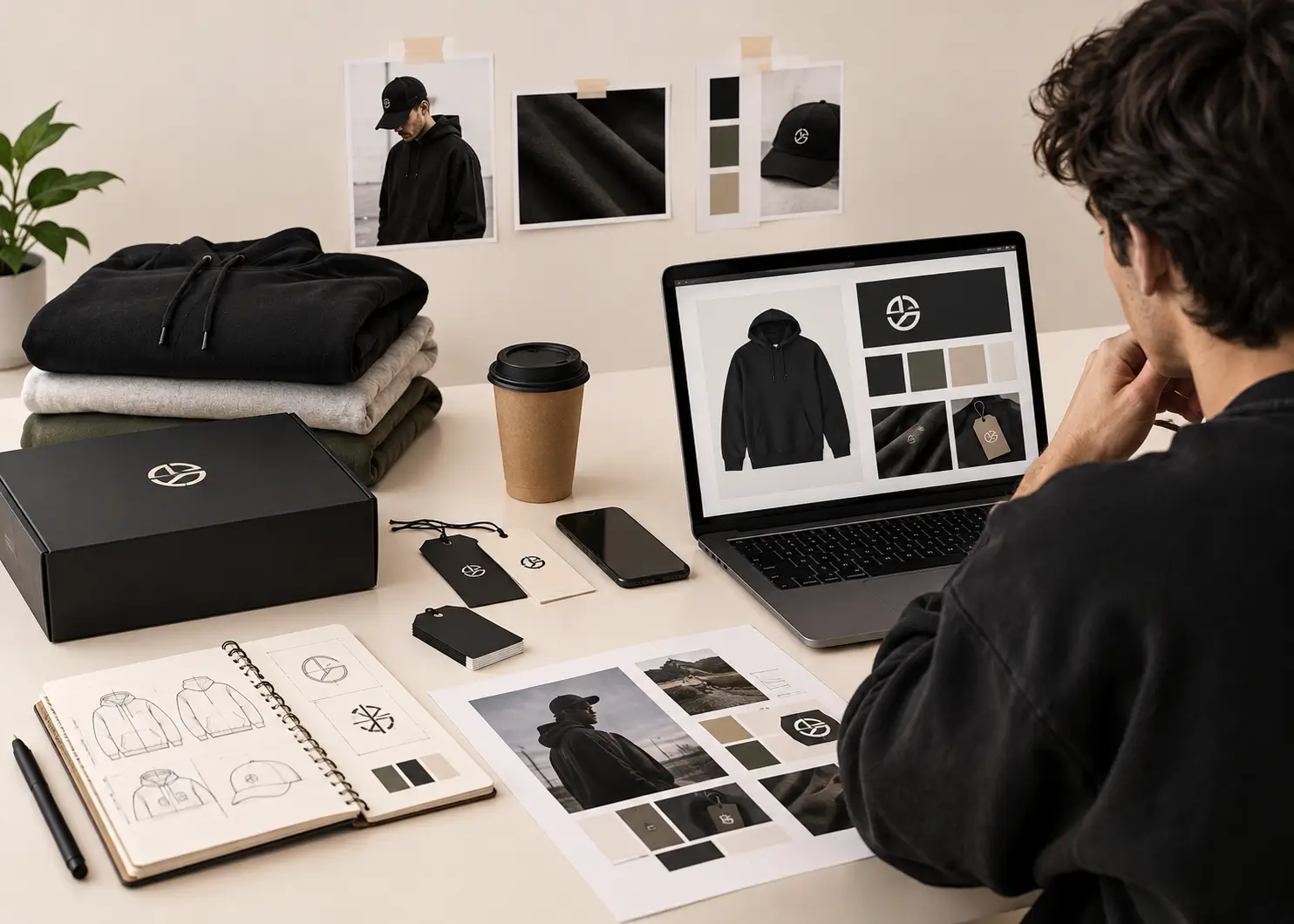
Your graphics are often the first thing customers notice, and they need to feel consistent with the identity you defined earlier. Work through a moodboard first, then narrow down a color palette before moving into actual graphic design, so your visuals feel cohesive across every piece in the collection.
Build a Tech Pack
A tech pack is the technical document your manufacturer uses to produce your garments accurately. It typically includes measurements, fabric specifications, print or embroidery placement, color codes, and construction details for each product in your collection.
Manufacturers require a tech pack because verbal descriptions or reference photos alone lead to inconsistent quality across your run.
Taking the time to build a proper tech pack before reaching out to manufacturers will make your quotes more accurate and your samples closer to what you actually envisioned.

Step 4: Find the Right Manufacturer
Choosing the right streetwear clothing manufacturer affects your cost, your quality, and how quickly you can get your first drop to market. There are several distinct paths available, each suited to a different stage and budget.
Print on Demand
Print on demand services let you sell designs printed onto blank apparel without holding inventory, since items are produced only after a customer orders. This is the lowest barrier to entry, making it a reasonable starting point if you are still validating your brand concept, though margins are thinner and product quality is generally less distinctive than custom manufacturing.
Private Label
Private label involves working with a manufacturer who already produces a base garment, which you then customize with your own branding, prints, or minor design changes. This gives you more control over quality and branding than print on demand while still being more accessible than fully custom cut and sew production.
Cut and Sew
Cut and sew manufacturing means your garments are built entirely from your own patterns and specifications, giving you full control over fit, construction, and fabric choice. This route typically requires higher minimum order quantities and a larger upfront investment, but it produces the most distinctive and premium feeling product, which matters as your brand grows and quality becomes a bigger part of your reputation.
Questions to Ask Manufacturers
Before committing to any manufacturer, get clear answers on their minimum order quantities, typical production timelines, sample costs, and what certifications or quality standards they follow.
Ask to see photos or samples of previous work in a similar product category to your own, and confirm their payment terms before sending any deposit.
Step 5: Price Your Products for Profit
A common mistake among new streetwear brands is terrible pricing.
A price based on what competitors charge without calculating your own actual costs is a very risky move which could cost alot.
Start by adding up your production cost per unit, shipping costs, packaging, and a reasonable allocation for marketing spend per unit sold.
From there, apply your target margin to arrive at a retail price that actually supports your business rather than just covering your costs.
Basic pricing formula:
Production Cost + Shipping + Packaging + Marketing Allocation = Total Cost Per Unit
Total Cost Per Unit ÷ (1 minus target margin percentage) = Retail Price
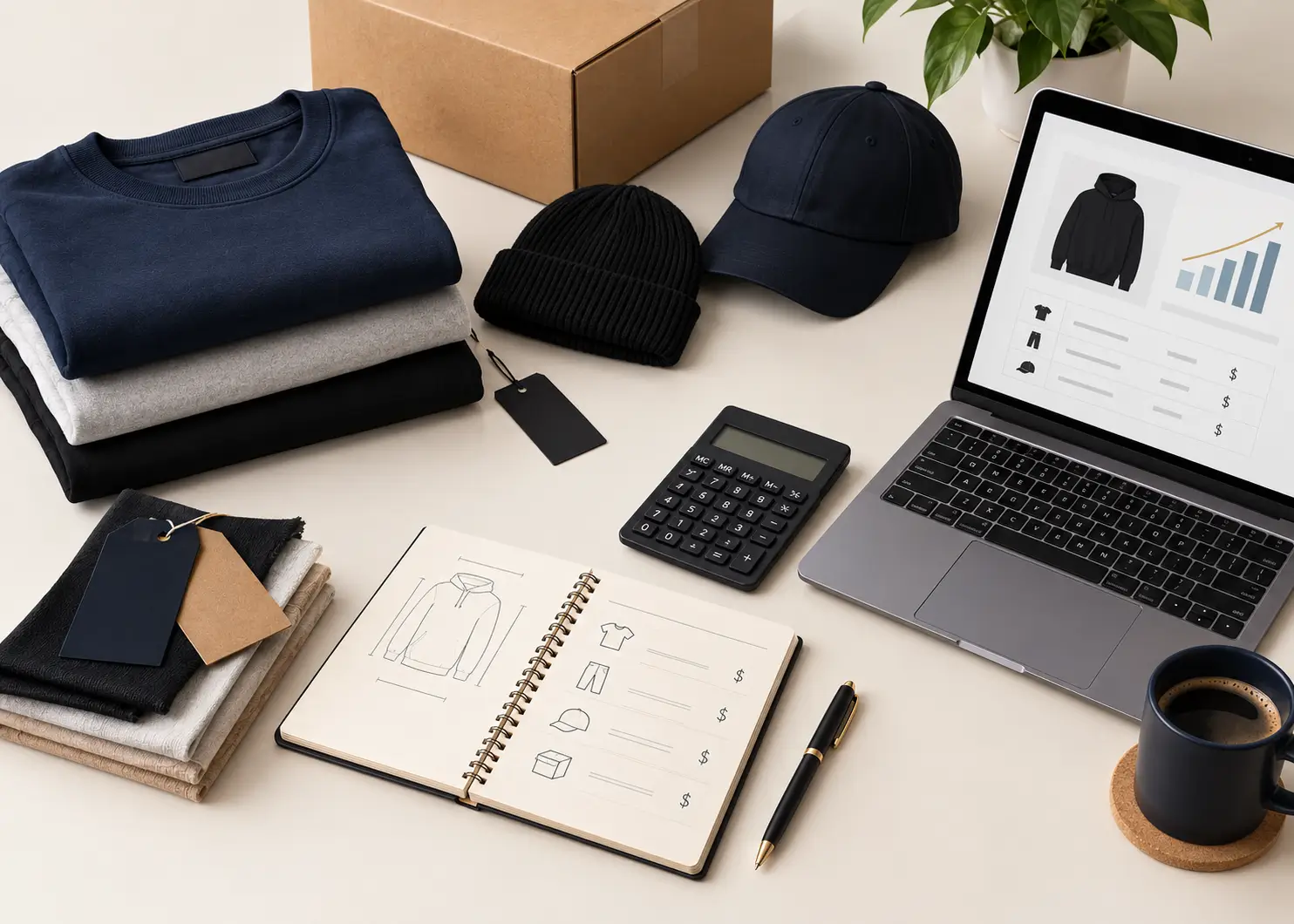
Step 6: Build, Launch, and Grow Your Brand
Your online store should reflect the brand identity you’ve developed throughout the previous steps. Choose an eCommerce platform that matches your needs:
- Shopify: Best for beginners, with built-in features and apps for waitlists, countdowns, and limited drops.
- WooCommerce: Offers greater design and functionality customization but requires more technical knowledge.
Your product pages should include:
- High-quality photos from multiple angles.
- Clear sizing information.
- Product descriptions that tell the story behind each piece.
Launching your brand starts well before your products go live. Build excitement by sharing behind-the-scenes content, design previews, and progress updates to keep your audience engaged.
At the same time, encourage potential customers to join a waitlist so you have a ready audience on launch day.
Common Mistakes to Avoid When Starting a Streetwear Clothing Brand
Most failed streetwear launches trace back to a handful of repeated mistakes, and being aware of them ahead of time makes them much easier to avoid.
Here’s what to look out for:
- Launching with too many products instead of a focused first drop
- Using cheap blank apparel that undermines the perceived quality of the brand
- Skipping the brand story and jumping straight into selling
- Copying established brands like Supreme instead of developing an original identity
- Ignoring community building until after launch instead of from the start
- Launching without an email list or waitlist in place
- Pricing too low and struggling to adjust later without upsetting early customers
- Skipping samples and moving straight to bulk production
How Much Does It Cost to Start a Streetwear Brand?
Startup costs for a streetwear brand vary significantly depending on your manufacturing route and how many products you launch with.
Approximate Budget Breakdown
Budget | Typical Approach | What Changes |
$500 | Print on demand, minimal upfront inventory | Lower quality control, thinner margins, fastest to launch |
$1,000 | Small batch private label with a limited first drop | Better quality than POD, still limited product range |
$3,000 | Full first collection with private label or small cut and sew run | Room for proper samples, photography, and a stronger launch |
$10,000 | Cut and sew production with a complete brand rollout | Higher quality construction, room for professional photography and marketing spend |
Many successful streetwear brands started with a limited budget or small minimum order quantities (MOQs). As your sales grow, reinvest your profits into higher-quality manufacturing, larger production runs, and stronger branding to scale your business sustainably.
Remember, building a successful streetwear label is a long-term process. Focus on consistency, learn from every release, and improve with each collection rather than trying to achieve everything with your first drop.
Streetwear Brand Launch Checklist
Use this checklist as a final review before your first drop goes live, working through each item in order to catch anything you may have missed.
- Brand name finalized and available across social platforms and domains
- Logo and visual identity completed
- Samples reviewed and approved
- Manufacturer confirmed with clear production timeline
- Website built with complete product pages
- Product photography completed
- Social media accounts set up and active before launch
- Pricing calculated and finalized
- Packaging designed and ordered
- Launch date set with a waitlist or email list in place
So what is stopping you from taking the next step?
Innovate Apparel is here by your side, ready to take on the streetwear clothing brand challenge alongside you. Hit us up via our contact form or email us.