
China vs USA Clothing Manufacturing: Which Is Better for Your Brand in 2026?
Are you looking for the difference between China vs USA clothing manufacturing in 2026? If this is for your manufacturing decision, you should take some time to process the information we are going to provide.
Good-quality clothing manufacturing depends on minimum order quantity (MOQ), garment category, timeline, and the stage of the business.
A China vs USA clothing manufacturing decision is rarely a simple cost question.
This guide breaks the decision into measurable parts such as landed cost, lead time, MOQ, quality systems, and risk. It also provides a manufacturing location comparison, broken down by business type so that you can find a direct answer.
How Clothing Manufacturing differs in China vs USA
Choosing where to produce your apparel line comes down to balancing speed, quality, and scale. While overseas production like China offers bulk volume, manufacturing with us in the USA gives your brand lightning-fast lead times, low minimum order quantities (MOQs), and the premium appeal of American-made craftsmanship.
Here is how partnering with us compares to traditional overseas sourcing:
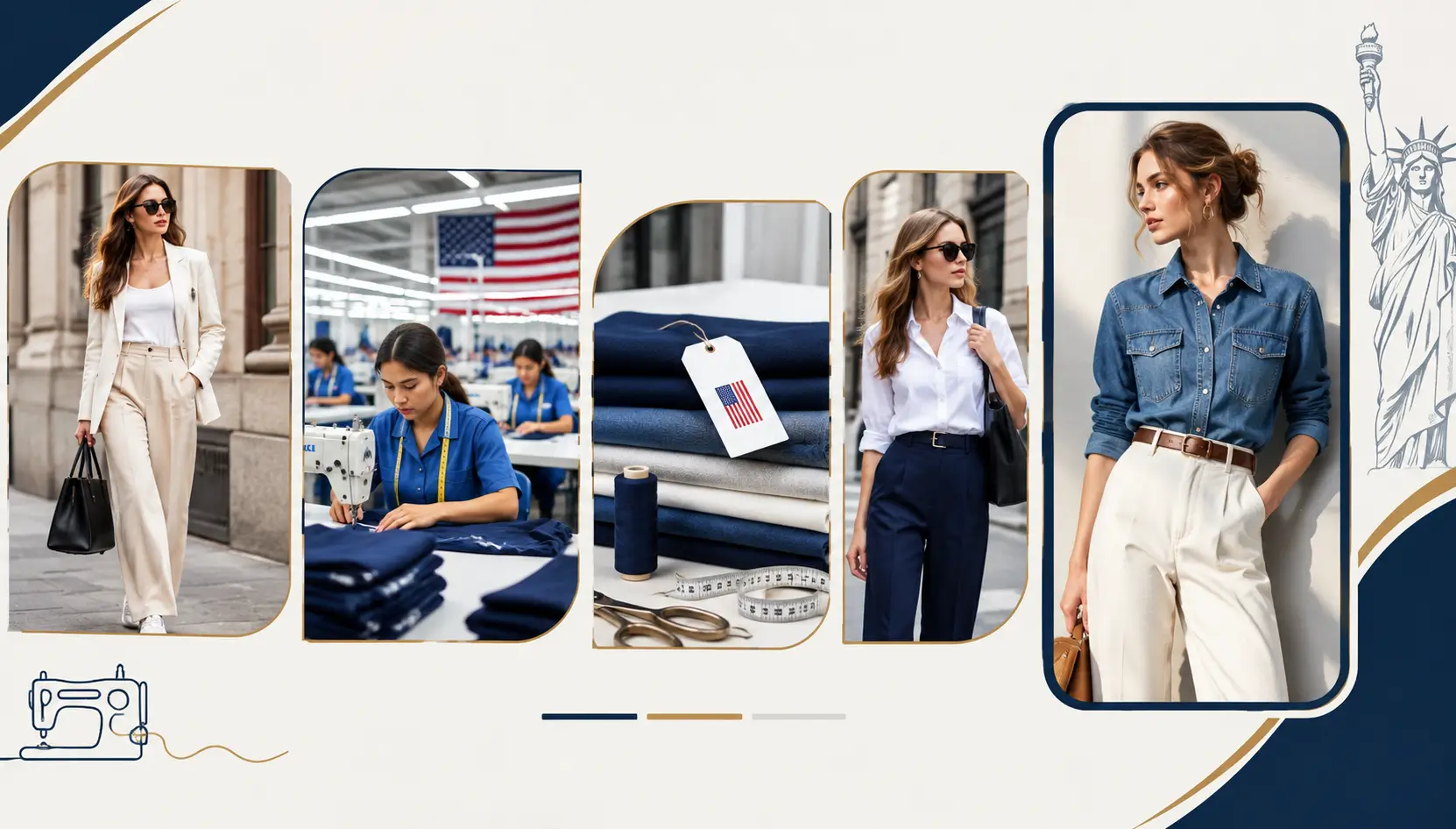
USA Manufacturing
The USA garment industry shrank significantly after the 1990s and 2000s as production moved offshore, and what remains today is a smaller, more specialized network of cut and sew houses concentrated in Los Angeles, New York, and parts of the Southeast.
Many USA factories focus on lower volume runs, technical fabrics, or premium construction because that is where domestic labor cost is easiest to absorb. Fabric sourcing is often imported, since domestic textile mills serve a narrower range of fabric types than they did decades ago.
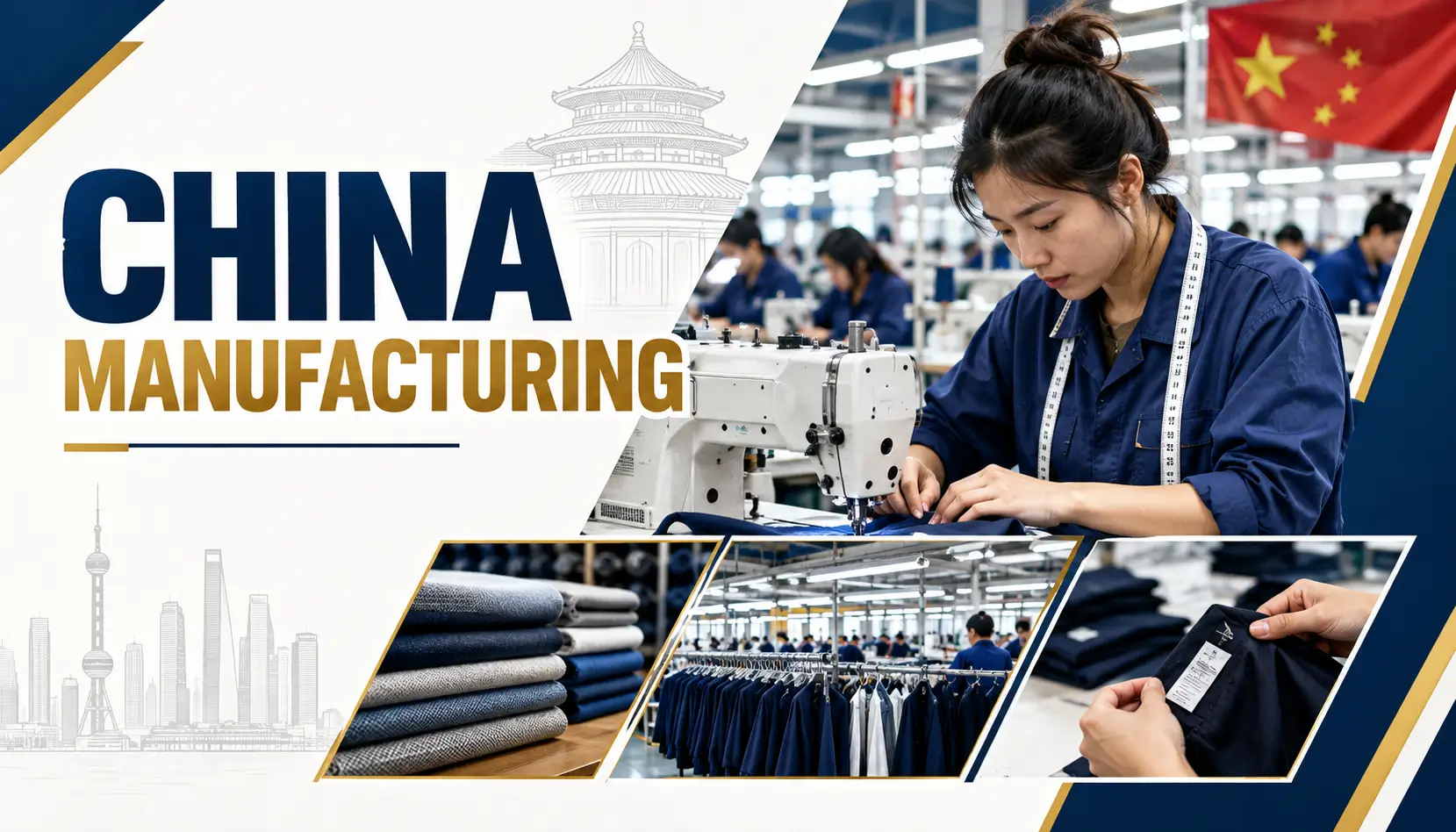
China Manufacturing
China built a fully integrated apparel supply chain over the past three decades, with yarn mills, fabric mills, dye houses, trim suppliers, printing facilities, and finished goods factories often located within the same industrial region. That density is the real reason unit costs are lower.
A factory in Guangdong or Zhejiang can source fabric, trims, and packaging within a short drive, which reduces both cost and coordination time compared to a supply chain that has to import components.
China vs USA Clothing Manufacturing: Side-by-Side Comparison
Category | USA | China |
Cost | Higher labor cost drives up unit price | Lower labor cost and dense supplier network reduce unit price |
Labor | Skilled, smaller workforce | Large skilled workforce, high factory capacity |
Fabric Sourcing | Often imported | Domestic mills cover most fabric types |
Production Capacity | Limited by fewer factories | High capacity across most garment categories |
Communication | Same time zone, English fluent | Time zone gap, sourcing agents often used |
Technology | Strong in automation and small batch systems | Strong in AI quality control and integrated digital production |
Certifications | Established compliance frameworks | Growing certification adoption, varies by factory |
Supply Chain | Shorter domestic chain, fewer nodes | Long export chain, more nodes and touchpoints |
Quality | Depends on specific factory | Depends on specific factory |
Flexibility | Faster changes on small runs | Better suited to large, standardized runs |
This apparel manufacturing comparison shows that when we look at China vs USA clothing manufacturing, each choice has its own perks. The next sections isolate cost, lead time, and quality individually with real numbers.
Total Landed Cost Breakdown
Garment cost alone is misleading. An approximately $6 garment from China and an approximately $12 garment from the USA do not represent the actual amount a brand pays to get inventory into a warehouse ready to sell. The true landed cost adds shipping, duties, QC inspection, freight insurance, customs brokerage, and inventory holding costs.
Cost Component | USA | China |
Garment Cost | $12.00 | $6.00 |
Shipping | $1.00 | $2.50 |
Duties | $0.00 | $1.20 |
QC Inspection | Included | $0.40 |
Freight Insurance | Included | $0.15 |
Customs Broker | None | $0.30 |
Inventory Holding | Lower | Higher |
Total Landed Cost | $13.00 | $10.55 |
Once every hidden line item is added, the gap between USA and China production narrows from roughly six dollars per unit down to about two and a half dollars per unit in this example.
That gap changes further depending on garment complexity, fabric weight, and order volume, which is why a brand should always calculate landed cost per product rather than relying on the sticker price of the garment alone.
Manufacturing Cost by Order Size
Unit price drops as order volume increases, and the rate of that drop differs by country. Using a mid weight hoodie as an example:
Order Quantity | USA Unit Price | China Unit Price |
100 units | $28.00 | $15.00 |
500 units | $22.00 | $10.00 |
1,000 units | $19.50 | $8.20 |
5,000 units | $16.00 | $6.40 |
The price gap widens as volume increases, since China’s factory density allows larger orders to be split across specialized production lines while USA factories are more limited by floor space and labor availability. A brand ordering under 500 units may find the cost difference small enough that lead time and communication outweigh price. A brand ordering 5,000 or more units will usually find the cost difference too large to ignore.
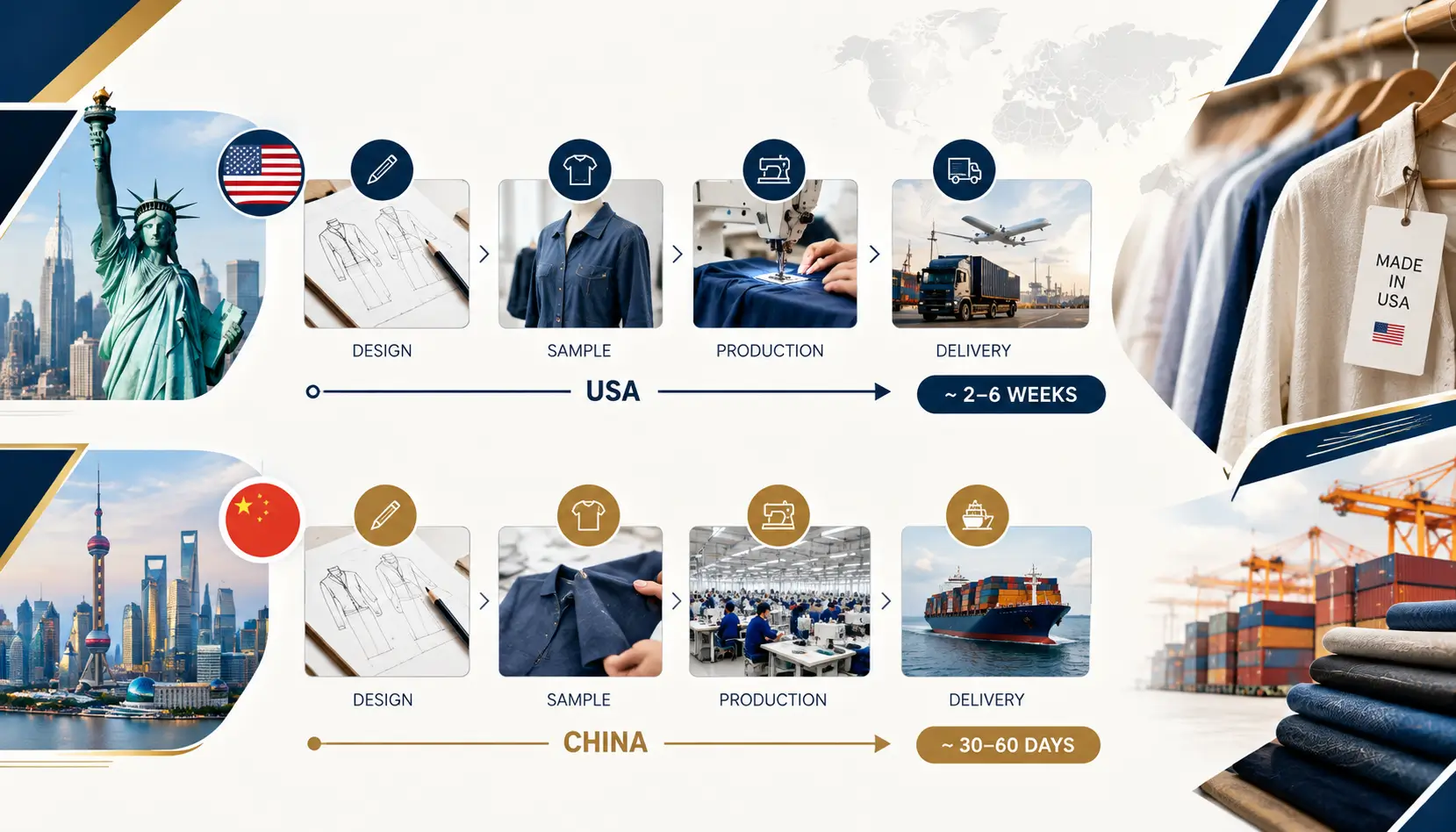
Lead Time Comparison
USA production timelines run shorter mainly because there is no ocean freight leg and customs clearance is domestic.
USA Timeline: Design → Tech Pack → Sample → Revision → Production → Delivery (typically 2 to 6 weeks total)
China Timeline: Design → Tech Pack → Sampling → Approval → Bulk Production → Ocean Freight → Customs → Warehouse (typically 8 to 14 weeks total)
A rush order in the USA can sometimes be compressed to under two weeks if the factory has open capacity.
A rush order from China rarely compresses below six weeks once ocean freight is included, though air freight can cut that to roughly two to three weeks at a significantly higher shipping cost.
MOQ Comparison
Order Type | USA Availability | China Availability |
Samples | Widely available | Widely available |
Small Batch (under 100) | Common | Less common, higher per unit cost |
Mid Volume (100 to 1,000) | Available at most factories | Widely available |
Mass Production (1,000+) | Limited by factory size | Standard offering |
USA factories are generally more flexible for brands testing a new product because many were built around smaller production runs. China factories are structured for volume, so a brand asking for 50 units may pay a premium or get turned away entirely by larger facilities that focus on bulk contracts.
Check out:
👉 Best Small Batch Clothing Manufacturers of 2026
👉 Best No MOQ Clothing Manufacturer Options (2026)
Quality Comparison
Quality is not a single score. It is a set of measurable production factors that vary by factory.
Quality Factor | USA | China |
Stitch Consistency | Strong on lower volume runs | Strong on standardized runs |
Pattern Accuracy | High with in house pattern makers | High with experienced factories |
Fabric Quality | Depends on imported source | Wide range from budget to premium mills |
Shrinkage Control | Managed through smaller batch testing | Managed through pre-production testing |
Color Matching | Reliable with domestic dye houses | Reliable at established dye facilities |
Print Quality | High for small run digital printing | High for large run screen and digital printing |
Embroidery Quality | Strong for detailed, low volume work | Strong for high volume standardized work |
Finishing | Hand finished detail common | Machine finished consistency at scale |
Packaging | Custom, smaller run options | Full range from basic to premium packaging |
QC Systems | Often in house, factory floor visibility | Third party inspection commonly used |
The honest takeaway is that both countries have factories capable of excellent work and factories that cut corners. Quality outcomes track more closely with factory selection, sampling discipline, and QC process than with country of origin alone.
Manufacturing Risks
Risk | USA | China |
Shipping Delays | Low | High, especially during peak season |
IP Concerns | Low | Medium, factory dependent |
Communication | Same time zone, direct | Time zone gap, often through an agent |
Quality Consistency | High with known factories | Depends on supplier vetting |
Political Risks | Low | Medium, tariff policy sensitive |
Tariff Exposure | None | Possible, changes with trade policy |
Currency Volatility | None | Present |
Tariff exposure is the risk factor most likely to change year over year, since trade policy between the two countries has shifted multiple times over the past decade.
Brands sourcing heavily from China should build tariff volatility into their cost models rather than assuming current rates will hold for the life of a product line.
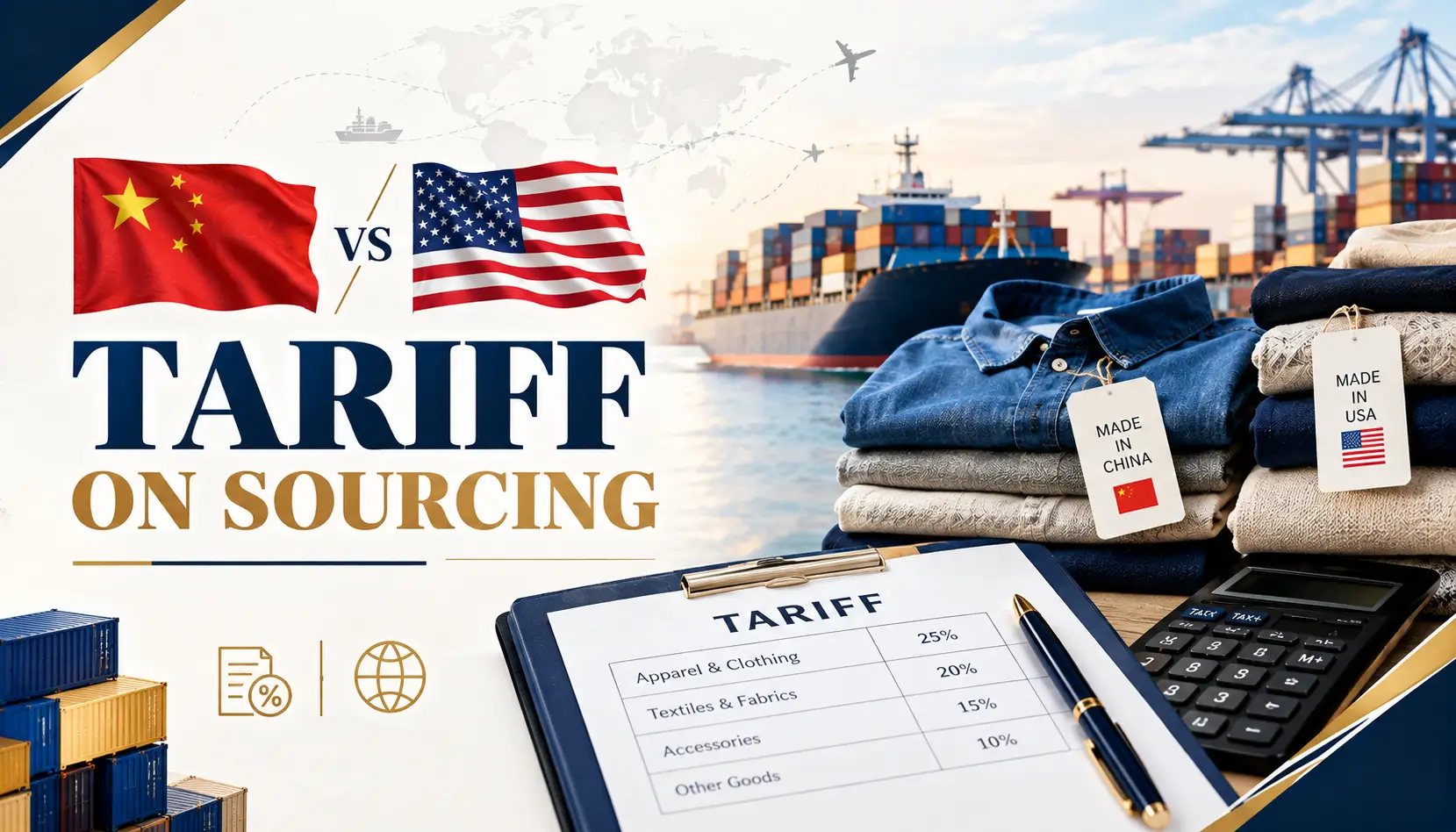
Current Tariff Impact on Sourcing (2026 Update)
Tariffs remain one of the biggest factors affecting apparel sourcing costs in 2026. Following major policy changes earlier this year, the U.S. now applies a Section 301 forced-labor tariff of 10% or 12.5%, depending on the country of origin.
- China: Subject to the 12.5% tariff, which generally stacks on top of existing Section 301 duties and standard MFN import tariffs, increasing landed costs.
- Vietnam: Also falls under the 12.5% tariff.
- Bangladesh, Cambodia, Indonesia, and Malaysia: Subject to the lower 10% tariff, helping maintain their competitiveness for many apparel categories.
- Mexico: Qualifying garments remain duty-free under USMCA.
- USA: Domestically made apparel incurs no import duty, though manufacturing costs are generally higher.
Since apparel duties vary by product classification and trade rules, brands should verify current HTS-specific rates with a customs broker before making sourcing decisions.
Which Country Is Best for Different Clothing Categories?
Garment Category | USA | China |
T-Shirts | Strong | Strong |
Luxury Dresses | Strong | Limited |
Denim | Limited | Strong |
Workwear | Strong | Strong |
Activewear | Limited | Strong |
Streetwear | Strong | Strong |
Uniforms | Strong | Limited |
Technical Outerwear | Limited | Strong |
Garment complexity drives this table more than cost. Denim and technical outerwear require heavy machinery, specialized washing facilities, and bonded seam construction that is more concentrated in China’s industrial zones. Uniforms and luxury dresses tend to favor USA production because of smaller run sizes and the value of close quality oversight during construction.
Which Country Is Right for Your Business?
Business Type | Best Option |
Startup | USA |
Luxury Brand | USA |
Fast Fashion | China |
Private Label | China |
Test Collection | USA |
Enterprise Retail | China |
DTC Premium | USA |
Budget Ecommerce | China |
A startup selling technical outerwear may still need China for the fabric and construction the category requires. Meanwhile, an enterprise retailer selling premium basics may keep part of its line in the USA to shorten replenishment cycles.
Use the matrix alongside the garment category table above to land on a realistic sourcing plan.
Fast Decision Flow
For a quicker read on direction, work through these questions in order and stop at the first one that applies to your order.
- Do you need fewer than 300 units for a first production run? USA manufacturing is usually the more practical starting point.
- Is turnaround under four weeks a hard requirement? USA manufacturing removes the ocean freight leg that adds most of China’s lead time.
- Is your target price point dependent on the lowest possible unit cost at 1,000 or more units? China manufacturing typically wins on landed cost at that volume.
- Do you want to test a product locally before committing to a large overseas order? A hybrid strategy, sampling and piloting in the USA before scaling bulk production in China, fits this case.
Most brands land on an answer within the first two questions. The remaining two matter most for brands with a specific garment category or a multi-stage growth plan.
Still Unsure Which Country Manufacturing Fits Your Brand?
Choose USA manufacturing if speed, premium quality, lower MOQs, and close collaboration with the factory matter most to your business right now.
Choose China manufacturing if you need large scale production, a wide range of fabric and trim options, and the lowest possible unit cost at volume.
Choose a hybrid strategy if you want to validate a product domestically before scaling production internationally, or if you want a backup supplier in case tariffs or freight timelines shift.
This China vs USA clothing manufacturing decision ultimately comes down to matching production location to order volume, garment complexity, and timeline rather than picking a country and forcing every product line to fit it.
Find the Perfect Manufacturing Partner for Your Next Collection: Contact Innovate Apparel for an instant quote.