
How to Start an Online Clothing Store
Starting an online clothing store takes more than uploading products to a website and waiting for orders.
You need to choose the right business model, validate demand, manufacture apparel, calculate your costs, build a trustworthy store, set up payments, and create a plan to attract your first customers.
You don’t need a huge inventory to get started.
You can test a collection through low MOQ manufacturing. If customers respond well, you can reinvest your revenue into better clothing manufacturing and marketing.
This guide walks you through the process to start an online clothing store. More importantly, it explains what to choose at each stage, how much you may need to spend, what to check before committing money, and how to avoid common mistakes.

What You Need to Start an Online Clothing Store
Before you build your store, you’ll need to make several decisions:
- What type of clothing will you sell?
- Who will buy it?
- Which business model fits your budget?
- Will you manufacture, wholesale, dropship, or use print-on-demand?
- How will you validate demand?
- Where will you sell?
- How much will each product actually cost?
- What price gives you enough margin?
- How will customers discover your brand?
- How will you handle payments, shipping, returns, and customer service?
You don’t need perfect answers on day one. You do need enough information to make your first small, controlled launch.
How Much Does It Cost to Start an Online Clothing Store?
The cost depends heavily on your business model.
A print-on-demand store can start with relatively little upfront inventory because the supplier produces products after customers place orders. A private label or custom cut and sew brand requires more capital because you may need samples, minimum order quantities, packaging, labels, and inventory before launch.
But recently, low MOQ private label manufacturing is quite common; you can reach out to one of the best small batch clothing manufacturers, such as Innovate Apparel.
Your major startup expenses can include:
Expense | Lean Launch | Standard Launch | Custom Clothing Brand |
Product samples | Low–Medium | Medium | Medium–High |
Inventory | Minimal | Medium | High |
Custom labels/packaging | Optional | Medium | Optional |
Photography | DIY/Low | Medium | Medium–High |
Business setup | Varies | Varies | Varies |
Marketing | Low | Medium | Medium–High |
Shipping supplies | Low | Medium | Medium–High |
These categories provide a rough framework because supplier rates, taxes, shipping costs, and manufacturing requirements vary by location.
What Can You Launch With $500?
An ecommerce apparel startup can begin with a small product range, limited inventory, and a focused customer segment rather than a large catalog.
A $500 budget requires a different strategy from a traditional inventory heavy clothing business. Consider allocating your budget towards the following:
- A basic website setup
- A small number of product samples
- Basic packaging
- A small reserve for unexpected expenses
You could also use print-on-demand or dropshipping to reduce upfront inventory costs. Just don’t spend your entire budget before you know whether customers want the product.
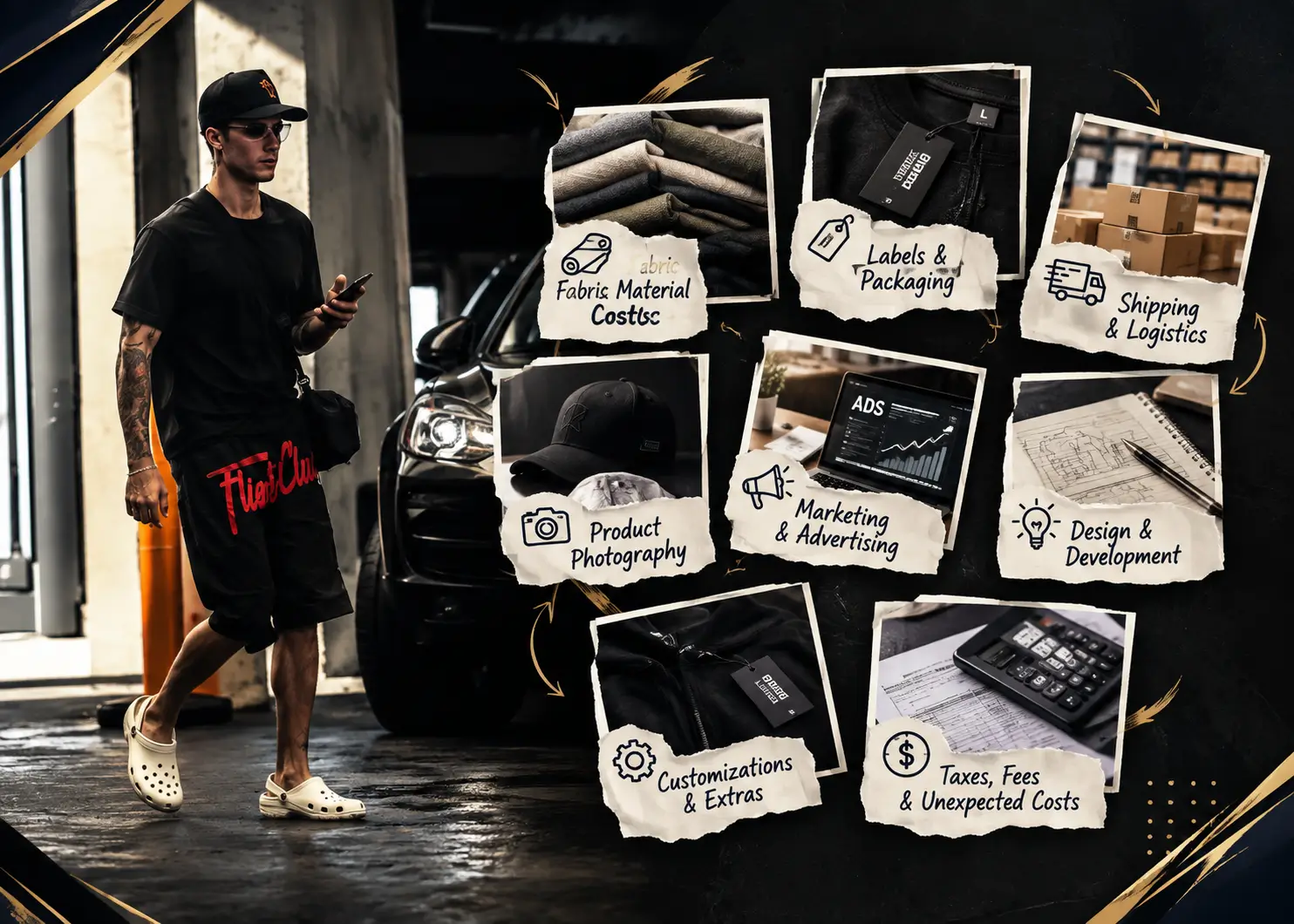
Hidden Costs Beginners Often Miss
Your product’s wholesale or manufacturing price isn’t your complete cost.
Remember to account for:
- Product customization
- Labels and packaging
- Shipping to you
- Shipping to customers
- Customs duties and taxes where applicable
- Payment processing fees
- Returns and exchanges
- Influencer or creator costs
- Damaged or defective products
These expenses affect your real profit margin.
Which Clothing Business Model Should You Choose?
Use your budget, goals, desired control, and tolerance for inventory risk to make the decision.
Model | Upfront Inventory | Customization | Inventory Risk | Product Control | Typical Use |
Print-on-demand | Low | Low–Medium | Low | Low–Medium | Testing designs |
Dropshipping | Low | Low–Medium | Low | Low | Testing products |
Wholesale | Medium–High | Low | Medium–High | Medium | Curated clothing store |
Private label | Medium–High | Medium–High | Medium–High | High | Branded collections |
Cut-and-sew | High | High | High | High | Original clothing designs |
There isn’t one universally correct model. Choose the model that matches your available capital, product strategy, and desired level of control.
Choose a Profitable Clothing Niche
A clothing niche gives your store a defined customer and product focus.
Instead of trying to sell clothing to everyone, identify a specific group with a recognizable need, interest, style, or purchasing behavior.
For example, you might target:
- Minimalist streetwear buyers
- Sustainable-fashion shoppers
- Fitness enthusiasts
- Outdoor consumers
- Modest-fashion customers
- Plus-size shoppers
- Parents looking for children’s clothing
- Professionals seeking workwear or quality jeans
- Fans of a particular lifestyle or hobby

Identify Your Target Customer
Start with the customer rather than the product.
Define:
- Age range
- Location
- Lifestyle
- Spending habits
- Clothing preferences
- Problems with existing products
- Preferred shopping channels
- Reasons for buying
Ask yourself:
Why would this person buy from my store instead of an established competitor?
Your answer should go beyond “better quality.”
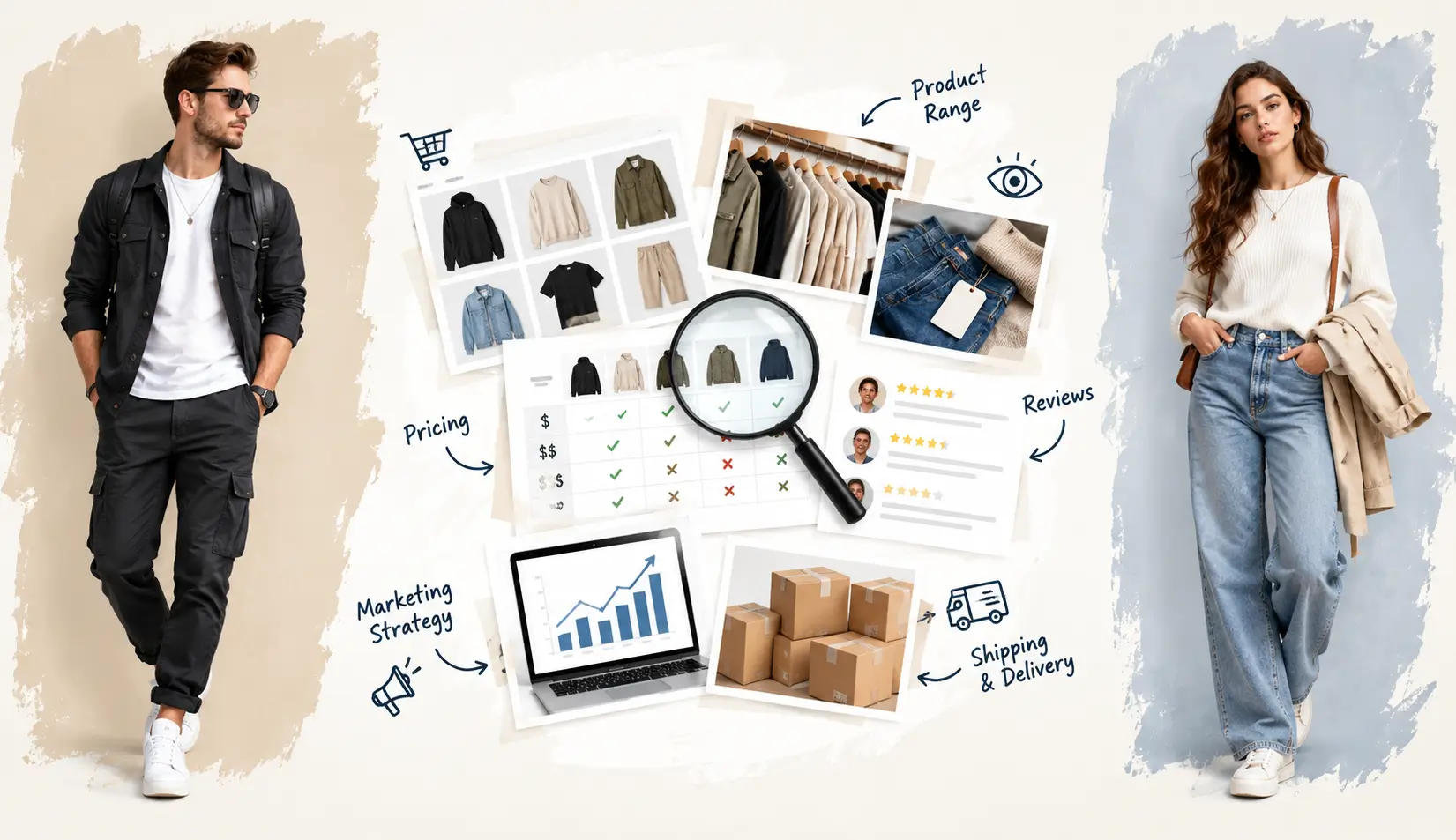
Analyze Competitors
Study competing clothing stores and marketplaces.
Look at:
- Product range
- Pricing
- Materials
- Product photography
- Reviews
- Size options
- Shipping
- Returns
- Customer complaints
- Social-media content
- Product positioning
Customer reviews can reveal opportunities that competitor websites don’t advertise.
If shoppers repeatedly complain about poor sizing, limited size ranges, uncomfortable fabrics, or slow shipping, those complaints can help you identify potential areas for differentiation.
Check Search and Social Demand
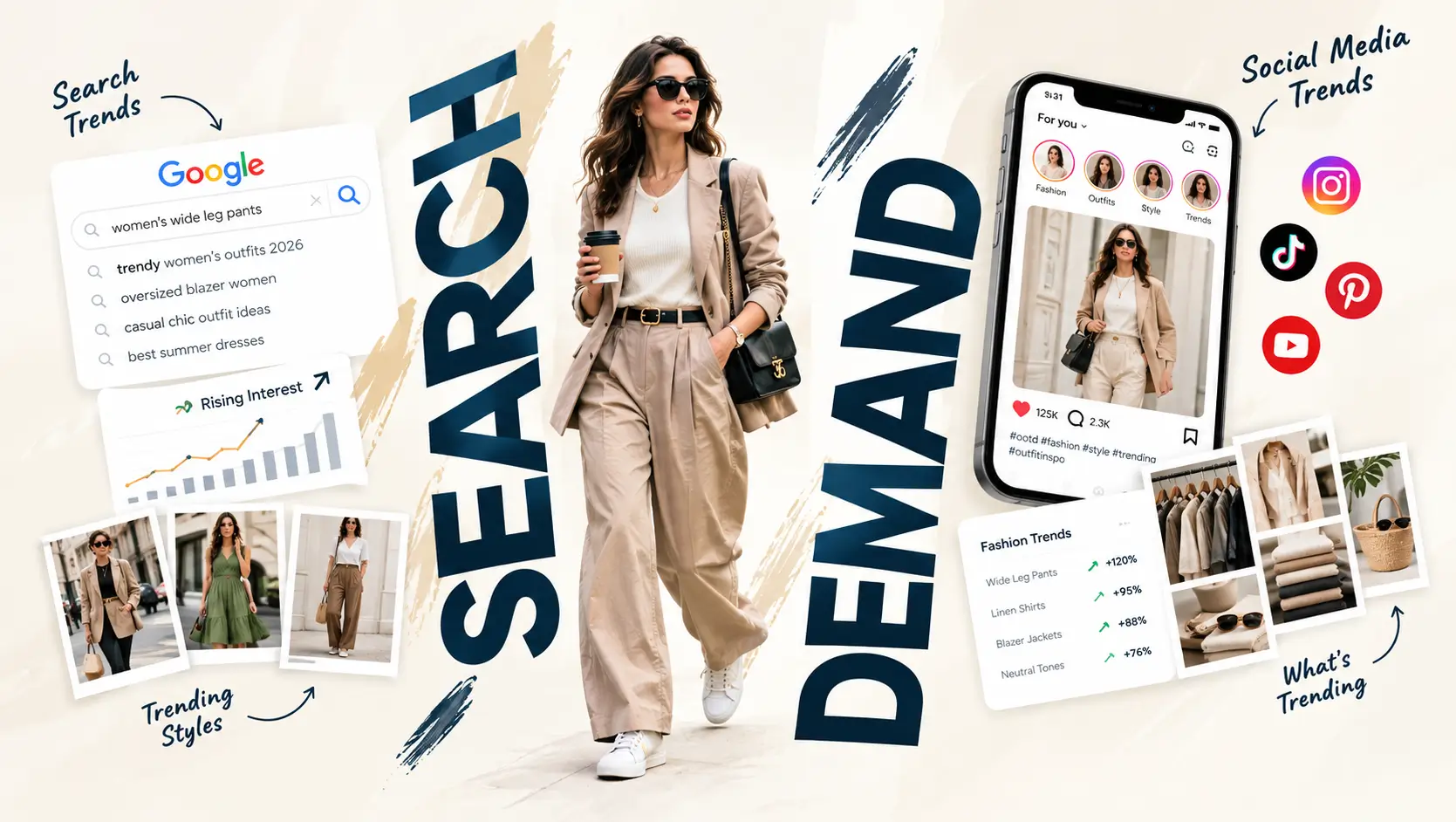
Research how people discuss your product category across:
- Google Search
- Google Trends
- Amazon
- Etsy
- TikTok
- Other relevant marketplaces
Look for recurring language, questions, complaints, and product requests.
Don’t treat search volume as proof that a clothing business will succeed. Use search behavior as one signal alongside competition, customer feedback, pricing, supplier availability, and margins.
Validate Your Clothing Business Before Spending Money
One of the easiest ways to lose money involves buying inventory before confirming demand. Instead, validate your idea first.
1. Research Search Demand
Use search trends and keyword research to understand whether people actively look for products in your niche. Look beyond one keyword.
2. Analyze Amazon, Etsy, and Social Media
Marketplaces can reveal what customers already buy.
Study:
- Best-selling products
- Number and quality of reviews
- Price ranges
Social platforms can reveal emerging styles and customer language, but don’t assume viral attention automatically translates into sustainable demand.
3. Talk to Potential Customers
Ask potential customers about their existing shopping behavior.
Useful questions include:
- Where do you currently buy this type of clothing?
- What do you dislike about current options?
- How much do you normally spend?
- What would make you switch brands?
- Which features matter most?
- What would stop you from buying?
4. Test Samples
Order samples before placing a large production order.
Check:
- Fabric feel
- Fit
- Stitching
- Seams
- Print quality
- Embroidery
- Color accuracy
- Measurements
- Label placement
- Packaging
A product can look excellent in a supplier’s catalog and perform differently in your hands.
Build Your Online Clothing Store: Easy Steps
Once you’ve validated your niche, chosen a business model, sourced your products, and worked out your pricing, bring everything together in your online clothing store.
Think of your store as your digital retail space. It should communicate your brand, showcase your products, help shoppers understand what they’re buying, and make them confident enough to place an order.
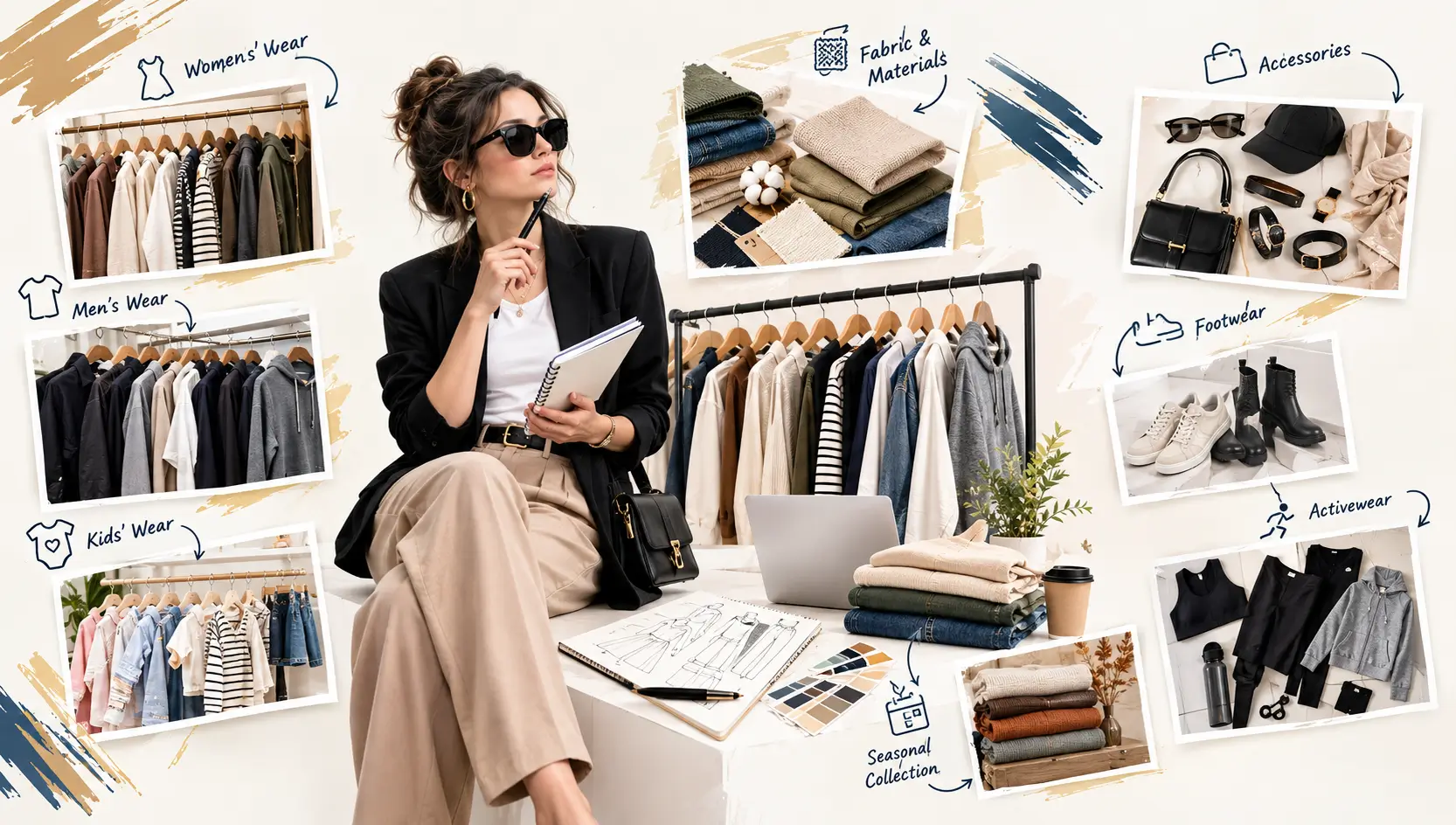
Step 1: Define Your Store's Product Range
Don’t launch with every product you could potentially sell.
Start with a focused collection that makes sense for your target customer. Depending on your niche, this might include:
- T-shirts
- Hoodies
- Sweatshirts
- Shirts
- Jeans
- Dresses
- Activewear
- Outerwear
- Accessories
Choose products that work together rather than creating a collection of unrelated items.
For example, a streetwear brand could launch with a small collection of heavyweight T-shirts, hoodies, and caps that share the same visual identity. A fitness brand might focus on training tops, leggings, shorts, and lightweight outerwear.
A focused collection makes your inventory easier to manage and gives your brand a clearer identity.
Step 2: Decide How You Will Present Your Brand
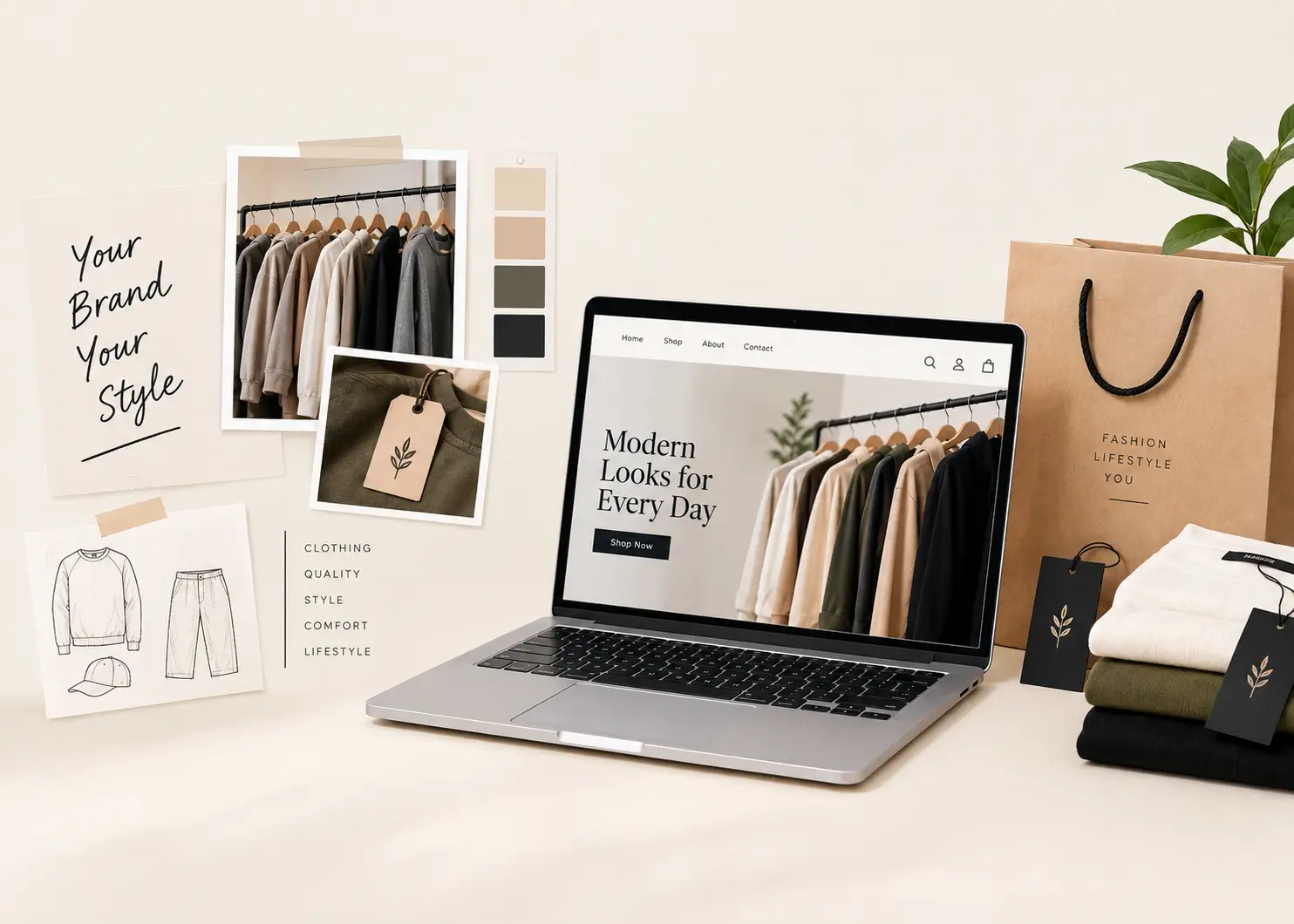
Your store should immediately communicate what your clothing brand represents.
Define your:
- Brand story
- Visual identity
- Color palette
- Typography
- Photography style
- Product presentation
- Packaging style
- Tone of voice
Keep these elements consistent across your store, packaging, social media, email marketing, and other customer touchpoints.
A customer should recognize your brand even before seeing its name.
Step 3: Organize Products Around How Customers Shop
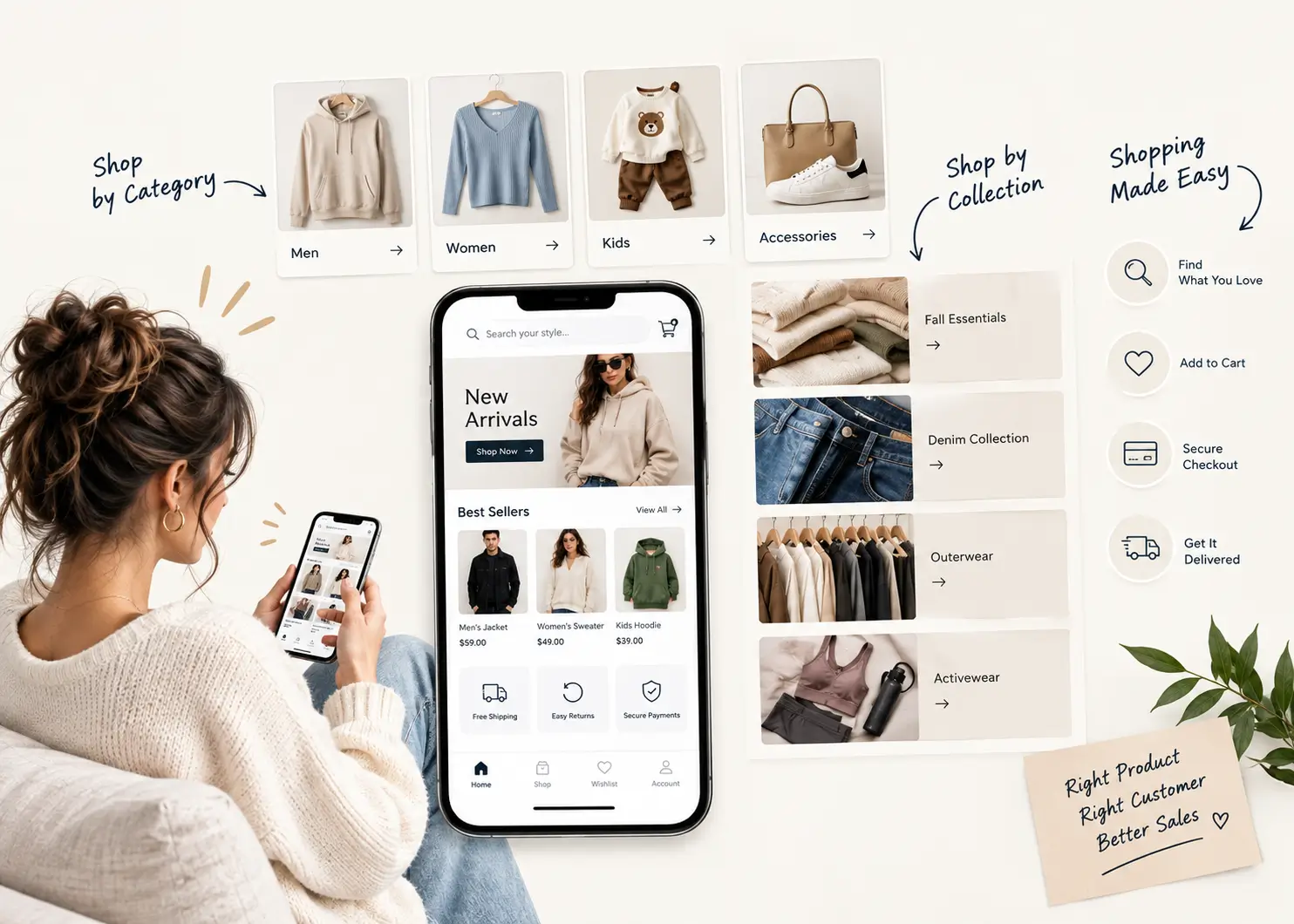
Make it easy for shoppers to find what they want.
You can organize your clothing collection by:
- Product type
- Gender
- Collection
- Season
- Occasion
- Size
- Color
- New arrivals
- Bestsellers
- Sale items
Choose categories that make sense for your customers rather than simply reflecting how you organize inventory internally.
If someone visits your store looking for a summer dress, they shouldn’t have to browse through dozens of unrelated products to find it.
Step 4: Create Product Listings That Answer Buying Questions
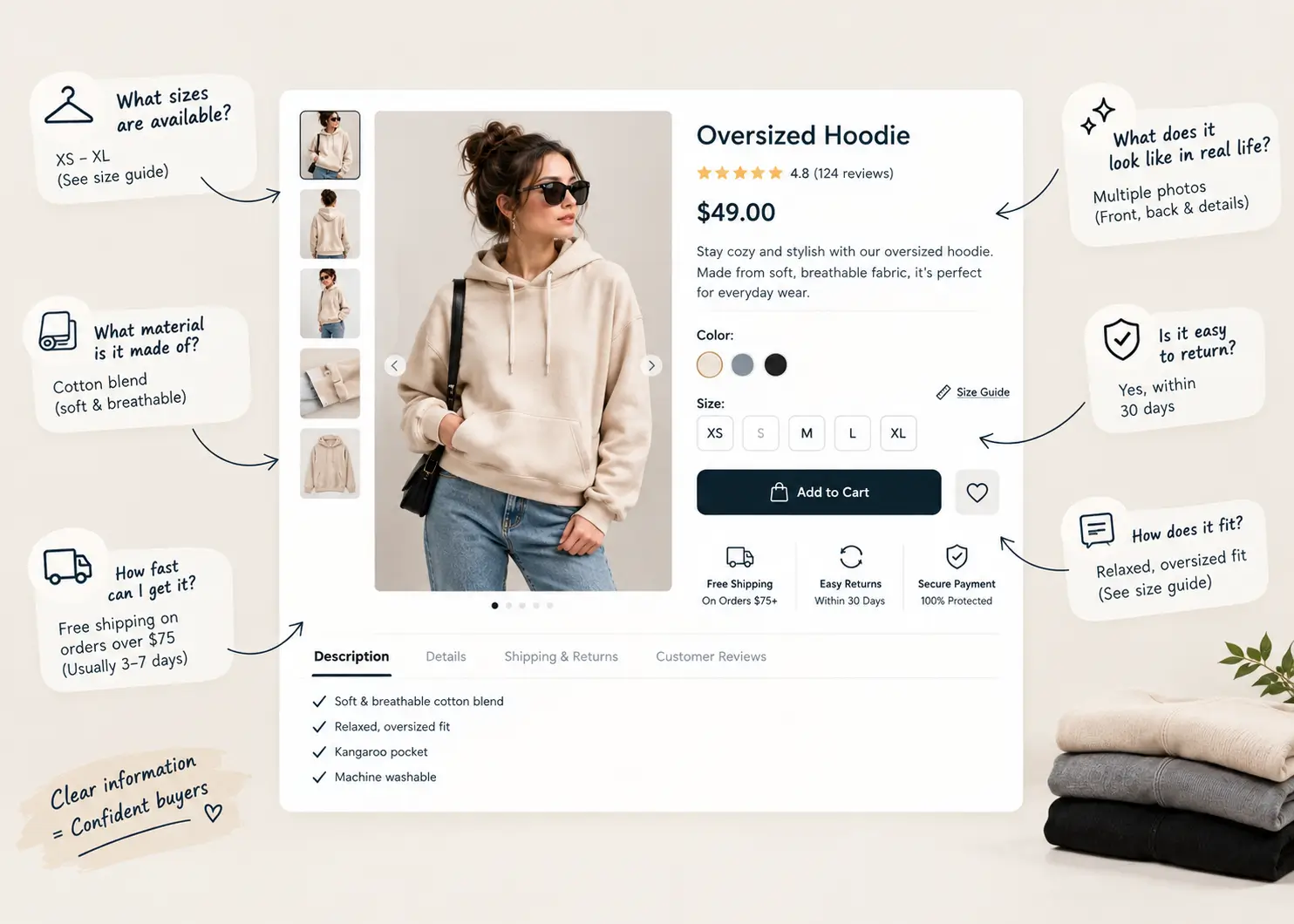
Every product listing should give customers enough information to decide whether the garment suits them.
Include details such as:
- Product name
- Price
- Fabric composition
- Fabric weight or GSM where relevant
- Available colors
- Available sizes
- Fit
- Measurements
- Construction details
- Care instructions
- Manufacturing details where relevant
- Shipping information
- Return and exchange terms
Don’t rely on phrases such as “premium quality” or “luxury fabric” without explaining what supports the claim.
Instead, give customers concrete information.
For example, in your Shopify store, when you upload a new product or edit an existing listing, make sure you are honest and mention everything, including the fabric composition, weight, stitching, construction, finish, or other characteristics that genuinely distinguish the garment.
Step 5: Show Customers What the Clothing Actually Looks Like
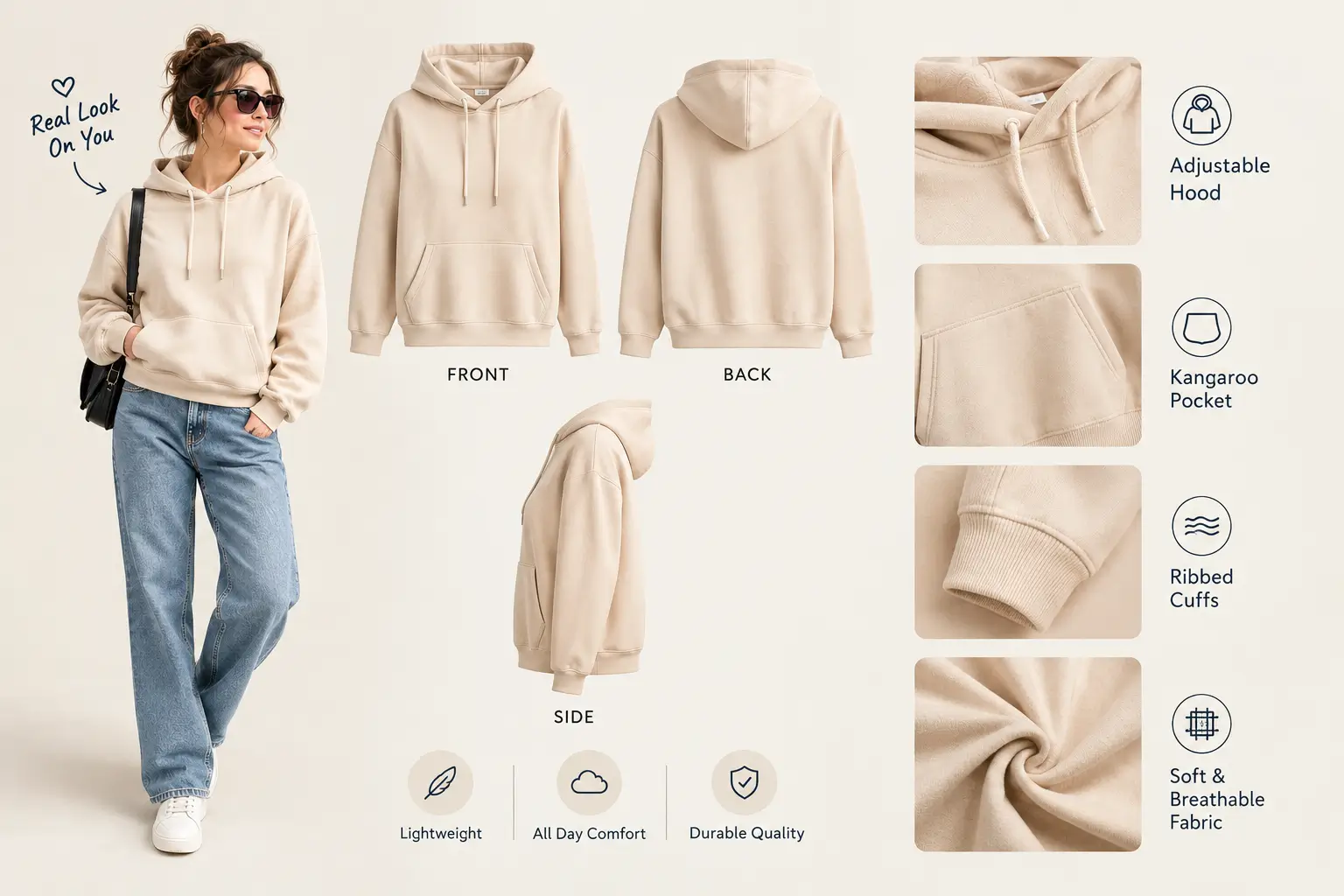
Good product photography can make a significant difference to an online clothing store because customers cannot physically examine the garment before purchasing.
Show each product from multiple angles.
Useful images can include:
- Front view
- Back view
- Side view
- Close-up fabric detail
- Stitching and construction
- Labels and finishing
- On-model photographs
- Lifestyle photographs
- Different styling combinations
Show the garment on different body types when possible. This gives customers a better idea of how the product may look and fit in real life.
Don’t use photography simply to make your store look attractive. Use it to answer the questions a customer would normally ask while examining clothing in a physical store.
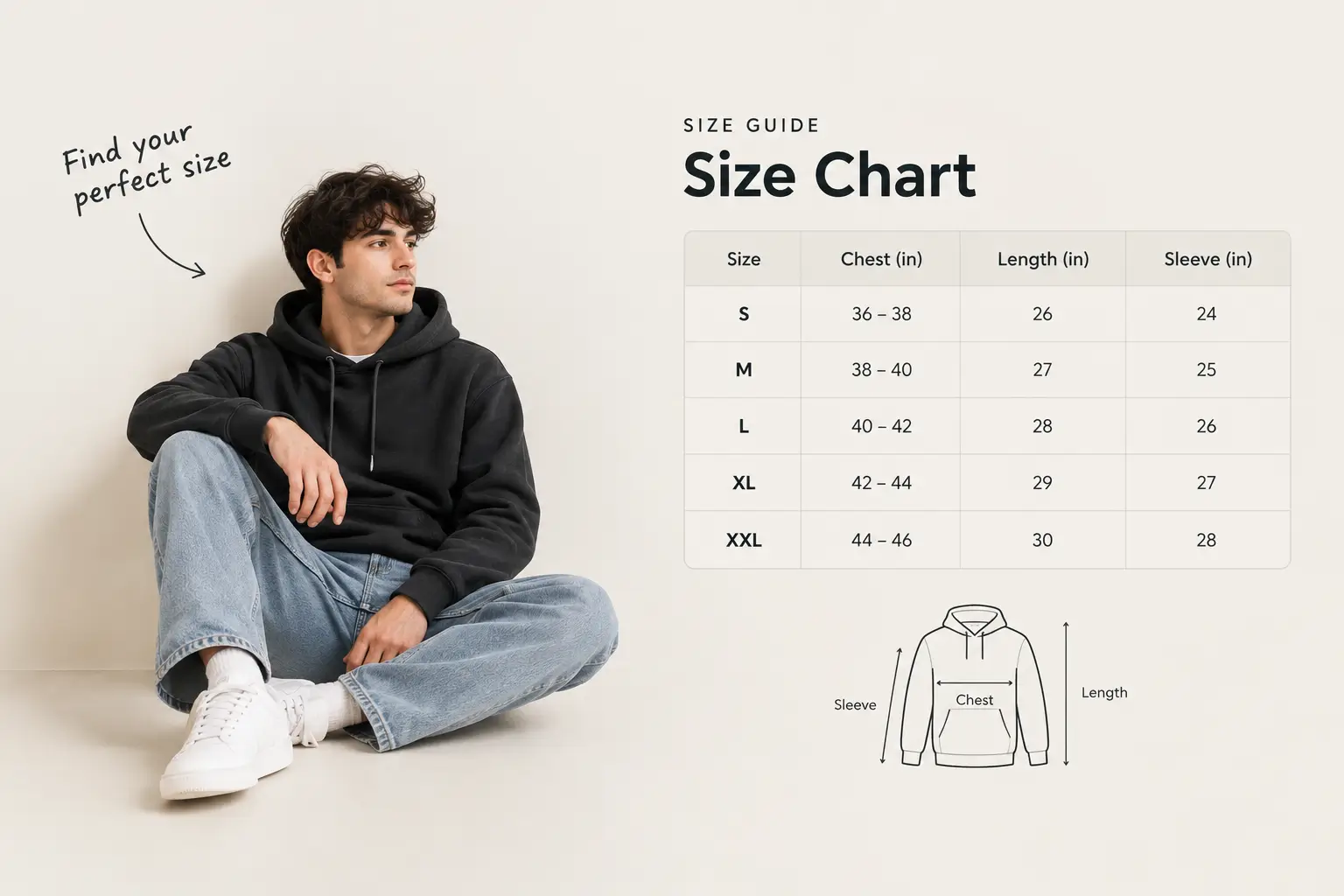
Step 6: Make Sizing Easy to Understand
Sizing remains one of the biggest uncertainties when customers buy clothing online.
Provide an accurate size chart based on your actual garment measurements.
Depending on the product, include:
- Chest
- Waist
- Hip
- Shoulder
- Sleeve length
- Garment length
- Inseam
Also explain whether the garment has a:
- Slim fit
- Regular fit
- Relaxed fit
- Oversized fit
- Tailored fit
If the garment runs smaller or larger than standard sizing, tell customers clearly.
You can also include the model’s height, measurements, and worn size to provide additional context.
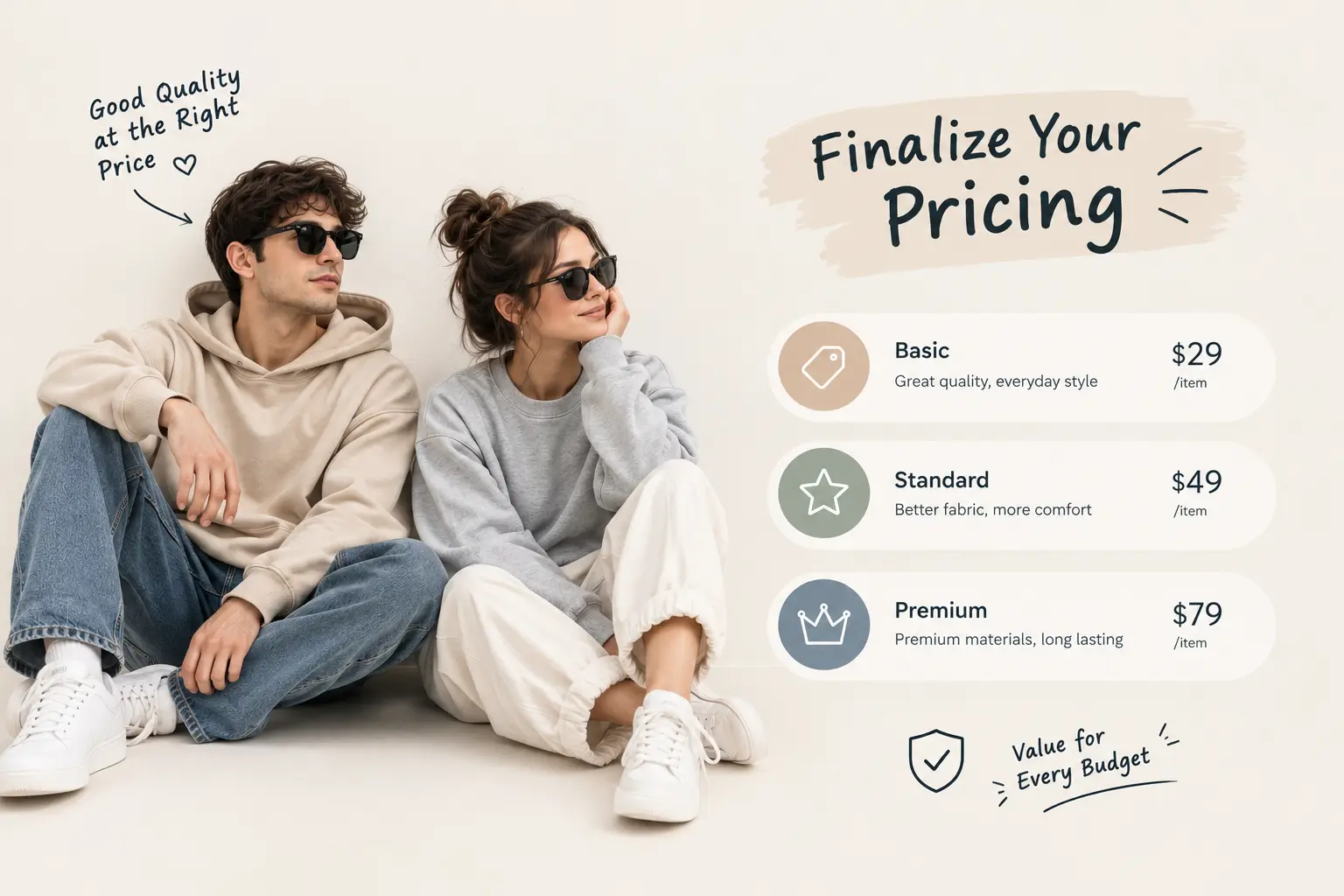
Step 7: Finalize Your Pricing
Your price should reflect your product costs, desired margin, market positioning, and customer expectations.
Before setting the retail price, account for:
- Manufacturing or wholesale cost
- Customization
- Labels
- Packaging
- Shipping
- Duties and taxes where applicable
- Payment-processing costs
- Returns and exchanges
- Marketing expenses
- Discounts and promotions
- Operating expenses
Don’t price a garment simply by adding a percentage to the supplier’s price.
You need to understand the full cost of selling the product.
Check out our blog on: How much does it cost to start a clothing brand?
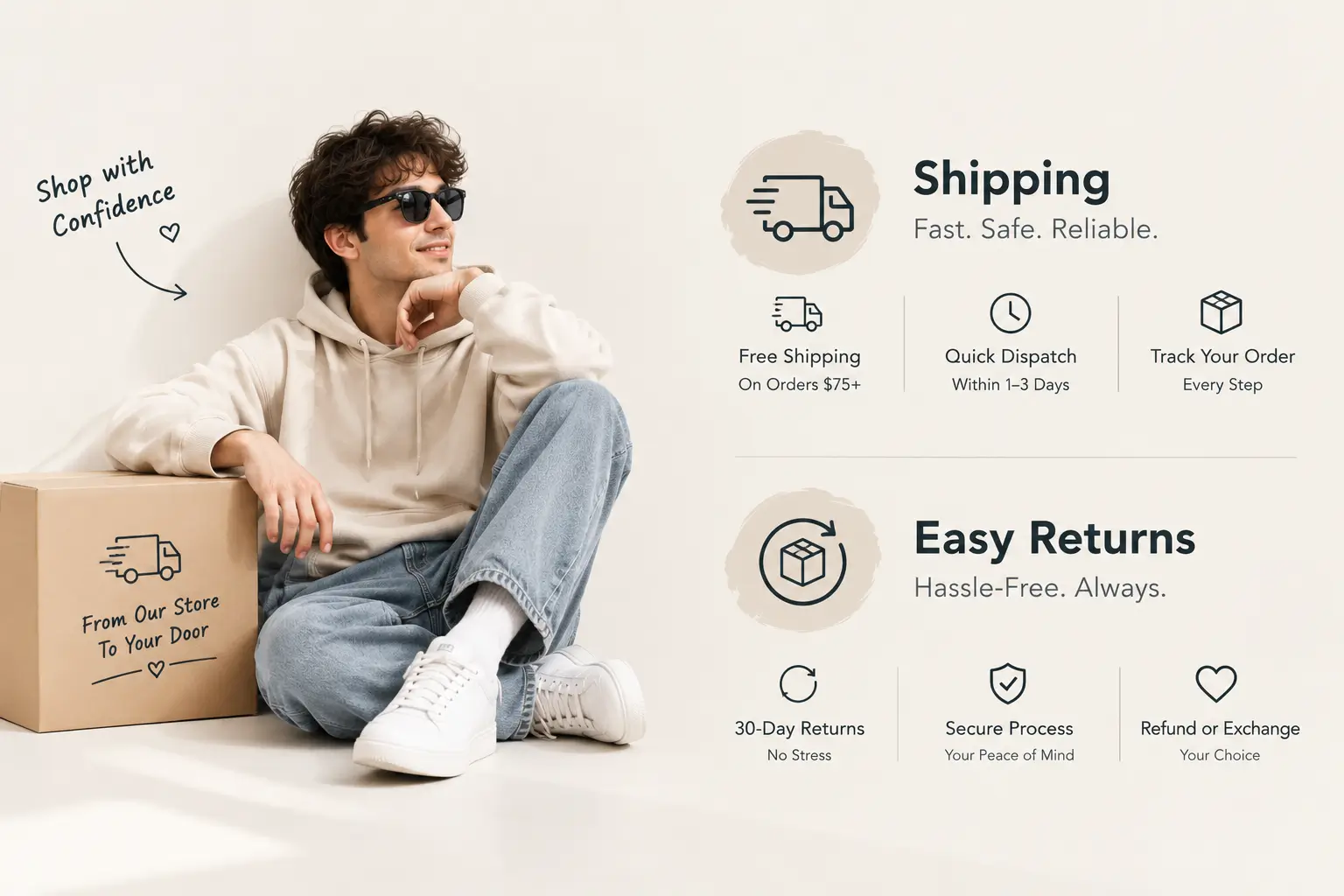
Step 8: Create a Clear Shipping and Returns Experience
Customers want to know when their clothing will arrive and what happens if it doesn’t fit.
Clearly explain:
- Where you ship
- Shipping costs
- Processing times
- Estimated delivery times
- International shipping
- Customs or import charges where applicable
- Return period
- Exchange process
- Refund process
- Return-shipping responsibility
Keep these policies easy to find before customers place an order.
Step 9: Build Confidence With Social Proof
A new clothing brand has to overcome a simple problem: customers may like your products but still hesitate to trust an unfamiliar business.
Use genuine social proof such as:
- Customer reviews
- Product ratings
- Customer photographs
- User-generated content
- Creator reviews
- Testimonials
- Press mentions where applicable
- Repeat-customer stories
Don’t manufacture reviews or exaggerate customer experiences.
Authentic feedback gives prospective buyers a better idea of product quality, sizing, fit, and overall customer experience.
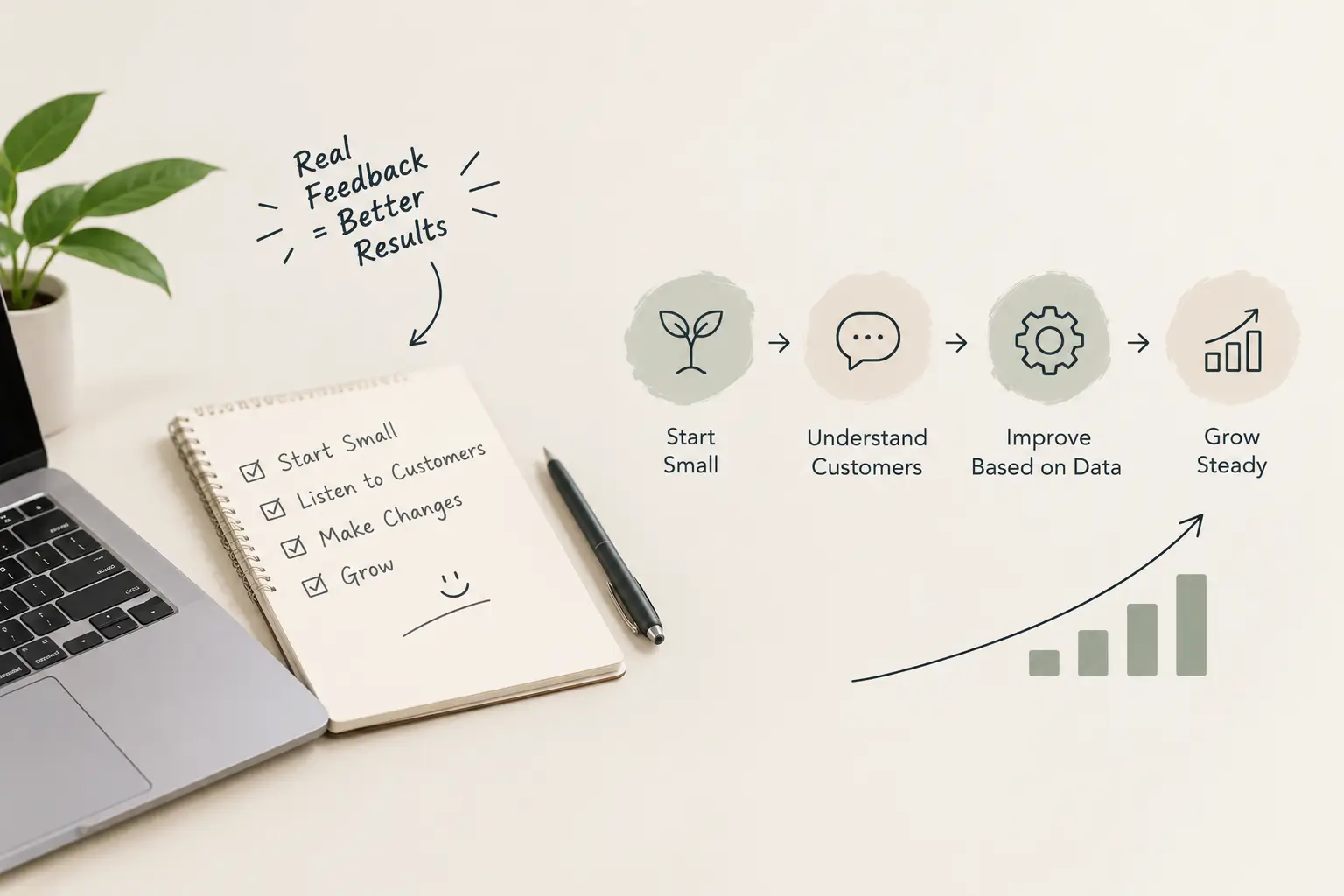
Step 10: Start Small and Improve From Real Customer Behavior
Your first version doesn’t need to contain a massive catalog.
Launch a collection you can manage properly, then use real customer behavior to guide your next decisions.
Pay attention to:
- Bestselling products
- Products customers repeatedly view
- Popular sizes and colors
- Abandoned carts
- Return reasons
- Customer questions
- Product reviews
- Repeat purchases
- Products that fail to attract interest
If customers consistently ask for a particular color or size, that feedback can influence your next production run.
If one product sells significantly better than the rest of the collection, you can investigate what makes it attractive before expanding the range.
Your online clothing store should evolve with your customers rather than remain fixed after launch.
Difficulty in Starting? Contact Innovate Apparel
Starting an online clothing store isn’t simply a matter of choosing a product and building a website.
The strongest launch process starts with validation and decision-making.
First, identify your customer and niche. Then choose a business model that matches your budget and desired level of control. Validate demand before committing significant capital. Test your products, calculate landed costs, build your brand, choose the right sales channels, and create a store that makes buying easy.
Once you launch, keep learning from your customers and your numbers.
The goal isn’t to build the biggest clothing catalog on day one. It’s to build a repeatable business model that lets you understand what customers want, sell products at sustainable economics, and reinvest intelligently as the brand grows.
Get in touch with Innovate Apparel for the best quality clothing manufacturing and quick quotations.