
Sourcing apparel from overseas is one of the biggest decisions a fashion or clothing brand will make. It affects your cost structure, your production timelines, your quality standards, and ultimately how your customers experience your product. Yet most brands go into overseas sourcing with only a partial understanding of what the process actually involves.
This guide is built to answer every question a brand owner, product manager, or sourcing lead is likely to have when they search for apparel sourcing overseas. By the end, you will have a practical playbook you can apply immediately in your brand growth journey.
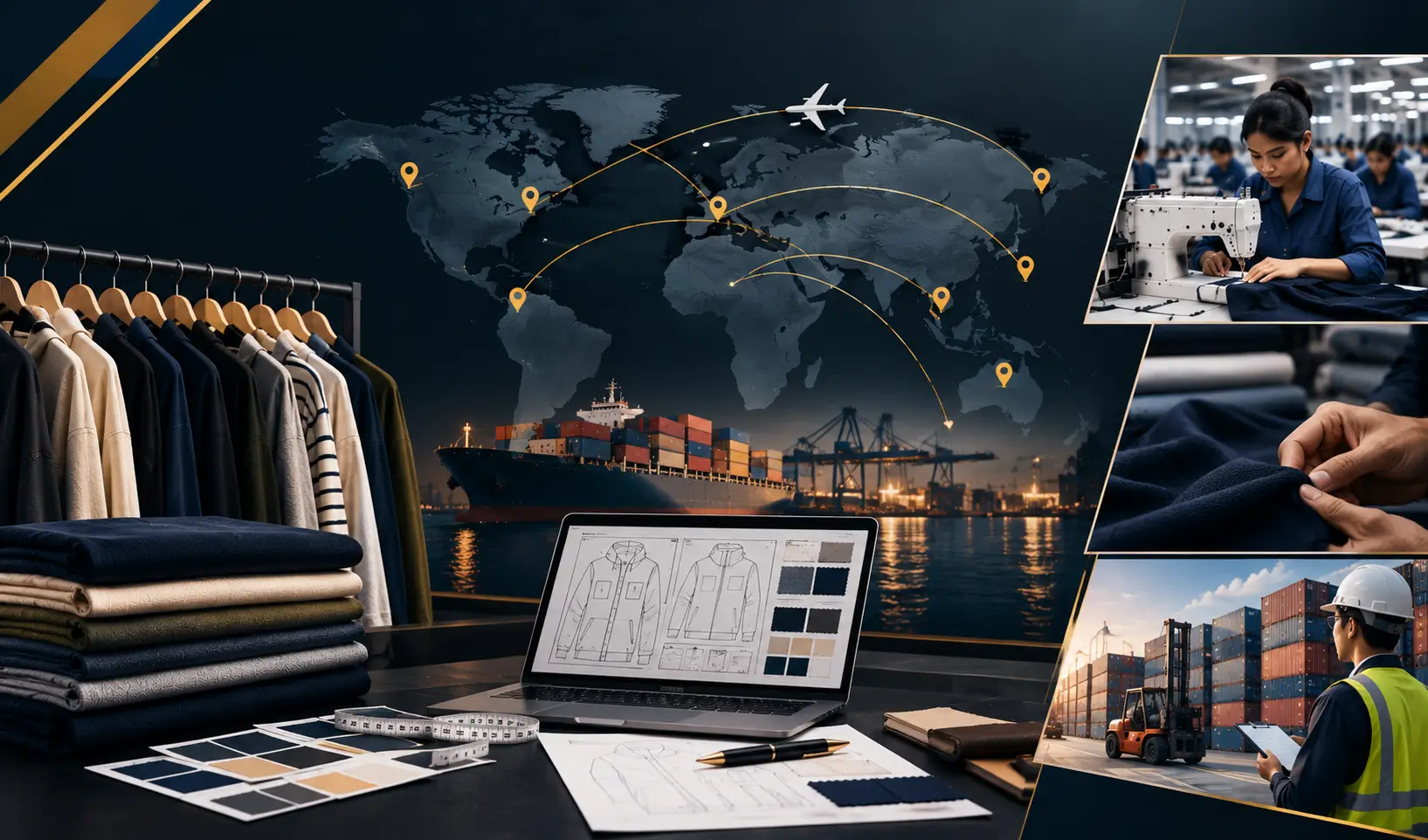
Why Brands Source Apparel Overseas
Brands look overseas for manufacturing because the combination of cost, capacity, and specialization is difficult to match domestically.
Countries with mature garment industries have built entire ecosystems around apparel production, from raw material mills to trim suppliers to finishing houses, all located within the same industrial zones. That density brings efficiency that a smaller domestic supply chain often cannot replicate.
There are also strategic reasons beyond cost.
Some fabrics, finishes, and construction techniques are simply more accessible in certain regions because generations of expertise have concentrated there.
- A brand producing technical outerwear may need access to specific performance fabrics that are woven in only a handful of countries.
- A denim brand may need washing and finishing facilities that took decades to develop.
Overseas sourcing gives brands access to this concentrated expertise.
Key benefits of overseas apparel sourcing:
- Lower unit costs due to labor and raw material economics
- Larger production capacity for scaling orders
- Access to specialized manufacturing techniques and fabrics
- Established supply chains for trims, packaging, and finishing
- Flexibility to work with factories that specialize in your exact category
Is Overseas Apparel Sourcing Right for Your Brand?
Not every brand needs overseas sourcing. Overseas production usually involves higher minimum order quantities, longer lead times, and more upfront coordination than working with a local cut and sew shop.
If your brand is still testing product market fit with small batches, the fixed costs and time investment of overseas sourcing may outweigh the savings.
The right fit largely depends on order volume, cash flow, and the lead time your business can tolerate.
A useful way to think about this is to map your business stage against what overseas sourcing typically requires.
Business Stage | Typical Order Size | Overseas Sourcing Fit |
Startup, pre validation | Under 100 units per style | Usually too early, consider domestic or small batch producers |
Small business, validated demand | 100 to 500 units per style | Possible with the right supplier, watch MOQs |
Growing brand | 500 to 5,000 units per style | Strong fit, cost savings become meaningful |
Enterprise | 5,000 plus units per style | Overseas sourcing is usually the default choice |
If your brand fits the growing or enterprise category, overseas sourcing is almost always worth pursuing. If you are still in the early stages, it can still work, but you will want to focus on suppliers who accept lower MOQs or work through a sourcing agent who can consolidate your order with others.
Step by Step Guide to Apparel Sourcing Overseas
Sourcing apparel overseas is a sequence of decisions that build on each other. Skipping a step, such as jumping straight to price negotiation before you have a finished tech pack, tends to create expensive problems later in production.
The process below reflects how experienced sourcing teams actually move from an idea to a finished shipment.
Treat this as a checklist you can return to for every new product or supplier relationship.
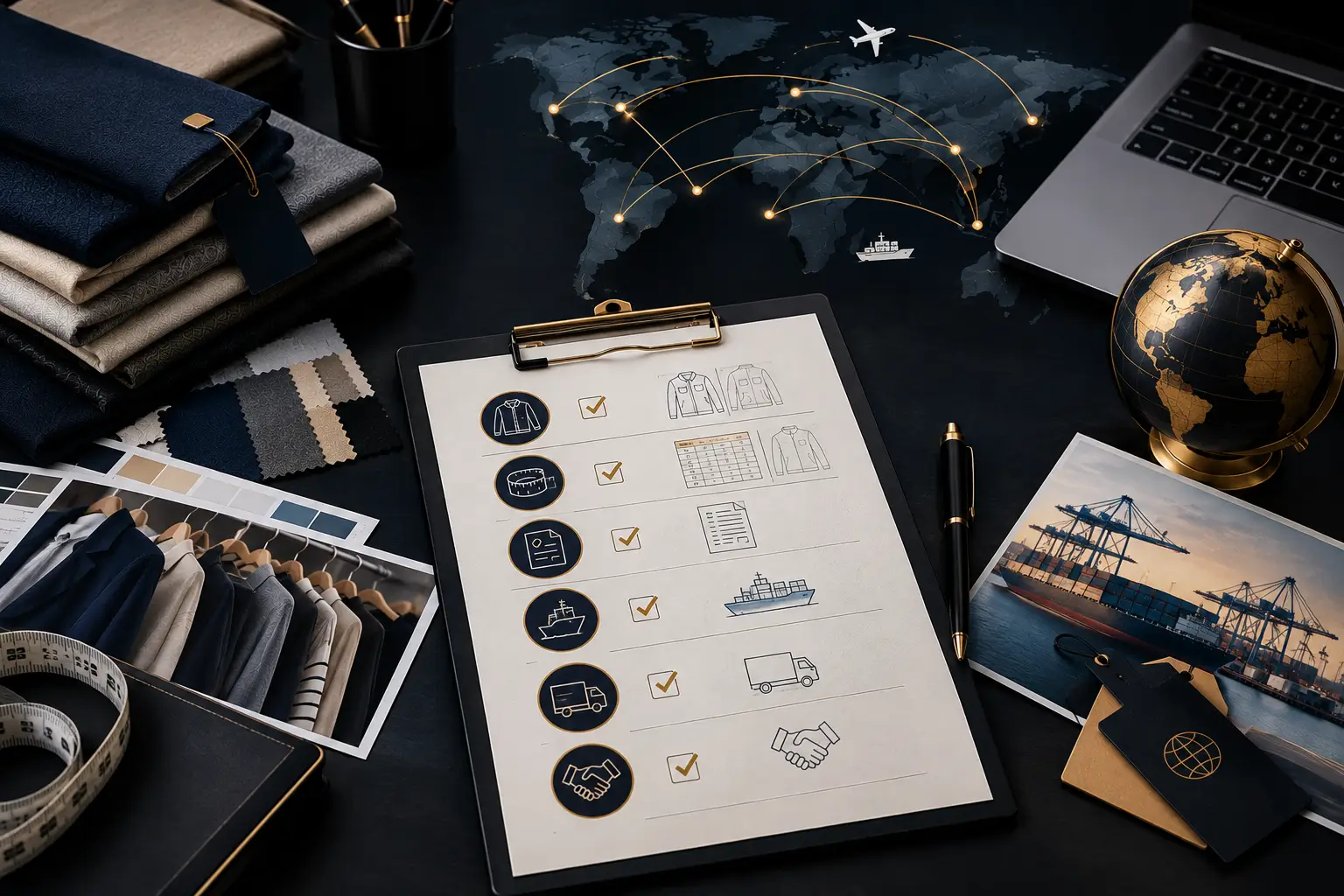
Step 1: Define Your Product
Start by clearly defining the garment you want to manufacture. Specify the product type, fabric, fit, sizing, colors, trims, and target price point. The more detailed your product requirements are, the more accurate your supplier quotations and production results will be.
Step 2: Create a Tech Pack
A tech pack is the technical blueprint for your garment. It includes measurements, construction details, fabric specifications, trims, labels, and artwork. A complete tech pack minimizes misunderstandings and ensures manufacturers produce your design accurately.
Step 3: Estimate Your Budget
Set a realistic budget before contacting suppliers. Consider the total landed cost, including manufacturing, sampling, shipping, import duties, inspections, and customs fees. This helps you compare supplier quotes more effectively.
Step 4: Choose the Right Country
Different countries specialize in different apparel categories, price points, and production capacities. Research which sourcing destinations best match your product, order volume, quality expectations, and delivery timeline before approaching manufacturers.
Step 5: Find Potential Suppliers
Build a shortlist of manufacturers using sourcing platforms, trade shows, referrals, or sourcing partners. Comparing multiple options gives you better pricing and more confidence in your decision.
Step 6: Verify Suppliers
Before requesting samples or placing an order, verify each supplier’s legitimacy. Check their business credentials, certifications, production capabilities, and customer reviews to reduce sourcing risks.
Step 7: Request Quotations
Share your tech pack with shortlisted suppliers and request detailed quotations. Ask for pricing, MOQs, lead times, payment terms, and shipping conditions so you can compare suppliers on more than just cost.
Step 8: Review Samples
Order samples from your preferred manufacturers to evaluate quality, fit, fabric, and workmanship. The sampling stage also gives you insight into a supplier’s communication, responsiveness, and attention to detail.
Step 9: Conduct a Factory Audit
Before moving into bulk production, confirm the factory has the equipment, workforce, and quality systems needed for your order. A factory audit or an assessment helps reduce production risks.
Step 10: Negotiate Terms
Once you’ve selected a supplier, negotiate pricing, payment terms, production timelines, and shipping responsibilities. Focus on building a long-term partnership rather than simply securing the lowest possible price.
Step 11: Approve the Pre-Production Sample
Review the pre-production sample carefully before bulk manufacturing begins. This final approval ensures the factory has correctly interpreted your specifications and provides a quality benchmark for the production run.
Step 12: Begin Bulk Production
After the pre-production sample is approved, manufacturing begins. Stay in regular contact with the supplier and request production updates to monitor progress and address issues early.
Step 13: Perform Quality Inspection
Arrange a quality inspection before your order ships. Identifying defects at the factory is faster, less expensive, and far easier than resolving quality issues after the products arrive.
Step 14: Arrange Shipping
Choose the shipping method that best fits your budget and delivery schedule. Ocean freight is generally more economical for large orders, while air freight offers faster delivery for urgent shipments.
Step 15: Complete Customs Clearance
Your shipment must clear customs before it reaches its final destination. Ensure all shipping documents are accurate and complete to avoid delays, penalties, or unexpected costs.
Step 16: Receive Your Order
Once your shipment arrives, inspect the products against your purchase order and packing list. Confirm quantities, check for damage, and verify product quality before distributing inventory or fulfilling customer orders.
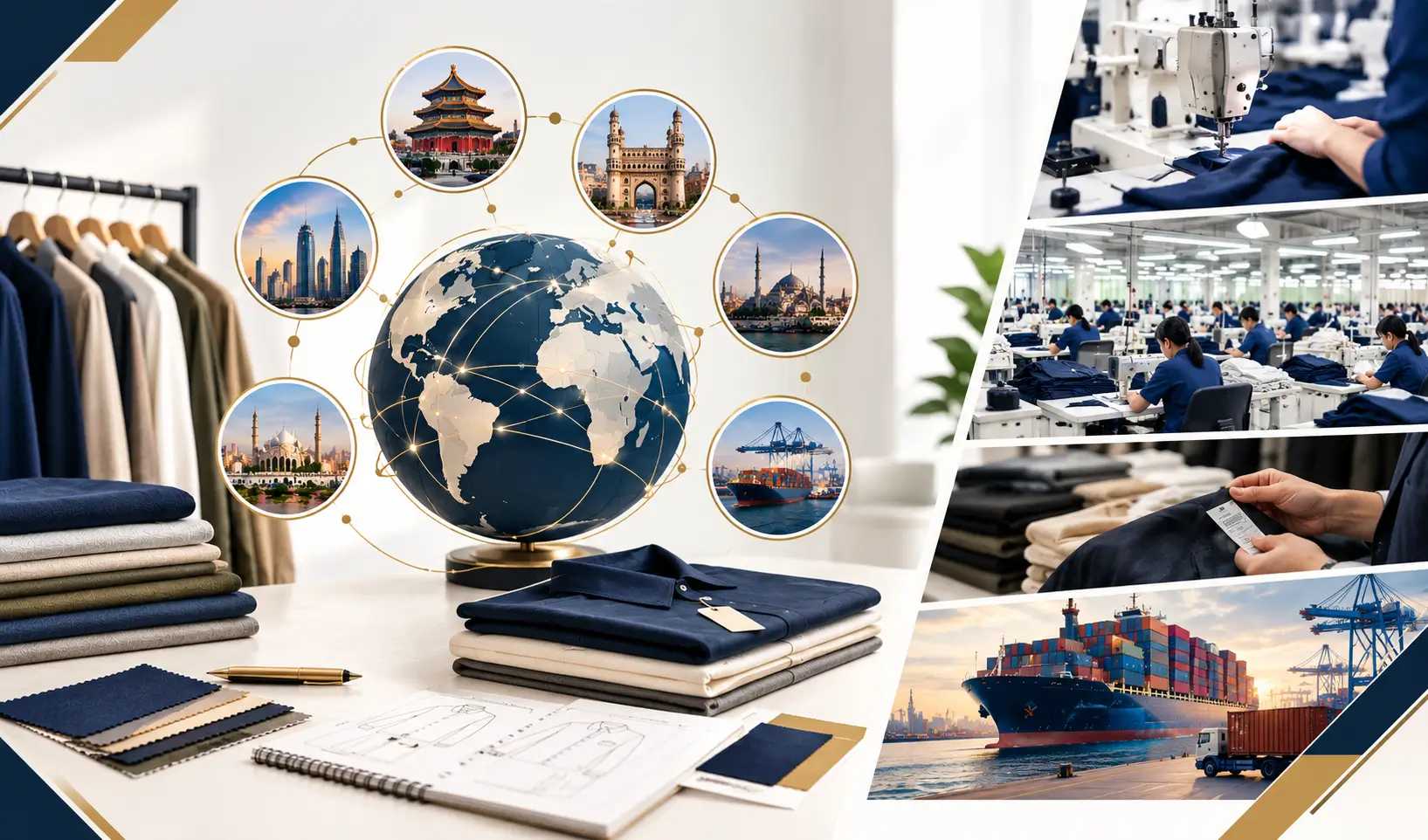
Best Countries for Overseas Clothing Sourcing
The most consequential decision in the sourcing process is finalizing a choice – country in this case. Each major sourcing country has a distinct profile in terms of pricing, minimum order quantities, lead times, and category strengths, and understanding these differences upfront can save you months of trial and error.
The table below summarizes how the leading apparel sourcing countries compare across the factors that matter most to brands. Use it as a starting point, then narrow your research to the two or three countries that best match your product category and order volume.
Country | Best For | MOQ | Lead Time | Cost | Quality |
Pakistan | Denim, knitwear, woven basics | 500 to 1,000 units | 45 to 75 days | Low to mid | Good, strong in cotton based apparel |
China | Wide category range, complex construction, fast sampling | 300 to 1,000 units | 30 to 60 days | Mid to high | High, especially in developed clusters |
Bangladesh | Bulk basics, t shirts, knitwear at scale | 1,000 plus units | 60 to 90 days | Low | Good for standardized products |
Vietnam | Sportswear, technical apparel, mid to premium basics | 500 to 1,000 units | 45 to 60 days | Mid | High |
India | Embellished garments, embroidery, prints, cotton apparel | 300 to 1,000 units | 45 to 75 days | Low to mid | Good to high depending on region |
Turkey | Fast fashion, denim, knitwear with quick turnaround | 300 to 500 units | 20 to 40 days | Mid to high | High |
Portugal | Premium and luxury apparel, small batch, ethical production | 100 to 300 units | 30 to 50 days | High | Very high |
How to Find Reliable Overseas Clothing Manufacturers
Finding suppliers is often where new brands spend the most time, largely because there are so many channels available and no single one guarantees quality on its own. The strongest sourcing strategies combine multiple discovery methods rather than relying on just one platform.
Each channel below has its own strengths and limitations, and understanding those tradeoffs helps you build a more reliable shortlist before moving into verification.
Common supplier discovery channels:
- B2B platforms like Alibaba and Global Sources.
- Trade shows, such as apparel sourcing expos.
- Buying agents, who act as intermediaries with established factory relationships.
- LinkedIn, increasingly used by factory sales teams and sourcing professionals.
- Direct Google search.
- Referrals from other brands, one of the most reliable methods.
- Government export associations, directories of verified exporters.
A combination approach tends to work best. Use platforms for volume and referrals for trust, then apply the verification framework below to every supplier regardless of how you found them.
If you are that keen on finding a reliable apparel source, you can get in touch with our team, Innovate Apparel. We will help fulfil your apparel needs without any hassle – just let us know what you need, and entrust us with everything.
Supplier Verification Checklist
Verification is the step that protects your business from the majority of sourcing risks, from outright scams to factories that simply cannot deliver the quality or capacity your order requires. It takes time, but it is far less costly than discovering a problem after you have already paid a deposit or received a bulk shipment.
The checklist below covers the core areas to confirm before moving forward with any new supplier relationship, whether you found them on a platform, at a trade show, or through a referral.
Supplier verification checklist:
- Valid business license and export license
- Physical factory photos and, ideally, a video walkthrough
- Relevant certifications depending on your product and market
- Independent factory audit report
- Confirmed production capacity relative to your order size
- Machine list matching your product’s construction requirements
- Customer references you can independently contact
- Social compliance standards covering labor practices
- Financial stability indicators, particularly for larger orders
- Years in business and track record with export orders
Not every supplier needs to check every box, particularly smaller specialized workshops that may lack formal certifications but have strong reputations within their niche. Use this checklist as a framework to identify risk, then decide how much risk your order size and business can reasonably absorb.
How to work with MOQs:
- Negotiate lower MOQs in exchange for higher unit pricing, which many factories will accept for a trial order
- Consolidate multiple styles or colorways into a single fabric order to help meet fabric MOQs even if garment MOQs stay lower
- Consider blank or semi finished goods that can be customized in smaller batches downstream
- Work with a sourcing agent who can combine your order with others to meet factory minimums
- Explore countries like Portugal or smaller workshops in India that tend to accept lower order volumes
MOQs tend to decrease as your relationship with a supplier matures. Many factories are willing to lower minimums for repeat customers who have demonstrated reliable ordering patterns and clear communication.
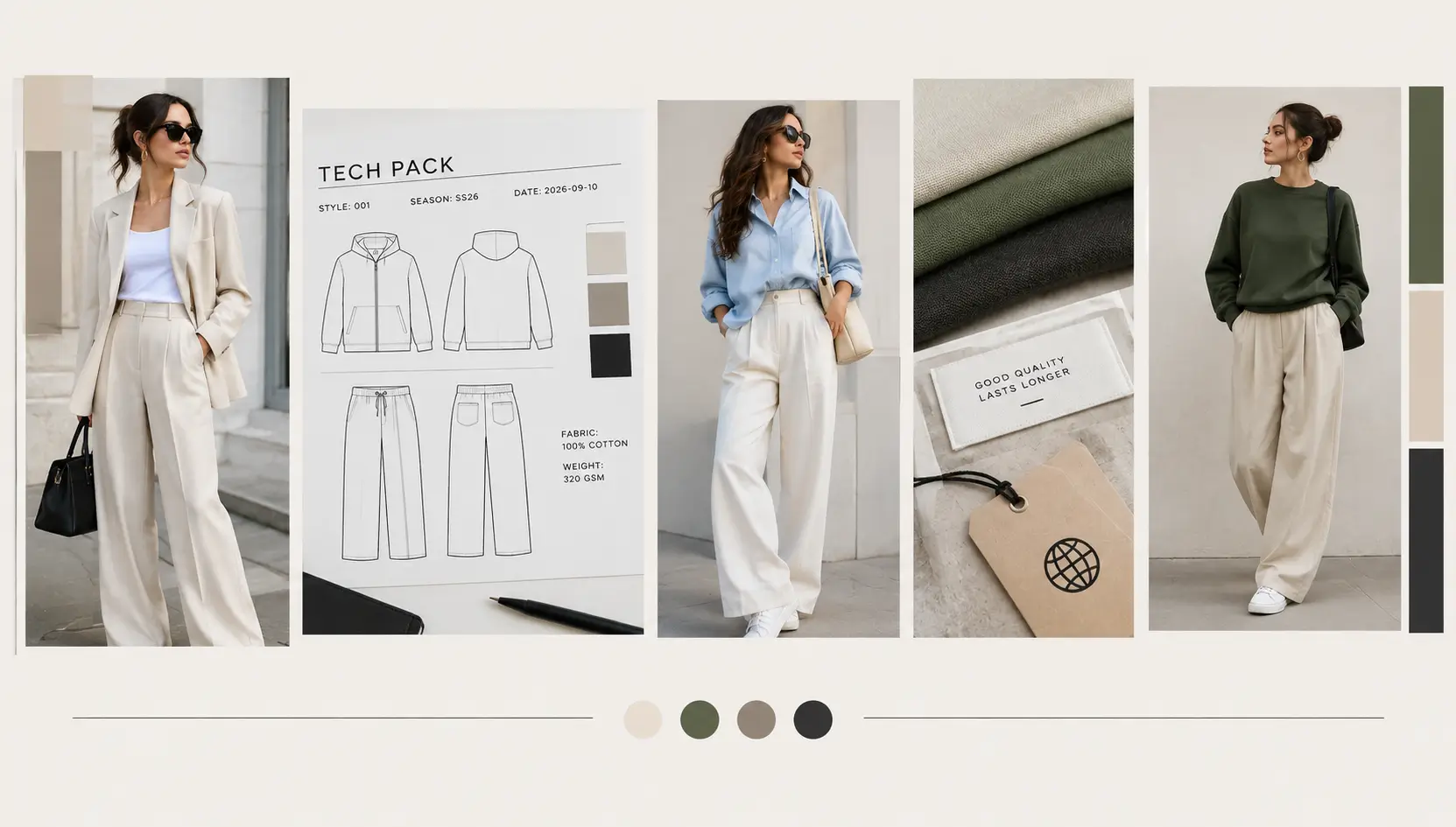
Tech Packs: Why They Matter
A tech pack is the document that translates your design vision into something a factory can manufacture accurately and repeatedly.
Brands that invest time into a thorough tech pack tend to see fewer sampling rounds, faster quoting, and more consistent quality once bulk production begins. It is one of the highest leverage documents in the entire sourcing process.
What a complete tech pack should include:
- Flat sketches or technical drawings from multiple angles
- Detailed measurements with tolerance ranges
- Fabric composition, weight, and construction details
- Trim specifications including buttons, zippers, and labels
- Stitch and seam construction notes
- Colorway and print or embroidery placement
- Size grading rules across your full size range
- Labeling, packaging, and care instruction requirements
Cost Breakdown for Overseas Apparel Sourcing
The factory’s unit price is only one part of your total sourcing cost. To understand your true investment, calculate the landed cost, which includes manufacturing, sampling, packaging, shipping, import duties, inspections, customs clearance, and warehouse handling.
Landed Cost Formula:
Factory Price + Sampling + Packaging + Inspection + Freight + Insurance + Import Duties + Customs Fees + Warehouse Handling = Total Landed Cost
Estimating these costs before placing an order helps you price your products accurately and avoid unexpected expenses.
Shipping and Logistics
Your shipping method affects both cost and delivery time. Ocean freight is the most economical option for bulk orders, while air freight is better suited for urgent shipments. Samples and small orders are commonly shipped via express courier.
Method | Transit Time | Cost | Best For |
Ocean Freight (FCL/LCL) | 20 to 45 days | Low | Bulk orders, cost sensitive shipments |
Air Freight | 3 to 7 days | High | Urgent orders, high value goods |
Rail (select regions) | 15 to 25 days | Mid | Orders between Asia and Europe |
Express Courier | 3 to 5 days | Very high | Samples and small parcels |
When arranging international shipping, also agree on the appropriate Incoterms. Terms such as FOB, EXW, CIF, and DDP determine which party is responsible for shipping costs, insurance, customs, and risk during transit.
Payment Methods
Most overseas manufacturers require a deposit before production begins, with the remaining balance paid before shipment. Payment terms vary depending on the supplier, order size, and business relationship.
For first-time orders, secure payment methods such as Letters of Credit (L/C) or escrow services can reduce risk, while established supplier relationships often use Telegraphic Transfers (T/T).
Production Timeline
Overseas apparel production typically follows a structured process: supplier selection, sampling, sample approval, bulk production, quality inspection, shipping, and final delivery.
Week 1: Supplier search and shortlist finalized
Week 2: Quotations received and compared
Week 3: Initial samples produced
Week 5: Sample revisions completed
Week 7: Bulk production begins
Week 12: Production completed
Week 13: Quality inspection conducted
Week 14: Shipment departs
Week 18: Goods delivered to destination warehouse
Lead times vary by product complexity, production volume, and shipping method, so it’s important to build sufficient buffer time into your production schedule to avoid delays.
Quality Control
Quality control should take place throughout production rather than only after manufacturing is complete. Most brands perform inspections during production and again before shipment to verify that garments meet approved specifications.
Quality control checkpoints:
- Inline inspection
- Mid production inspection
- Pre shipment inspection
- Lab testing
Many importers also use AQL (Acceptable Quality Level) standards to determine acceptable defect rates and ensure consistent product quality across each production batch.
Common Overseas Apparel Sourcing Mistakes
Most sourcing problems trace back to a handful of recurring mistakes, many of which are avoidable with better upfront planning. Recognizing these patterns before they happen to you can save significant time and money.
Mistakes to avoid:
- Choosing a supplier based on the lowest price without evaluating capability or compliance
- Ignoring certifications and compliance requirements relevant to your target market
- Skipping inspections to save on cost, then absorbing the expense of returns or rework later
- Poor or infrequent communication during production, leading to preventable errors
- Approving bulk production without reviewing a pre production sample
- Signing agreements without clear written terms covering price, timeline, and quality standards
Most of these mistakes come from prioritizing speed or cost savings over process discipline.
Why Choose Innovate Apparel for Overseas Apparel Sourcing?
Successful overseas apparel sourcing is about more than finding the lowest-cost manufacturer. It requires reliable supplier selection, clear communication, consistent quality control, and careful production planning.
At Innovate Apparel, we help brands navigate every stage of the sourcing process so you can focus on growing your business with confidence.
You may also want to look at our other blogs:
Frequently Asked Questions
How do I source apparel from overseas?
Start by defining your product and creating a detailed tech pack. Then shortlist suppliers, verify their credentials, request samples, compare quotations, approve a pre-production sample, and monitor quality throughout production before arranging shipping and customs clearance.